Tag: q&a

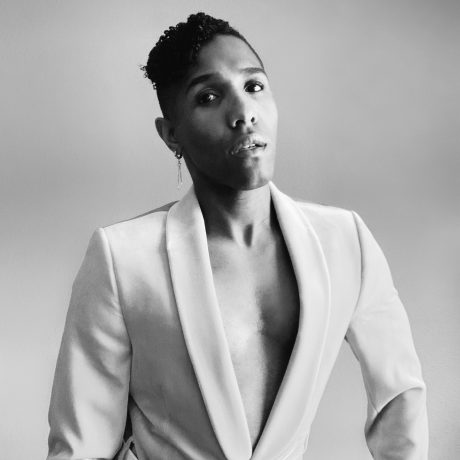
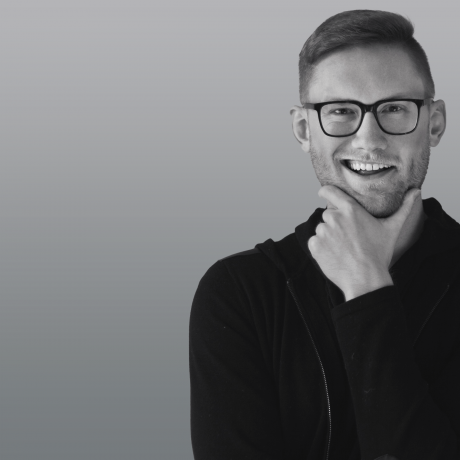
  • Hey, I’m Honey Mahogany

    Hey, I’m Honey Mahogany

    Honey Mahogany made a name for herself, appearing on the fifth season of RuPaul’s Drag Race, representing the drag culture of her hometown of San Francisco. Parodied by editors of the show for her choice in wearing caftans and for not fitting into a certain mold expected of Black drag queens, Honey has made greater prominence, first, by not desiring to “fit in” and simply be her true authentic self as a non-binary trans woman and drag performer, and, secondly, by showing she can do more than strut in a gold lamé dress, bodice and matching mesh headpiece. She can organize. She can fight to protect the rights of marginalized communities. She can even run for public office and win.

    Born to immigrants who escaped persecution from Ethiopia, it is perhaps no surprise why there is so much dimension to Honey. The American Dream is not a slogan, it’s a cherished and lived experience. Her upbringing in a family with collectivistic cultural roots and having attended a Jesuit school reinforced ideas to think beyond herself. Those experiences fostered notions that while individuality is key in creating a sense of self, community is the centerpiece that gives that self purpose and a true sense of belonging. It inspired her professional pursuits into social work where she led the Rainbow Community Center of Contra Costa County (RCC) as its community mental health director. There, she not only saw the suffering of those living at the fringes of society in homelessness and drug use, but the beauty that can come from transformation when instead of throwing in the towel, through focused efforts, you can bring about a sea change.

    Honey realized this not only at the personal level of those that fell into her care, but more socially and culturally as well. She, along with a group of other LGBTQ leaders at various institutions and non-profits, including Aria Sa’id, Janetta Johnson, Brian Basinger, Stephany Ashley, and Nathan Albee were successful in creating the Compton’s Transgender Cultural District in San Francisco’s Tenderloin community. This first-of-its-kind initiative was an effort to preserve the buildings and the heritage of this area that was so pivotal to the Compton Cafeteria Riots and the LGBT Liberation Movement, and a safe haven for many in the trans community who called it home.

    Similarly, Honey and a small group of her colleagues rescued the Stud, a cornerstone of the LGBTQ nightlife in San Francisco that faced closure due to the pandemic, by becoming its co-owners in a cooperative. The depth of her love of San Francisco and honoring its local traditions in the queer community it seems knows no bounds, and, for it, San Franciscans paid her in kind by electing her to the San Francisco Democratic County Central Committee (SFDCCC), the first Black transgender person to be elected in public office in the state of California. The SFDCCC is responsible for setting the agenda for the city’s Democratic Party, including the chartering of Democratic clubs and organizing efforts, voter registration, and fundraising.

    Regarded favorably for being one of the few RuGirls that can hold her own at the mic rather than lip sync (all thanks to her studies in musical theater), Honey has been singing in her own voice from the beginning, hitting personal and professional notes yet to be achieved by other drag queens. We sat down to talk deeply about her upbringing, the importance of drag culture and the great work that she’s currently doing.

    Did your parents discuss the conditions under which they fled Ethiopia?

    My parents didn’t discuss it that much. There was some discussion in terms of the oppression that was faced and how they had to flee the country. A lot of it had to do with my father who was against the government at the time. His Ethiopian citizenship was revoked. He ended up losing his scholarship, where he was studying at med school in Greece, because it was on Ethiopian student scholarship. When his citizenship got revoked, he could no longer continue his studies, which forced him to seek asylum. He eventually got it in the U S and then my mother came over with him. I think it definitely did make me appreciate living in a country where that was quote unquote free and, was a democracy, where people had free elections and were able to vote, and that we were able to have differing opinions and different parties. Being a part of the democratic process and having the people hold most of the power was something that we took very seriously.

    You studied musical theater in college, and I imagine you must have been quite the entertainer as a child. Where did this passion come from and who, if anyone, inspired you?

    It’s probably from my father’s side. My dad had an outgoing personality. My mom was much more reserved. To be honest, I can be very reserved as well, but there is a part of me that loves to perform. My older cousins would tell me that, as a very young child, I was enthralled by Madonna and would just be rolling around on the ground, like her in “Like a Virgin” video. And so, they were always just like, “Well, I guess they like to perform.” I think at a very young age, I also identified very much with more women and female performers. Though, I also loved Michael Jackson because he had that longer hair. I associated that with being more feminine. My mom also says that I was really into Cyndi Lauper, though, I honestly can’t remember that. I was just very much into Whitney Houston, Tina Turner, Madonna and Michael Jackson. Those are the people that I think I drew the most inspiration from as a child, or I should say that, motivated me to want to get up and dance and perform.

    What was it like growing up trans in your family?

    It was hard because my family was Catholic, very Christian. They weren’t like openly anti-queer, or anti-gay, or, anti-trans or anything like that, but it just wasn’t talked about. And then when it was talked about, it was guarded, sort of like something that you don’t talk about, something-to-be-ashamed-of tone to it, or something to not acknowledge publicly. So, in that sense, I think there was a sense of shame around it. As someone who was assigned male at birth, I think there was a level of shame there as well, especially for my father. My mother always saw me as being sensitive and just wanted to honor and protect that part but then also wanting me to grow up to be like a strong man. And so that definitely played out in a lot of different ways. I would get pushback a lot when I wanted us to do more feminine things like dance or take ballet class. Music, they were supportive of that, because it wasn’t as specifically feminine. But I remember when I wanted to really take ballet class, there was a lot of pushback around that. Although I eventually did it on my own regardless. So, it was very hard, in that sense. I had to keep a lot of it from my family and also didn’t feel like my family supported that part. But at the same time, I think that my family was very loving in general. I felt like I was loved by my family, and I didn’t feel ostracized growing up or anything like that. We were very tight knit.

    So, with embracing your true identity, did that happen later in life or earlier in life?

    I would say later, like after I went to college. I think especially for people of my generation. It’s very much the norm. People didn’t really come out as much in high school. Well, that’s not true. There were two or three people in my high school who were openly queer, nobody who was openly trans. There were a lot of folks who did not end up coming out until college because, at that point, you can sort of separate yourself from your family and actually have these lived experiences and have conversations with folks in a way that I don’t think you really can in high school. There’s a level of anxiety and fear, but also attachment in high school, where you’re sort of worried about what people think. When people go to college with a fresh start, people are more open to reexamining who they are and how they relate to the world.

    Your dad was a cab driver and your mother put herself through school having the quintessential immigrant experience chasing after the American dream. What have you learned or gathered from their industry that has helped to get you where you are today?

    My parents taught me that hard work is rewarded and that it very much was certified with the American dream. As immigrants, even though they weren’t tied to some of the historical racism of the United States, they definitely experienced it. Yet, they were able to push past that like many other people, in order to build lives for themselves. I’m very proud that they were able to build a life for themselves and family, buy a house and really build something from nothing. That kind of trickled down to me. I’ve always been the person to put my head down and get to work. I also have always had an attitude of “I can do anything that I put my mind to.” I feel like they’ve passed that onto me, especially my mom. Even with my dad, he did end up pursuing a variety of other things outside of being a taxi driver. Things didn’t always work out for my dad as much, but he was able in the end to provide for his family in a very meaningful way. That sort of hard work ethic and the ability to achieve your dreams, that’s something that I really did take on for my parents.

    How did you become interested in drag? And what was happening in between the years you were in college and grad school, where it seems you took a break from drag?

    The way that I first did drag was my friend who was in film school at USC, basically approached me and said, “Hey, I would like you to play this part because you’re the only guy that I think would look good as a girl. Will you do this for me?” I had just recently come out as queer. But there was something that really attracted me to that role. I was fascinated by dressing as a woman. And so, I did the role, and it was very well-received and then kept doing drag occasionally, following that first starring film role in the student film department at USC. When I was at USC, I actually was one of the resident advisors for the Rainbow Floor, which at the time either was the only or was one of two LGBT-themed dorms in the country. Then when I went to UC Berkeley for my masters, they were also just getting a program off the ground for LGBT student housing. I became the theme program advisor at UC Berkeley for Unity House. As a part of that programming, I got really involved in producing events and so we decided to produce those student drag shows.

    Why have psychology and social work been areas of interest of yours?

    I’ve always been interested in how people relate to the world and how we can continue to support people, especially people that need help, whether it be with resources or through counseling. My focus has shifted, but I think in general, it’s always been how we can uplift the community, fight for what’s right and help folks. Some of that probably came from my upbringing, being from a more collectivist culture, but also my experience going to a Jesuit school where the theme was about “being a person for others.” That was something that we’ve heard a lot, and the importance of charitable work. Maybe because I was afraid that who I was was not necessarily acceptable or supported, and I didn’t like how that made me feel. So, I wanted to be able to make sure that other people felt supported regardless of who they were or how they identified because I saw that these systems existed for other communities and maybe weren’t as widely accepted within my own community, which was the LGBT community, especially for LGBT people of color.

    How would you sum up your experience as a RuGirl?

    Being on RuPaul’s Drag Race is definitely a special experience. Obviously, we all gained notoriety and received a platform from participating in the show. As someone who did drag before RuPaul’s Drag Race was created, I can say it definitely economically empowered a segment of our community to be able to make a living doing drag. It has also changed people’s opinions about what drag is and what drag can do. Drag Race has glamorized drag to an extent, given it a spit polish, if you will. It’s raised its profile in a way that has allowed us as a community to have some tough conversations because Drag Race wanted us to have those conversations and also as a result of things that we would see on the show. Race has become a topic that is oftentimes discussed as a part of the way that Black queens are treated by the fandom and even by the show itself and how queens of color are sort of edited to fit certain tropes and stereotypes.

    As a contestant, if we don’t often feel like we fit into those tropes, and if we don’t play these sort of reality TV games, then the edit that we receive is not always the best, because they don’t kind of know what to do with you. I feel like I fell into that category. I don’t blame the show for anything, but I also just don’t feel like I got what I could have gotten out of the show, because I didn’t fit into their idea of what a Black drag queen was. So, I appreciate my time on the show. It’s definitely given me a platform, but I still remain grateful for what the show has done for drag in general and grateful for my platform, but I don’t think I had the most positive experience on the show. I think that there are a lot of girls who feel the same way.

    Why is drag important both to entertainers and as an art form?

    I think drag is a key part of our culture because it allows us in a very visible way to play with many of the systems of oppression that we have been dealing with. It allows us to make fun of the fact that we don’t fit in and allows us to use arts and creativity and fun to build community. By that, I mean, drag has been at the forefront of fundraising for our community. Whenever it is in need, whether it be during AIDS, whether it be any other sort of issue that the LGBT community has faced, the drag community has been there to uplift those issues, bring attention to them and also raise money for them. This goes back to the very first LGBT nonprofit fundraising organization in the world, which is the Imperial Court System, which was founded in San Francisco by José Saria.

    Drag queens are the storytellers of our community as well. We definitely help amplify what is happening now with current music, current numbers, exploring themes through performance that are playing out in the media or in our world today. But they’re also a way preserving our histories and oftentimes drag queens are the ones that are doing some of these old school numbers, whether it be female impersonation of older divas and women throughout history, or even bringing back old tropes and really making us examine what they mean through their performances. So, drag is really versatile in the way that it gives back to the LGBT community and it’s a part of the fabric of our culture.

    What’s your favorite makeup brand?

    I use a lot of different ones. I struggle with that question because there are so many amazing independent makeup companies, including KimChi, Sugarpill that have created really amazing products. In terms of foundation, I have to give it up for MAC because I’ve done FENTY, and I’ve done KVD, and I’ve done all of these other ones – Anastasia Beverly Hills and Juvia. I often find myself going back to MAC because the quality of their products is just so amazing. And they have a range of foundations. It’s probably not very popular anymore, but it was definitely the big makeup company when I first started that we were really able to use besides Ben Nye. It’s still a goodie.

    Border states like California are dealing with waves of immigration of folks coming to America for a better life. And I wonder as a Californian and the child of immigrants who fled, how does this affect you personally?

    The United States has been a melting pot since the foundation of this country. In terms of immigration, what we’re seeing now is not that different [from] what we’ve seen over the last 500 years, which is that people come to this country looking for a better life. It’s important to acknowledge, obviously, there are people who were here first – our native peoples who are still here – but the fact is that this is a nation of mostly immigrants. I think the issue of immigration is a hot button topic at this point in time because of the tremendous amount of scapegoating that I think has happened because of some of the crazy foreign policy platforms that our government continues to use. I definitely think that there are issues that are real issues when it comes to this country’s foreign relations. The results of many of those policies have led to instability in countries across the globe. So, in some ways I think that the US has been a part of the problem and creating sort of messes across the globe. And so, we definitely need to think about how we are making up for that and how we are supporting communities who are negatively impacted by this type of globalization and interference and how we are supporting immigrants from these countries. Additionally, I think it’s crazy that we, as a nation of immigrants, continue to scapegoat them because we have learned this lesson so many times throughout our history. And, yet, we’re still going back to the same issues, the same mode of operation, which is to blame “the other.”

    With so much discourse the last election cycle about banning transgender folks from bathrooms, from seeking asylum from the military and now in women’s sports, what has it meant to you in creating a safe space, a whole district as a cultural place in San Francisco’s Tenderloin?

    Unless we fight to preserve some of its history but also the affordability of the neighborhood and really claim it for ourselves, we could quickly see the continued displacement of our people. This is something that I was able to witness firsthand because working as a social worker, I would see so many people displaced from the Tenderloin, from San Francisco because their building was being torn down and they were in a subsidized housing program and they were being placed out in the East Bay, places where they didn’t have access to public transportation, or didn’t have access to healthcare, or a community and quickly saw them devolve and resort to self-medication through substance abuse and resorting to sex work again, because they couldn’t find other work that was accessible by public transit or near enough to where they lived. So, this level of displacement really was a life-or-death situation.

    That’s what led us to found the Transgender Cultural District. We wanted to make sure that we acknowledged the deep history of trans people in San Francisco and the world. A lot of that history has been erased due to white supremacy; an Anglo-prevalent culture has really erased a lot of the diversity of our history. I think that you see this specifically play out in communities of color and in marginalized communities like the LGBT community. For a lot of us, we were not able to congregate openly for a long time and we were forced to only congregate in places like bars and places that were underground and not well-publicized, but that were places that, for our community, were really sacred. Those places, unfortunately, were not preserved. Their histories weren’t preserved, the physical buildings weren’t preserved in the same way that we put effort and money into preserving a lot of those institutions, buildings, and people that we as a predominantly white culture uphold.

    What did the achievement ultimately win? What does it mean in practical terms to have a cultural district?

    The cultural district does a lot of things: it advocates for community resources, so we negotiate with any incoming developments to make sure that they are providing funding to mitigate the impacts of their displacement to community groups; we fight for the inclusion of more affordable housing within any new developments, whether that be in the development itself or in subsequent developments that are going to be in the district. we create community programming; we’ve hosted spring celebrations within the district on behalf of the transgender community; we currently have a housing program where we subsidize the rents of trans people living in San Francisco to prevent them from being displaced; we also have an entrepreneurship program that we launched that basically provides training for folks who have business ideas, as well as seed funding and support for those looking to implement business ideas within the district.

    The trans district has also been very much involved in COVID outreach and work helping to organize testing days within the district for the community and also working with the city to try and do vaccine pop-up events within the district as well. We’ve done all that place-making within this neighborhood, and it’s helped to raise the profile of the trans community and make people be more aware that we are here and that we are an essential part of this community, and that the city celebrates this history and this community.

    The pandemic has caused so much harm and loss of life and livelihoods. And I understand that you and your business partners also lost the Stud. What has the Stud meant culturally in San Francisco?

    The Stud is a very important part of San Francisco culture. Before its closure, it was the oldest, LGBT nightlife venue left in the city and the oldest continuously operating one. It is emblematic of San Francisco culture in that it was a place where everyone was welcome, and anything goes. People love the Stud because of its “try anything” attitude, where people never knew what to expect. It was a place that was incredibly diverse. Actually, one of the original owners of the Stud was a transgender woman. We, to this day, have a lot of trans people who really consider the Stud their home away from home. We also have very deep connections to a variety of communities, whether it be furries, who had a regular monthly party at the Stud; more body positive parties, like Planet Big; we had Black Fridays, an all-Black review; and Club Papi, a Latin X party. The Stud has held a lot of San Francisco’s values of diversity and inclusion, since it first began. It has also historically been a place where music has really been central. Experimental DJs and experimental music were oftentimes played at the Stud at the beginning of movements, like the punk rock movement, like disco.

    In the sixties when the Stud was founded, which was actually the same year as the Compton Cafeteria Riot, around that same time, there was obviously the Civil Rights Movement, as well as the gay liberation movement that was happening, and the Women’s Movement was also taking off all at the same time. Huey Newton, who was a leader in the Black Panther party, called for intersectional movements that we all work together and figure out how to fight for justice and equality for everybody. The first place that the Gay Liberation Front and the Black Panthers actually met to discuss how they can continue this collaborative work was actually at the Stud. So, definitely a deep, rich history of social justice and creativity and bringing people together.

    So, are you guys planning to bring it back?

    We’ve been looking for a new space. We don’t have an update on when that would happen yet. We haven’t found a specific place yet, but we are very much committed to bringing it back.

    You’re the first Black transgender person to be elected to public office in San Francisco and the state of California. How do you make sure that you are not the last?

    That’s a great question. I try my hardest to bring people into the fold and uplift not just trans issues, given the platform that I have, but also other trans leaders and bring them to the table. I’ve been a collaborative force within the trans community, especially in the founding of the district. [I] really worked hard to bring people together, especially segments of our community that weren’t always friendly or who were sometimes at odds. Even if I move on to do other things, there are some people there that are able to do the work.

    The last election cycle, nearly 600 LGBTQ folks ran, and about 40% won local, state and federal offices nationwide. What do you make of this trend?

    It’s a long time coming. LGBT people have always been a part of leadership and doing various things. Now that they’re just able to do so more openly and be themselves, I think that it is definitely a sign of our changing culture and broader acceptance. I also think that there’s still a lot more work to be done. As you probably know, there are over 80 anti-trans bills being considered across state legislatures in this country, partly because this has become like a scapegoat for a lot of the issues that we have seen in this country. With Trump losing the election and white nationalists trying to figure out how they can engage their base, using the same sort of hate-filled rhetoric, they’re scapegoating trans people and using them as an issue to rally around. Something that we need to be aware of is that this anti-trans, anti-LGBT, anti-progress movement within the country isn’t dead and gone just because Trump wasn’t reelected. We have to continue fighting and pushing forward for change for all of us.

    What falls under the purview of your current position?

    I am involved with the rechartering of Democratic clubs in San Francisco. I also help with fundraising for the San Francisco Democratic Party, and I also serve as a delegate to the state party. The San Francisco Democratic Party endorses various resolutions and speaks out on issues. The city party platform – we definitely shaped that, but we also have a voice on the state and national platforms. Obviously, San Francisco is a heavy hitter when it comes to the Democratic Party and pushing it towards the left. We also have pretty strong representatives in Congress, including House Speaker Nancy Pelosi, who is a representative from San Francisco. We are a heavy weight when it comes to Democratic Parties. I think we will continue to be at the forefront of change for our country.

    Do you plan to release any more music in the future?

    I am working on a separate musical project with a group called Commando, sort of a punk-rock collaborative project by Lynn Breedlove, who is a Lambda literary award-winning writer and also a trans man who has in the past performed with bands like Homobiles, Tribe 8 and then with Juba, who was an original member of The Deep Dickollective. It’s definitely going to be a fun album. I just listened to it the other day. It’s just a really good mix of heavy metal, rock and roll and spoken word, and it’s just funky and fun and really speaks to punk rock’s history within the queer community and how we use it as sort of an outlet to speak truth to power. We’re going to be releasing a record probably in the next year.

    So much of your experience has been fighting for a seat, a voice, to be seen and heard, to belong. Why is representation important?

    Representation is important because unless we see something, then we don’t. It’s almost like it doesn’t exist. But when you’re forced to confront it, you no longer have an excuse. Visibility is incredibly important. Participation is a part of that. Making sure that there is space for trans and gender non-conforming people to have a seat at the table, so that they can speak and be a part of decision making is important. It’s equally important for people of color and for women. It’s just the only way that real change is going to happen.

    What advice would you give to a young queer person who hasn’t yet had their “aha moment” or know how to recognize it?

    Just jump in and get involved. Sometimes things can be intimidating because you feel like you don’t have the skills. There’s this imposter syndrome that I think we oftentimes feel were we to take on this task or this position. But the fact is that’s how everybody feels and it’s just that now a lot of us aren’t used to being told that we can do things. And so, just being willing to jump in and get your hands dirty and learn while you’re going, I think is the most important thing.

    If you didn’t have to be successful, what would you do with your life?

    Probably what I’m doing now, to be honest. I don’t do what I do not because I’m successful at it, but because I think it’s important work. At the end of the day, even though I often do feel exhausted and drained – there are many times where I feel like, “Oh, I just can’t do this and why am I doing this? Like, it’s just too much.” At the same time, I feel as though if I were to die tomorrow, I would feel like I was happy with my life. I think that that’s what’s important is that we are happy with where we are in our lives and that we are fulfilling not just our dreams but our purpose. And I do feel like I am fulfilling my purpose and being the most that I can. I’m satisfied with that, and I don’t think that I would do anything differently.

    Follow Honey Mahogany @​
  • Hey, I’m Staceyann Chin

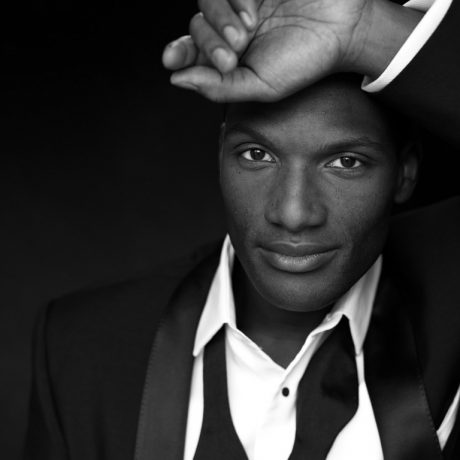
    Hey, I’m Staceyann Chin

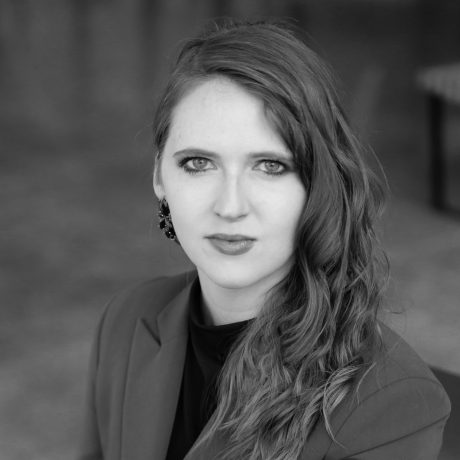
    Jamaican-born writer, poet and activist Staceyann Chin is a “wildcat woman.” A tigress. A marauder out for blood. She’s hell bent on eviscerating the patriarchy, colonialism, sexism, racism, homophobia and xenophobia. Fuck it, toss in the suffixes of all the “isms” and “schisms” that denote human oppression and delimitation, for she considers them just as odious. She’s calling for an all-out revolution.

    For the past twenty-odd years, Staceyann’s full-throated, gesticulated, irreverent, and unapologetic verses have propelled fingers to snap and audiences to bellow. Her firebrand style of poetry electrified the New York spoken-word scene in the early ‘90s with a Jamaican twang many might have not heard outside of the outer boroughs. She cut her teeth at the Nuyorican Poetry Café in New York City’s Lower East Side with an Afro made loftier by Asian roots, if the last name “Chin,” belonging to a Black woman, hadn’t already made that apparent—a kind of multi-ethnicism common in Jamaica.

    The provocateur, whose verses that often spoke about vaginas: their physiology, the power they hold and the beholders they make surrender won many a poetry slam nationally and internationally for a kind of free verse heretofore unseen for its brazenness and defiance. How dare she speak of such things with such passion and bravura? And to applause! With her performances and her many chapbooks, including one called “Wildcat Woman,” she caught the eye of Russell Simmons who cast her in the Tony-award-winning ‘Russell Simmons Def Poetry Jam,’ which appeared on Broadway. Since then, Staceyann has cemented herself among the greats.

    She has had a number of other one-woman shows on and off Broadway, including “Hands Afire” in 2000 and “Unspeakable Things” in 2001. Her 2005 show “Border/Clash: A Litany of Desires” about growing up a half-Black, half-Chinese lesbian in a religiously conservative Jamaica in the 80s debuted on Broadway to rave reviews. She followed it up with the American Book Award-winning memoir “The Other Side of Paradise” in 2009, where she went even deeper into her upbringing and the many traumas of her young life: being abandoned by her mother at birth, not having any relationship or connection to her Asian father, resisting the intrusive hands of her boy-cousin while she lived with her deaf grandmother, and being brutally assaulted by 12 boys while a university student for being a vocal, out lesbian.

    [power_magazine_shortcode_incontent_1]

    Not yet the acclaimed poet, Staceyann grew up admiring and later studied the works of such literary geniuses as Shakespeare, Wordsworth, T.S. Eliot and Derek Walcott in high school and university. Her earliest writing imitated the tone and style of her idols, but seemed inert, void of personal connection. They lacked both relevance and rush. It was not until she fled Jamaica after her assault—where she was perhaps already raw and cracked open—that she homed into a different kind of rhapsody. She discovered the words of Audre Lorde, Adrienne Rich and June Jordan, and the syncopation of Jean “Binta” Breeze. Staceyann not only found a stable of ideas with a sense of nowness but a staccato she could uniquely animate with her pained body and accented voice.

    If only out of vanity she could rest her laurels on her many accomplishments, including being interviewed by Oprah Winfrey and CBS’ 60 Minutes, but self-doubt is a motherfucker. It took until 2019 for her to release a book of poetry called “Crossfire: a Litany of Survival” because she thought, as spoken-word, her poetry would be dull in written form, even questioned whether they were any good. Now 48 and a single mother of a 9-year-old, taking stock of the lack of fortunes handed to her in life hits differently. Plus, there’s the little matter of a literary legacy to protect. Surely, her priorities have shifted. Witnessing the ever-widening chasm of many of America’s treacherous social fault lines, including #MeToo and Black Lives Matter, she sees a tsunami rising—even though she had been its oracle the past 20-plus years.

    Staceyann Chin, the wildcat woman, is on edge at a time of great hardship and especially for artists whose handicrafts would do much to abate our collective suffering. We sat down with her to discuss her experience, her thoughts on the state of the nation and what she’s imparting to her young daughter to prepare for the forthcoming revolution.

    Your grandmother played such a pivotal role in your life. Tell us about those formative years with her.

    It’s important to know that her impact remains significant and even critical in my life only because after she and I parted ways, there was no other adult who was consistently kind in whose care I lived. So, my grandmother looms large because of the scarcity in other arenas. The early years of my grandmother were certainly pivotal and critical and significant, in that, she couldn’t hear. So, the way that adults often correct children, I didn’t really have that as a backdrop from my adult, my grown up. She couldn’t hear what we were saying because she was deaf and couldn’t read. So, by the time I started reading, I could read what I wanted without her knowing exactly what it was. So, there was a certain amount of freedom with regard to my own developing philosophies. As a kid, my brother and I were talking about God and the Messiah and history and who was in the Bible, and if the Bible is the story of God’s people and if we are God’s people, why are we not in the Bible? And those were the kind of meandering conversations we had because no one was listening to us. Also, I suppose (now that I think about it), because she couldn’t hear, maybe she used more of her body to speak—maybe the way that she understood understanding. If someone’s talking to her, they would have to point a lot and use their hands. I mean my grandmother was certainly a creature that was dramatic.

    [power_magazine_shortcode_incontent_2]

    You said recently that you learned to tell stories because of her. How so?

    Teaching by watching and by telling me stories. I’m not a person who can’t hear. One may spend a lot of time interpreting markers in terms of what you do with your hand or your face or your body and perhaps she would reflect that in the telling of stories. So, almost everything she did she would perhaps act it out in some way or reference it physically. My Instagram post this morning or last night, I can’t remember, I was looking at pictures of my grandmother and when she would talk about dumplings, she would put her hand to say, “the dumpling movement” to making dumplings. When she would say, ‘My grandfather was tall, she wouldn’t just say he was tall, she would say, “Tall. High like so,” (reach her hand up high). But also, I think I learned timing from her; she knew how to lean in and to pull back and to whisper and to use silence. Now that I’m older and I can see it more clearly from a distance, I can see that my grandmother gave me quite a lesson in how to use drama to make a point.

    I’ve read that you used to sneak underneath the house to read. How did you discover literature, or did it discover you?

    I would read “Macbeth” and “The Merchant of Venice.” I don’t know if at eight or so I knew what those words meant, but I liked the sound of them in my mouth and said them. I also like the sound of the Bible. My grandmother was very religious. It’s left with me a healthy dose of respect for things that I don’t know for sure – for spiritual matters. If you were to pin me down and asked me to say what I am, I would say I’m an atheist. But I think on the edges of that definitive identity or religious identity or spiritual identity, there’s some respect and perhaps some awe for those who believe something I find difficult to believe or to have faith in something that you can’t see, that is only promised but not evidenced.

    In this exploration of literature were you at that point interested in poetry at all? When did that awakening or connection happen for you?

    I’ve always excelled in school in English literature and language and a lot of that had to do with recitation of poetry. I’m Caribbean. I grew up in Jamaica. We all recited “Daffodils” and Miss Lou’s poetry about the bananas coming. All those poems are still in me. I excelled at those things and not just excelled but enjoyed them. I was in school and doing well with poems and stories and writing and reading; I did well overall. When I went to high school that only kind of blossomed. But I went to a girls’ school, there were very few people interested in the sciences, and because I scored high marks in the sciences as well as the arts, I was compelled to do the sciences because they had to make up numbers for the classes when we separated into elective classes. So, I did the sciences in high school in 10th and 11th grade. Then, when I went to college, Shortwood Teachers’ College, I also did teaching (biochemistry, physics and math). When I finished there with one round of tertiary education, I said, “My God, I don’t want to do the sciences, it largely bores me, I’m not interested in it.” I found myself borrowing books from the English majors, from the history majors and reading those books instead of sitting down and memorizing equations and figuring out the human reproductive system. So, when I transitioned from Shortwood Teachers’ College to head to university, I said, “I will no longer be doing science” and I switched to literature and philosophy.

    What was it like to be an out loud lesbian during the 1980s in Jamaica?

    Jamaicans are very worried about things being thrown in their face. So, as long as the boy wants to be quiet in the choir and he wants to wear tight pants and he wants to wear more perfume than everybody else and he wants to be any kind of effeminate that he chooses, they don’t mind. He could do the hair, he could help them get their clothes together, all of the ways in which that we have used queer people and required their silence as a kind of pact, contract. Queer people have always existed in Jamaica along the continuum, but my transgression wasn’t that I was gay so much as it was that I was loud about it. I confirmed it publicly. I referred to it every chance I could get, and if I happen to have any kind of love interest, I insisted on our relationship not being fodder for the male gaze. I think that people were upset with that; Being gay is a transgression, but “Yuh, just bright. Yuh just bright and out of order” when you take it upon yourself to be telling people, “Yes, I’m gay. Yes, I participate in cunnilingus. Yes, this is what I’m doing. Yes, I would like to marry a woman” under the tree on campus. Feminism has done the work so that we can necessarily talk about women in that way, but I was out there, participating in the most crass of conversations around sex and sexuality and I think that really just set me up for a fight with people who require silence around women and their sexuality.

    [power_magazine_shortcode_incontent_3]

    Was it as a consequence of the assault that you then left Jamaica?

    It was more than a consequence; it was the reason I left. Before the attack, I thought that they would not talk to me, blackball me from social events, I would be a kind of social pariah. I expected some social punishment, some pushback. But I did not expect violence because we were on the campus and everyone knew that the campus was tolerant of all kinds of deviants with regard to conversations around religion, ambiguity with regard to sexuality. Everybody knew that university people were strange that they could get away with a whole bunch of things. I kind of felt like I was in that place where I was safe.

    Given many of the traumas you had in your young life, I was surprised it wasn’t until you came to America that you started writing poems. Is this so?

    I wrote some really terrible poems earlier on. I wasn’t serious about it nor was I surrounded by people who were intent on teaching me to write poetry. I had a lot of amazing teachers of literature on campus, but I didn’t take writing classes. I don’t think they offered them. Also, the poems existed in a language that was not mine. So, the poems didn’t have the kind of contemporary rush and speed and the beginning of globalization that now exists with us, where so many of the words I write are immediately accessible to even people who don’t speak English. There’s a way that the internet has made the world smaller and language has become more of a global tool. There’s a common language on the internet that we all participate in.

    As a feminist, there wasn’t very much. I love Lorna Goodison, but there was something stirring about Lorna Goodison’s work for me. I identified with it deeply. But it didn’t have the kind of unapologetic, unsayable note. She wasn’t writing about vaginas and sexuality and in the same kind of way. She wrote about women’s sexuality in a cloaked form and I knew it was there and identified with it and felt it, but it didn’t come alive for me the way when I came to the U.S. and I saw these poets in the in New York onstage, writing about a language that was alive and now and only referenced the ancient languages. So, it had a nowness; whatever I was living, I could write about it. I felt like a lot of the poems I studied in school were not necessarily about things that were happening now. A lot of the poetry addressed a kind of post-colonial reality or pre-colonial reality. Nobody was talking about young, black girls who wanted to be gay or who wanted to have more in life or who are resisting sexism as it was happening now.

    What is it about poetry that hooked you?

    When I came to you the U.S. I saw Jean “Binta” Breeze perform and she moved me deeply because her work had a kind of nowness attached to it. It wasn’t referencing or harkening back to an older time that didn’t feel like my time. Poetry seems to be able to hold 100 stories all at once. One line could have a thousand stories simultaneously occurring in a way that maybe literary, prosaic narratives didn’t. I still love those works. In fact, I spend more time with prose than I do with poetry, generally, but the creation of language, the kind of elasticity of it, the kind of bending and twisting. Prose seems to me like you’re weaving a piece of fabric. This is the way to weave it and you’re weaving it, and when it’s finished, it looks very much like a piece of cloth and you can use it for a certain thing. Poetry feels more like you’re just taking whatever form you can and you just twisting it into this giant thing that you’re weaving and it’s not just a cloth, it could be a chair, it could be a window. It just feels like it’s a thousand things all at once; I can tell the story of my mother, I can tell the story of my grandmother, I can tell the story of me, I can tell the story of my daughter, I can tell the story about survival, I can tell the story about not surviving all in one poem.

    Beyond the obvious, is there a difference between poetry and spoken-word? What is it about the performative part of it that makes it different?

    I think that you can have spoken-word that isn’t poetry just like you can have poetry that isn’t necessarily great for being spoken aloud. Some poems lose some of the texture when you put them onstage when people only hear them because you don’t know where those line breaks are, you don’t know where the pauses are, you don’t see how the words are—whether you make a tab to make a space or you drop down or you begin again in a new line. Edward Kamau Brathwaite, before he died, used to write poems that were visually so rich. So, if you were to attempt just to speak them, you would miss so much. I think that there are different things that are emphasized, depending on what the author intended, and the speaker causes to happen. I tried to straddle both. Maybe some would say because I straddle both, then my work is neither good in either realm, or you can say that I do a great job of straddling and so, I take maybe some of the good parts of the page-poetry and I translate it very well into performance poetry. But my work always begins as a crafted piece of work on the page. I think the more I perform it the more I discover in it that I maybe didn’t intend.

    [power_magazine_shortcode_incontent_4]

    There were not a lot of female spoken-word poets in the early 2000s who had your firebrand of revolutionary and feminist ideas or eccentricism. Do you think at all that your being Jamaican was a key part of that?

    It’s the same thing I attribute to my grandmother and her storytelling. The man on the corner in Jamaica is a storyteller. Culturally, we are storytellers. What is a storyteller if not a person who moves an audience to feel something and perhaps even act on something? My friends here who are not Jamaican, when they see me talking to Jamaicans, they realize how remarkably commonplace I am. I think when I come here and I speak out loud or say something, I think maybe Americans tend to have a sense of, “Oh my goodness. She’s so fiery and outspoken and forceful,” and I suppose there is some truth in that, but I’m just Jamaican on steroids. I’m remarkably banal in Jamaica because when a philosophical argument is in tow, or a debate about who is the fastest man in the world, or which song is the best festival song which year, or which is the correct way to prepare rice and peas, any of these moments could be easily translated into a performance piece in a second.

    My grandmother attended my birth with my mother and so if I asked her like, “So, Grandma, you said I was born just after midnight, right?” And she’s like, “Yeah! Yeah! Christmas Eve your mother come home…Wait, wait…because Delano was born in the morning, cause you born ‘72, right? Yes. So, Delano was ‘69. I remember ‘69 because it was raining, and because I was working at a police station.” Before you know it, four hours from now I’m still saying to her, “Can you reach my birth?” because she must tell you every story in between and I’m not bored by her storytelling. That is common in Jamaica.

    In every description I’ve seen of yours it highlights your Jamaican nationality. You’ve lived in the US now longer than you have in Jamaica and I wonder how you consider your identity now caught between these two cultures?

    It’s actually almost exactly half at this point; so, half in Jamaica and half here. I think it’s very difficult to erase the first stains of who you are, the first color imprint. It can’t ever be washed away. So, I can’t forget my accent, and perhaps I am less prone to forget it because my mother was so prone to forgetting hers. My mother left us when I was born, and she did live a life completely informed by a desire to forget where she came from. And so that forgetting had to do with telling people lies about where she was from. Those lies in turn after almost 40 years have become truth inside of her brain. So, there’s a place where reality does not meet what she desires to be and so she struggles with that. She wanted to forget the two children she left behind. She wanted to forget the life of pain. She was living there until she was 23 years old. My mother and I migrated at the exact same time, but when you talk to my mother now, having lived in Montreal, Toronto, Rio and Cologne, Germany, there is no trace of a Jamaican accent. Like none at all. And I remember when I was on Broadway, we would get all these flyers, all these letters delivered to the Broadway show for us. Most of my letters consisted of people offering to help me to lose my accent. I remember digging in and refusing to say water or butter (sounding like the double ds). I wanted to say butter and water and bottle all the time. Even now I struggle with my kid because when we’re doing phonetics and learning to spell, there are many words that she will hear one way and spell another because it sounds like a “d” to her rather than “t.”

    Derek Walcott and V.S. Naipaul figure highly in Caribbean literature. You studied with Walcott for six months before he died. What did you learn from him about poetry?

    Using constraint; the power of not saying a thing. There’s great power in that. There’s power in the silence of it, especially if you make the audience aware of it, but you don’t necessarily say it.

    He said to me, “You have such a gift with words, if you would stop writing about your vagina and women’s rights. In 100 years, nobody will care about women’s rights (because maybe those battles would have been won) and nobody will care about women’s rights. You have to write about things that are enduring.” He didn’t think feminism was a matter for the long haul of philosophy. He and I diverged on that greatly; argued about it a lot. The way that he used that philosophy was deeply sexist and classist with regard to language. Not just the language, but the subject matter, like the quiet around girls and menstruation, the secrecy around sexual violation, the kind of privacy that is afforded to perpetrators of violence against women and children. I like to say it plain and then paint with poetry, and I think [he] likes to paint poetry and then maybe sprinkle a little bit of the plain over it.

    There was a way that twisting the English language in minute ways seemed to him more valuable and more of a skill to be admired than he thought breaking the language completely open. He didn’t think that that was powerful. He thought that that was brutish, which is interesting. It’s the conversation about Caliban and Prospero about language. The master, the more you learn his language and the more you learn to manipulate his language is the more valuable you become and the more you are seen as a creature of value. However, if you were to just chop it up the way that ordinary people do, twist up these words and slam them, lose the agreement between the subject and the predicate, throw out the fancy words and twist up the ordinary words the way that Damian Marley did in “Welcome to Jamrock,” then that isn’t necessarily seen as the same kind of high torch poetry as, say, when you can take Shakespeare and cleverly twist three or four phrases from Shakespeare and add a Jamaican phrase or two.

    [power_magazine_shortcode_incontent_5]

    Why did it take you 20 years to release a book of poetry when you had all that much material?

    The two things are connected. For a long time, I thought that the language in which I wrote, the subject matters found in my work and the kind of brazen, untraditional literary realities in my work would make it not really poetry. So, there’s a large part of me that still was asking myself, “Is what you write poetry? Does it belong in the canon?” Having studied with Walcott, he would speak of my talent as a poet, but it would always be countered with, “Man, you’re going to be an amazing poet when you stop writing these things, when you start writing about enduring philosophies.” Maybe I was waiting on those enduring philosophies to emerge in my work and for the supposedly banal—the matters of being female and being silenced under the patriarchy. I was maybe at the same time holding onto the subject matter, but perhaps waiting for some part of me that would become more Walcottian and I never did. Because I never did, I never thought that the work was ready. And then I looked up when it was 20 years later and the conversation around Black folk, immigrant folk, women, about all the silence that is a lie around our work and our history, and I said, “If the internet goes blank tomorrow and if all my digital files disappear and then I die, it will be as if there was never this period when a Black Jamaican girl wrote these things, and that pushed me.”

    I saw your reading of ‘Tsunami Rising’ about how white people have co-opted so much of Black people’s experiences, especially Black women and I wonder what your thoughts about a different kind of tsunami are, that of the Black Lives Matter movement, which at first wasn’t resonating with the white American public until the death of George Floyd and it brought about racial unification in a way we haven’t seen in a while. What are your thoughts about it?

    Rather than the unification that you talk about, it very clearly denotes the rift down the center of the American political world where actually half of this country believes that there’s no racist problem here and that Black people are making more of it than it actually is, and that white people are losing too much ground. I feel like America will have to come to terms with racism. It would have to come to terms with the brutal kind of racist patriarchal norm that it has championed for hundreds of years—story goin’ come to bump. I think the last four years under the Trump administration has made it so that people can no longer say this problem does not exist. But we are nowhere near coming to a conclusion about the solution it requires.

    Much of the space that is being given to Black women is ceremonial. Much of the space given to the conversation around racism and violent racism in this country is a kind of panacea, a Band-Aid, a PR stunt, where people want to be seen as if they are making progressive choices, but the real power is still outside of the hands of people of color and women, particularly Black people, as evidenced by what happened when the pandemic brushed across these United States. Who died? Who is without work? Who continues to make money as the country is in the worst economic downturn in 100 years? Rich, white men? White people of means? I mean, how is it that the world economy crashes and then Jeff Bezos and those people, they’re like 100 billion dollars richer? It’s kind of ridiculous! The economy crashes, but you get super rich. It’s a great time for you because you profit off of the sorrow and trauma and bad luck experienced by everyone else. Something is afoot here. Something is terribly wrong with the way things are set up and what we witnessed under the Trump administration is a kind of illumination of that and people thought that there was going to be some kind of breaking, but America quickly shifted and put Joe Biden in place to calm the waters and perhaps push back the kind of radical political push towards change that was going to probably end in Civil War.

    [power_magazine_shortcode_incontent_6]

    As an artist, how are you and your artist friends weathering this time through the pandemic?

    I haven’t worked in nine months and largely I survived. I have always posted work online. There are ways now to monetize your online content and I refused to participate in the monetization because I think after a while I will start writing towards the money. But I think if I’m not writing for a public that is paying me then I think I can perhaps write more honest work. So, I write it and I give it away for free all time. Some of those people who have means or maybe some people without means, really, maybe have a little girl, will CashApp or Venmo. So, I live completely at the mercy of strangers, the generosity of strangers. Some days, some people will Venmo me enough, and some days I’ll make my bills. Some months drag and I won’t make all of the financial responsibilities I have. The wonderfully, horrible thing is that my experience is not singular. It’s happening to everybody. Almost every artist I know, we are all broke and we are at the end of our financial tether, and our credit cards are maxed out, and we are just waiting for either the next stimulus package or just kind of waiting with bated breath for that vaccine, so that we can start figuring out how we’re going to earn our living again. It’s a rough time and I bought a house just before the pandemic, so I was in the middle of renovating and then the world went crazy. The difficulties for me are real and trackable and present. The only thing that keeps me alive, and keeps me going, and keeps me sane is that you’re not the only one. So, if you are to go over the precipice, you won’t be going alone.

    You’ve expressed that you credit your grandmother’s hard-working history and the pain of your mother’s absence for your work, and I wonder now that you are a mother what are the themes of your poetry today?

    I write towards a more equal world. I write towards the freedom of those in chains, whether they are financial or philosophical or actual chains—for those people who are incarcerated still and even those who we are planning to kill; not just hold them in boxes, but to kill them at the appointed time of our choosing. I’m concerned about the lives of people of color. I am deeply interested in the question of immigration, migration. What is it? What does it do to us? What do we gain? What do we lose from it? How does it color us? Does it make us different from people who sit still in one place and never move? When you have a child in another country, what does it mean about tradition and identity with regard to the family? Those things concern me now.

    You have a young daughter. What are you educating her about race and womanhood, especially as a first-generation American?

    I try to tell her that her body is her own; I begin with that. I tell her that she should respect the bodies of other people. I try to tell her that her place in the world is only guaranteed if she works for a better version of it. She earns the right to be a legal citizen of the world by working towards making the world better for other people who come after her. I try to give her space to speak and to argue with me. We have loud, rushing arguments with each other. But I’m also Caribbean and so I like to tell her, “You can’t do that. Don’t do that.” Then she’ll tell me, “How is it that you’re telling me my body is my own and I can’t do that?” Then we go into the tailspin of the Caribbean, progressive, radical, feminist mother, raising a child with a history of ways of being embedded in her DNA. It sends us into a tailspin, and we write more poetry.

    So, is the ‘wildcat woman’ tamed?

    At first glance it might seem so. I imagined myself a bit of a caveman before I had a child, where I was kind of roaming from whatever may feel good; I’ll just follow my nose. I’ll just go here, to Britain, I’ll spend some time in Scandinavia, go to Jamaica, I will move from lover to lover. But now that I have a child, I feel like I have to evolve into the hunter-gatherer era of my life where I have to hunt and gather to feed more than one person. In the last year, I’ve had to come to terms with becoming the farming person, where you have to sit still and plant. I’ve become a person who is interested in the permanence of home and what that means.

    I think it is remarkably radical to raise a kid the way that I’m raising a kid. I tell people all the time in my twenties, I walked around with a sledgehammer and broke anything that I could find. In my thirties, I tried out the, “Okay. Well, let’s see if we can do it more of a scalpel like approach.” Now that I’m heading towards 50, I can completely see the need for both. So, maybe in the hand that is tucked behind me I have the scalpel, and maybe the sledgehammer is sitting at my foot, and then I decide which is necessary, or when to use both. I think I have bursts of being wildcat woman and I also have times when I am required to be the tamed one, but I feel them equally present.

    What are we missing to kickstart the revolution you so often speak of?

    I just saw Ma Rainey’s Black Bottom with Chadwick [Boseman] and his character is remarkable, in that he was trying to plan ahead where he was going to trick and do this quiet conversation with the white man and smile and, “Yes, sir. Yes, sir.” And then he was going to use that to his advantage. But in the end, he became the one with the knife, with the violence erupting from him. And I don’t know if one method works anymore. I think in a real revolution where all of the body is present—and when I say “body” here, I don’t necessarily mean just your whole body, like all of you: whether you are a fighter, or a planner, or a wait-and-seer or an eruptor. All of the body meaning the body of people who will form that revolution who will rise up against injustice. I feel now that there is desperate need for all hands on deck.

    I’m but one body, and each moment I have is just one moment in that long journey. And so, my teaching Zuri to think critically and to take up space and to challenge ideas that seem unfair is a part of the revolution because then, you create the next generation of people who will seed the next Civil Rights Movement, will seed the next secession from big imperialistic countries that walk into other places and occupy them. I’m not quite concerned with how people see me. I’m more interested in what I really am. Sometimes you can’t be the person in the front making the big speech, but you can be the person guiding the pen of the person who will write for that person. So, we need soldiers coming up and someone has to train them and love them and encourage them and encourage them to dream beyond what we even saw for ourselves or even saw for them.

    Follow Staceyann @​
  • Hey, I’m Rob Woodcox

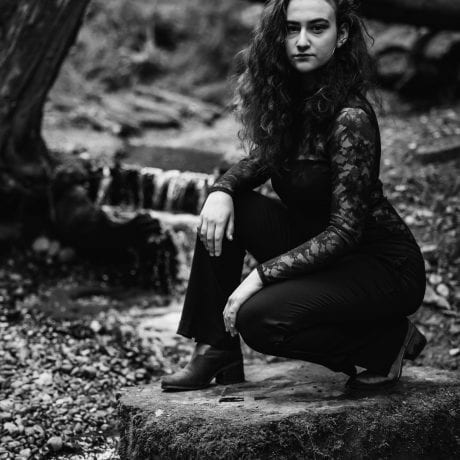
    Hey, I’m Rob Woodcox

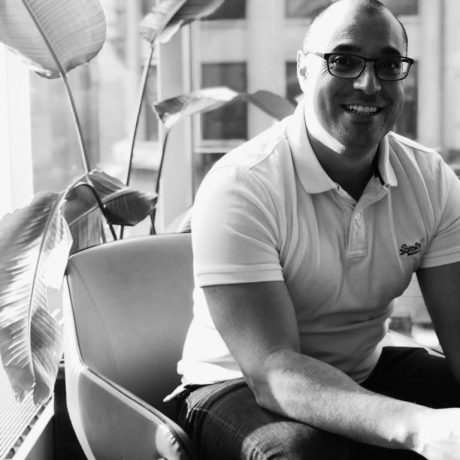
    Bodies in suspended animation float mid-air. Each one an expression of jubilee: an arabesque, a grand jeté, an attitude derrière. In every hue, a collection of dancers defy gravity in an aerial ballet, filling space and taking peculiar shapes—in the foreground of a sand dune, scaling the walls of a cathedral, or referencing Leonardo DaVinci’s Vitruvian Man doing barre work before stairs that lead nowhere. These are not merely abstract descriptions of dancers in motion but of images of photographer Rob Woodcox. They are a fantasy. Rob calls his artform realistic surrealism. This is because the images that comprise his dance series are engineered both in the mind and body—and at times aided by nifty software. Photoshop, primarily. 

    Tree of Life
    Time Travel
    Unity
    The Mountain
    The Tower

    Rob has created a genre all his own of naked and barely clad bodies in flesh-toned outfits that curl, swirl and pile up, typically in stunning landscapes that show harmony in the juxtaposition of the deliberate arrangements of the models in the foreground and the breathtaking, natural scenery in the back. In one image, aptly named The Mountain, bodies are stacked like a pyramid of cards, echoing the surrounding mountain peaks. In another, called The Tower, Rob’s subjects form a sort of human Tetris, balancing on point and in handstands on others’ body parts. Their surrealistic feats exclaim our potential as human beings, our inherent ingenuity and what we can accomplish when we work as a collective.

    Rob also does other types of photography, including fashion, that incorporate a depiction of life that is playful, dreamy and queer, using movement and color more as character than adornment. Having recently been ghosted by a date, he created a series of images to depict the disquieting experience. Surrounded by several floral arrangements, he along with another model curled up on his living room floor to create the montage:

    [power_magazine_shortcode_incontent_1]

    “It’s a three-part image,” said Rob. “In the first image, we’re embracing each other, and the flowers are full of life. In the second image, they start to wilt. In the last image, the flowers are all black. The other model is drifting out of the image. It’s kind of simple but you go on a date with someone and then they just disappear, or you have a crush on someone who has become a friend but then the moment they realize it, they go ghost on you; that rotten feeling of like, ’What did I do wrong?’ or ‘Why is this person choosing not to communicate with me during this time?”

    He says his creations come to him in visions or patterns and can be triggered by vista or lyric. They often carry a narrative or make a statement, such as displaying racial and human interconnectivity, representing queerness with verve and vivaciousness, or fostering body positivity. These he calls conscious photography.

    Miss Fame
    Michelle Hebért
    Nike x Arena Martinez
    Interconectivity Series
    Ghosted 1
    Ghosted 2
    Ghosted 3

    “There’s a photo I created years ago called All in Our Boxes, and it features nude bodies in boxes that are hanging in a forest. I remember that I was sitting in my living room and it was freezing in Michigan. It was probably like -15 degrees, just like inhumane outside, and I would just remember thinking, ‘Wow, all of us are just trapped in our boxes.’ Then my mind started wandering to a broader idea. In general, people really stay in their boxes. They’re told, ‘You should be a lawyer.’ ‘You should go to this school.’ ‘You should marry this person’ and they just follow this checklist of life or society. They always try to stay in the safe box, they don’t take risks. So, I created this photo of everybody and most of their poses are curled up, kind of like fearful in their box, and there’s just one person poking their head out of the box like he’s thinking about leaving that bubble of safety.”

    All in Our Boxes

    It would have been a shame to have lost Rob’s unique perspective in the canon of photography, as he nearly called it quits. He struggled to make ends meet until he hit his stride the last two years more compelled to be self-employed than to be constrained by somebody else’s vision as an employee. Aided by a few projects that allowed him to travel and gain more exposure, he ultimately published a well-received coffee table book of his works in March of last year called Bodies of Light. The reality of the economic uncertainty of a profession as a photographer is one he thought he overcame much earlier when his adopted parents thought his career decision was too risky, but his love of the craft was unrelenting.

    [power_magazine_shortcode_incontent_2]

    He grew up in the Midwest in what he describes as a “Christian bubble,” where he had no reference points for queer culture, high fashion or the magazine editorial world that have become fodder and a resting place for his art. It was not until he attended Washtenaw Community College for photographic arts that he discovered personal heroes Richard Avedon, Salvador Dali, Annie Leibovitz, René Magritte, Eugenio Recuenco and Tim Walker, whose work helped to inspire his young imagination. 

    These days, Rob lives an itinerant life in between New York, Los Angeles and Mexico City, teaching and doing commercial and personal shoots, creating art that is a kind of tethering of dreams, memory and reality, contributing his unique vantage point to a legacy of artists with killer instincts and a discerning eye more acute than a camera lens.

    We wanted to get into Rob’s head to learn about his upbringing, understand how he comes up with his imaginative creations and see how he’s been weathering the pandemic.

    What is your earliest memory?

    My earliest memory is actually from preschool. I must have been three or four years old and my parents would take me to this sort of daycare school situation. There was this giant castle playground, but it was inside a church. It was really cool for me as a kid. Who knows? Maybe my initial fascination with fantasy and things like that was growing up playing in a castle. I just remembered how weird that a church had this castle inside for kids to play on. It probably stands out too because I think most people can’t remember being three or four years old once they’re older. 

    You’ve been public about being an adopted child. Can you talk a bit about being adopted and growing up? 

    I feel very fortunate that I was adopted within my family. When I was six weeks old, the cousin of my birth mom, adopted me and basically rescued me from a pretty unfortunate situation. My birth mom struggled a lot with mental illness, had bipolar [disorder] and schizophrenia, and just wasn’t able to raise me. I was lucky, first of all to have been taken care of by my family because a lot of kids in foster care don’t get that. They end up in more abusive or in alienated situations. My family was very honest with me from the beginning. They told me my history; they didn’t try to hide that I was adopted. They told me about my mom. I even got to meet her a few times when I was a kid. Unfortunately, she lives in institutions, so I haven’t seen her in years, but I just always remember feeling so fortunate. 

    A really funny story: I was in second grade and the class bully came to my lunch table and he had found out that I was adopted, and he goes, ‘Hey, man, I feel really sorry for you. I heard that you were adopted.’ I looked at him and I was like, ‘Well, actually I feel sorry for you because my parents got to choose me, and your parents were stuck with you.’ I was so proud of being adopted because my parents really gave me that gift of knowing that they chose me and loved me.

    What were your childhood dreams?

    I went through phases of wanting to be different things: I wanted to be an urban planner, a pilot, a park ranger, a world traveler. It’s crazy because I’ve made that dream come true. I’m only 30 and I’ve been to so many places. I swear, when I was a kid, I literally drew maps for fun. I would study maps and study different regions of the world as a pastime. It’s funny that I live in Mexico City because in the second or third grade, we had a project to research an Indigenous culture and I chose the Aztec people of Mexico. I literally built a 3D version of Tenochtitlan, which was the capital city of the Aztecs that became Mexico City. Now, I’m living here, and I’ve been to the part of the city where there are still canals and you can take boats and stuff. It used to be like Venice – in the middle of a lake – the Aztec city. Most of the lake is gone now. I think what’s cool about photography is that it sort of combines a lot of my different interests: I get to be a location scout, I get to be a set designer, I get to talk about fashion, most importantly, I get to interact with people.

    [power_magazine_shortcode_incontent_3]

    How did you get your start in taking photographs?

    When I was a kid my mom would send me to summer camps with a disposable camera. The first time she did that, I literally just took pictures of leaves and plants because I loved nature and she was like, ‘No. Next time you go to camp. You have to take pictures of people. I want to know what you did at camp. I don’t just want to see pictures of plants and stuff.’ She basically would tell me like at least 50% of the pictures have to have people in them. She started giving me these assignments when I was a kid. Ever since then I just liked the idea of taking pictures, but I didn’t take it very seriously. But, coming to the end of high school, it was like, ‘What are you gonna do for your job? Where are you going to go to college?’ All those things were happening, and I was like, I don’t want to do anything typical. I just want to be an artist. That’s all that it kept coming to my mind. I didn’t know why. I just knew that was the only thing that was ever interesting to me was tapping into my imagination and creating stuff. 

    My senior year I was on yearbook and I started using a more real camera (a DSLR) instead of a point and shoot. Something in me was like, “You need to do photography. You just need to try it. You need to go to school, learn everything you can,’ and I told my parents, and they were like, ‘No, you’re never going to make money. Do a year of basics and then decide what you want to do.’ So, I did that. I went to a local college, did a year of the basic stuff that you have to have for any degree. I didn’t give up. I was like, ‘No I want to do photography.’ Some friends had told me about another local school that had a really good photo program, sponsored by Canon — Washtenaw Community College in Michigan. My parents agreed, finally. It took a year of convincing. I started on film. I spent a year doing 35-millimeter film, developing in the darkroom and I just started falling in love. I’ve never fallen harder for something.

    How has your early life influenced your work?

    Always being the youngest and always being pushed to embrace my imagination as a kid has definitely influenced my work. That inner child, I’ve tried to never let go of that. I’m still really imaginative. I still go backpacking for inspiration. I spend weeks in nature every year, which was a big thing when I was a kid; we went camping as a family all the time. I think being the youngest and learning from my older brothers and sisters has given me this outlook on life that I should always be listening and watching and learning from other people. In my work I include a lot of diversity. It’s just what’s natural for me – to be always interested in what other people have to say and how they live. I remember when I was in first grade, we had a foreign exchange student from Romania in our class and she could barely speak English. I remember she was the most interesting person to me. I didn’t care about anyone else in the class. I was like, ‘She’s going to be my best friend’ and she was. We became best friends.  We practiced English together when I was like six years old. I just remember that was the most interesting thing to me; someone that was different from me in whatever way. I think all of that has stuck with me, as I’ve become a photographer. I guess you can see it in my photos, I suppose

    A theme in some of your work is showing these amazing landscapes, even though the human subjects are in the foreground. What’s the message you are evoking by their juxtaposition?

    We are nature—humans. We are an extension of nature and we rely on nature heavily to survive. So, until we start seeing ourselves as part of nature, I don’t think we’re going to take environmental crises seriously. The planet is a whole living organism. In the early nineteen hundreds, we still had about 65 percent of wild spaces left. At this point, we only have 30 percent left. A lot of animals are becoming extinct. The thing is nature will repair herself eventually, but we depend on her. We depend on her for clean air, clean water, for sustainable temperatures to live in. My hope is that people will see my photos and see how beautiful that juxtaposition of humans and nature is and want that for themselves and want that for all of us, so that we can continue to live a symbiotic relationship with the planet. 

    [power_magazine_shortcode_incontent_4]

    Why focus on what we are at risk of losing and not what we’ve done? In other words, why not show our own ugliness?

    I think we see our ugliness every day. That’s all we see on the news. I want to give people hope with my art. I want them to see what I experienced when I go into nature, that beautiful relationship. I’ve spoken with kids from the inner city, I’ve spoken with other artists, I’ve spoken with people from all demographics that live in cities, and so many people have grown up in urban environments. I think the majority of humans alive today grow up in urban environments and they don’t even know what’s out there. Being at one with nature; so many people have lost that connection. The thing is, if you live in a city and you’ve never seen a mountain, you’ve never seen a glacier, you’ve never swam in a clean river, you don’t know what is at stake because all you’ve seen is an urban environment. So, I think people see the ugliness every day. We see the mess that we’ve created all the time, and I can talk about that in words and I can write about that in the captions of my photos but the art itself I want to show what is possible. 

    There’s a show on Netflix Abstract: The Art of Design. It’s a show about design, architecture and art. There’s a really interesting graphic that talks about how art inspires design, which inspires infrastructure, which inspires science, which inspires art. So, it’s like this cycle, and each part is equally necessary. I think for humans to progress and for us to create solutions to a lot of the problems that we’ve created in the world you need the thinkers and the dreamers that are artists to come up with new concepts of how to solve those problems. 

    You’ve described your interest in using dancers as subjects in your work this way: ‘It’s like tasting food from a chef and trying to go back to microwave dinners⁠—there’s no comparison to working with dancers.’ What is it about dancers that moves you so?

    I think the first time I worked with a dancer, I vocalized an emotion that I wanted to convey, and they immediately captured that with their movement. In my work, it’s important to work with all bodies, with all types of people, but specifically when I get the privilege to work with dancers, it just moves so smoothly. You can convey what you want, and they’ve trained their whole life to be able to move in specific ways. Working with anyone who’s a specialist at what they do is just a really thrilling experience because you get to witness all of that training and all of that work that they’ve done, and it truly becomes a collaboration. I think when I’m working with someone who hasn’t trained their body to move in specific ways, it’s just a totally different experience. I’m playing much more of a directing role because I have to try to get them into my vision, whereas a dancer, 90 percent of the time I’m just capturing what they’re giving me because they’re already giving me something that tells a story. So, it’s just two different ways of working and I find it really fascinating to work with dancers because of that.

    Given that we have been in a global pandemic have you continued to work and how have you been accommodating to keep your subjects safe?

    For the first few months of quarantine, it was really important to me that I set an example and take that seriously. So, I only ever worked with one or two subjects at a time, socially-distanced, all of those measures. I did some self-portraits to document how I felt during the time. As a lot of people can probably relate to, as the pandemic progressed, I feel like people started developing their safety bubbles of people, because we’re social creatures—I’m sorry, but even in a pandemic, you cannot be totally isolated all the time. And also, there’s a level of privilege in being able to just stay home 100 percent of the time. For someone that’s an artist, who works freelance, that’s not a privilege that I have. I have to keep working, I have to keep creating to have an income. I started finding safe ways to create, keeping it small, keeping it just the people in my bubble. If I was going to work with people, I would get tested, I would ask them to get tested. In the U.S. it’s a lot more accessible. I actually did produce my first dance set out in the desert in October since quarantine started. It was a little difficult for me. I asked everybody to get tested. Most of the posing was either spaced out or in partners with people who had been together throughout the quarantine. So, even in the new photos, there was never a moment where everybody was on top of each other all at once. I strategically made the photos so that people were spaced out.

    [power_magazine_shortcode_incontent_5]

    A subtle detail in your work is the inclusion of diversity in shades, shape, ethnicities. It seems to be a deliberate choice. Why?

    I think as creators, especially visual creators, we hold the power for how society progresses. You can watch countless interviews with young people who were plus size or Black or Latino in the U.S., or queer for that matter, who didn’t see themselves in media. Then you see those first icons that did it: Naomi, Ellen, the people who became an icon for queer people, for plus size bodies for, Black people, and those moments matter. Those changed everything for people. Those told a young person, ‘You have a place in the society, and you belong, and you can achieve your dreams if you want to.’ So, it’s really important to continue that narrative and to make sure that when I’m putting work out there, I’m including everybody because everybody belongs in this world, everybody belongs in my world that I want to create. 

    There’s a level of surrealism in your photographs with the suspended animation and hyper real positioning of your human subjects. But it also has a sense of order and symmetry as well. Have you created an entirely different artform, you think?

    For about five years I was traveling the world teaching workshops and I would refer to my work as ‘realistic surrealism.’ I had never really heard that term before but I just kind of made it up and was like, ‘This is how I see my work.’ I want people to be able to see something beyond what they see every day. I want to inspire people to think of that next level of possibility. So, on one hand, you have these humans juxtaposed in nature and that connection is beautiful. But also seeing humans create these structures by depending on each other is also a beautiful aspect of the work that is important to me; the importance of how relying on a community or investing in the community can raise your abilities to the next level. If it weren’t for my community, I wouldn’t be here today. 

    What’s the overall message you want people to take from your work?

    That’s a hard one because there are many messages, I suppose. I think if people can just feel encouraged or inspired to do something when they see my work, that’s success for me. Whatever it is. Something that I’ve also been learning this year is the more we are ourselves, the more we are encouraging other people to be themselves. It’s a symbiotic thing; the more I see people who are just trying to be themself, trying to share reality with who they are and what they want and what they see, the more I’m encouraged to do it and vice versa. I want that to be like a domino effect. So, I just want to put out what I see and how I see it, I guess, and hope that it connects to other people. Whether it helps them, whether it encourages them, whether inspires them, that’s all like a cherry on top. 

    [power_magazine_shortcode_incontent_6]

    What advice would you give to a young queer person who hasn’t yet had their ‘aha moment’ or know how to recognize it?

    Get out there and explore. I think getting out there and exploring is really important because you don’t really know. In my experience, I was living in a bubble. I didn’t know about the fashion world, I didn’t know about the queer community, I didn’t know about drag, I didn’t know about other cultures. There’s just so many ways to experience life, and I was sheltered from a lot of that. I think getting out into the world, exploring whether it was through going to a gay club or creating with other queer artist or traveling to another country or even state for that matter or city, all of those things have contributed to opening my eyes to the possibilities of the world. I think just exploring who you are by having new experiences is a really great way to figure it all out. 

    What’s the best piece of advice you never got?

    To trust my gut. I’ve been meditating, taking into account astrology and different belief systems and exploring that. Everything talks about intuition and trusting your intuition and all that stuff. I think that people are taught to fulfill expectations instead of fulfilling what you want to do or what feels good to you. My advice is to always follow your gut, always follow your intuition. We have that power within us. Our minds are really powerful, and we react naturally to the environment around us. If our mind is telling us, ‘No. This is not good for you.’ You should trust that feeling. And when it tells you that it loves something, follow that instinct as well. Follow the things that really drive you because you only get one life and if you end up at 80 years old never having done anything that you loved, it’s a little bit sad. I think it happens and I think it’s never too late to just start investing in what you love no matter what that looks like whether it’s just a hobby, whether it’s your entire job. None of those labels matter, just do things that you love, and I think that it makes life more fulfilling.

    If you didn’t have to worry about being successful, what would you do with your life?

    I would definitely go to live in a nature preserve. I would probably get involved in some sort of environmental stuff, and I might do that anyways. My dream is to live in a hobbit house in a forest and have a flat in the city where I go occasionally and invite other artists to create in nature. I want to create a whole retreat center where the kids from the city can come learn about different art forms and be trained by different professionals and genres and stuff. That’s a good dream of mine.

  • Hey, I’m Antonio Baldwin

    Hey, I’m Antonio Baldwin

    Antonio Baldwin is himself; unapologetically so—although, perhaps, not under his real name but as Tony Talks, the name that has brought him nearly 1 million followers between TikTok, Instagram and Twitter. In fact, he’s sometimes male but most times female with a bevy of bouffant wigs and insufferable attitudes. He’s funny. Not like your round-of-the-mill social media influencer, even though the platform and the chuckles can be similar. Let’s just say he takes his craft a bit more seriously and puts in a bit more thought.

    Antonio’s work is more sketch comedy with a beginning, middle, and end than the typical simple riffs and parody in response to media events and pop culture. He shoots them out of his Atlanta, Georgia, apartment and infuses the comedy with quips and witty banter, great timing and editing skills that amp up the funny, strewn amid living room furnishings and a whole kitchen counter – not meant to be a part of the scene but whose presence adds to the farce. This is because he’s had some professional experience in front of the camera as an actor. He’s also taken classes in graphic design and TV production in high school and college, where he dropped out after only two semesters. He will be the first to tell you that he is not an academic and describes his time in school as dull and uninteresting, “I felt like a robot. It felt like something that they were just throwing at me and I didn’t feel I would need any of this stuff. But when it comes to making something that I’m actually interested in making or creating something, that’s where my brain started tingling.”

    His interest in filming and editing began while he was at Gar-Field Senior High School in Woodbridge, Virginia, when the app Video Star came out that allowed users to make short videos and add effects, “I felt like a little Beyoncé. I felt like the star of my own show. I was consistently making different videos, editing it, and the imagination just took me from there.” This obsession later migrated to Vine, before Vine itself disappeared in its characteristic six seconds, but not before he had cemented himself a following.

    He’s appeared in a feature film, a television show, a TV pilot and a commercial. Rather than seeking parts in someone else’s script that he saw as stereotypical roles, he’s steadfast at creating his own. His sketches are different one to the other, although there are five recurring characters and there’s a distinct formula to his comedy. Pit a match of wills and egos in a power struggle between two characters, exaggerate the circumstance and dialogue in a relatable scenario, and sit back and watch the impending combustion. Usually, the erstwhile indefatigable of the two characters breaks down, cowers or even dies, but the victor always struts off to glorious visual and sound effects—sashay, heal clacks, hair toss and all. No doubt, he’s mastered the ability to tell a story in fewer than 60 seconds for an audience whose attention span is as short as a swipe on Tinder or Reels on Instagram.

    [power_magazine_shortcode_incontent_1]

    LJ Wellington, a London-based Instagram user and a follower of @IAMTONYTALKS said, “Tony Talks is very consistent each day he posts something new. That’s dedication. Also, the way he even edits is well put together and really thought about, down to the smallest details. He ain’t only funny but he gets into each character and most of the characters you can relate to. He needs to be on the big screen.”

    Antonio says some of the characters and plots on Tony Talks are inspired by the women in his life and from his regular job at a call center. In fact, some of his videos involve the types of conversations you might have had with call-center representatives or a boss. They may not be as surreal as, say, a recent sketch about a call-center operator, Brandon, who couldn’t spell his own name and died a thousand deaths, as his coworkers and customers seem never to remember it either.

    There’s something pithy and personal in these stories that for all this attention, love and adoration, Antonio is waiting to get fully launched. He has come of age at a time when Instagram fame and following has kickstarted many a career in music and entertainment in a grander or more established setting. His genre of social media worship of funny male-dressed-in-drag hasn’t yet lost its thunder, but he has sights on establishing a platform that can allow other creators to find their own voice and passion. Although he hasn’t entirely given up professional acting work, he aspires to produce his very own sketch comedy with a television network.

    In the meantime, he is happy putting smiles on the faces of nearly one million people weekly sixty seconds at a time, during this uncertain period of great human suffering, “It’s easy to be sad and it’s hard to make yourself happy. Hopefully, that’s where I come in.”

    We sat down with Antonio to talk about his acting, his comedy and future plans.

    [power_magazine_shortcode_incontent_2]

    What was it like growing up an only boy in a family of mostly women?

    I was very influenced by my sisters and my mom. I have an older sister and two younger sisters. I think that’s where half of my videos came from. Just being around them 24/7, arguing and mom being mom. So, it’s just a lot of their personality traits that created the videos, I guess you can say.

    You’ve said publicly you weren’t good at school. What about traditional schooling didn’t work for you?

    I was a C student like forever. With my sisters they are really good in core classes like math. My sister’s favorite subject is math. My mom kind of held the standard different for all of us; my sister, she had to get A’s. I get distracted very easily. As long as I got a C and above (C’s and B’s) my mom was content that I was trying my hardest. And then I went to college for two semesters and I dropped out because I realized it wasn’t for me because you can’t just go to school and learn what you want to learn. It wasn’t really for me. So, that’s why I was like, I’m gonna go ahead and do what I want to do.

    When did you realize that there could be a future for you in film and acting?

    When I was young, I auditioned for Sweet Life on Deck. It’s a little Disney show. Come to find out it was a fake audition that I went to. It was a Pop-Tart commercial that I had to read for and realized—okay. This is it. I want to be in front of a camera. Little did I know down the line it would get more so towards comedy. I thought I wanted to be a dramatic actor like dramas, soap operas and stuff like that. I like making people smile, so it started turning into more of a comedy type thing.

    [power_magazine_shortcode_incontent_3]

    You starred in two short films, a feature film, a TV pilot, a television show, and a commercial. How did you get your start?

    A guy named Duane Dixon gave me my first shot at being in a movie. Duane became my mentor. He was awesome. My very first time being on a film was Turnt. I had one line. I forgot what it was, but I practiced the fuck out of that line. It was one word and I stayed up all night, rehearsing that one word. It had a guy who played Notorious BIG; The Gift and the Curse, The Gift and the Curse 2—those were two independent films; Beast Beast—that one was the biggest thing I’ve ever been on. That was produced by Alec Baldwin; This Life (the TV pilot); The commercial was a JROTC commercial.

    Did you enjoy making those films?

    Yes and no. The only reason I say that is because, for example, with Turnt, I was being stereotyped. The auditions I was getting were drug dealer, some type of a thug, just something like that I did not necessarily want to do. I get it, it’s all acting. I just don’t feel comfortable with always getting roles like that. That’s why I’m glad I met Duane. In The Gift and the Curse, I was an actual character that I felt was inspiring and could have changed a few lives because it had to deal with a guy coming out. I liked it. The only part of acting that I per se was not a fan of was the call back process. When I would get into a call back room, I like to introduce myself and make friends with everyone. Call back settings, it’s very “fight or flight.” They’re there for one thing and one thing only and when you try to talk to them, it’s kind of, ‘Okay, I’m here as competition with you.’ I didn’t like that. I wanted to be surrounded by genuine people and I didn’t like that at all. With what I’m doing now and the opportunities that are presented to me now, it’s a lot different. It’s like everyone’s a little more happy. I don’t feel like I’ve got to compete with anybody. It’s one of these “we all grow together type things” and it’s more happy.

    What type of roles did you want to play?

    I like playing gay roles, but not necessarily stereotypical gay roles. I don’t want to always be the flamboyant gay best friend. I would prefer to be a more realistic character like someone who’s gay but still has the best of both worlds, family-oriented roles, a superhero, roles that show empowerment, roles that show you started from somewhere and you got to somewhere; just not roles where it looks like someone doesn’t have a future, or roles where this person doesn’t necessarily have anything going for themselves. You can’t be picky when you’re auditioning. You have to take what’s given to you.

    [power_magazine_shortcode_incontent_4]

    Describe when you had the idea for Tony Talks.

    Tony Talks is actually a name that a friend gave to me. At some point in time, I wanted to be a talk show host. I definitely don’t want to do that now, but at some point in time I did. The idea behind that is to create opportunities for other people who are kind of like me. I want my platform to get really big so I can offer opportunities for other people who are either struggling to be themselves or had a point in life when they were struggling to be themselves, or just a place where you can smile. If you notice on my page, I don’t put politics, I don’t put things that are going on in the world other than Covid—of course, I add a little bit of comedy into that. I try to make it a place where you go, and you forget about all the negative stuff that’s going on. Just like Disney World, you can’t see any highways when you’re at Magic Kingdom. The reason for that is because they’re giving you the illusion that you’re at a whole other place. Like that’s why you have to take a whole tram there because they want you to feel like you’re at an escape. When you go to my page, I want you not to think about a lot of stuff that’s going on.

    Let’s face it, you’re a guy, wearing wigs and playing mostly female characters, do you get a lot of hate and how do you deal with it?

    I’ve been through different things of accepting myself that I just don’t have time to pay too much attention to it in a sense. It’s like if I done went through all this work to show the world myself with a wig on or me doing this or doing this. It doesn’t affect me. Not only that, I leave the comment up there. The reason being is because I have a really good support team. I’ll just let them handle it. I want people to see that you will get hate. It’s not something you can just avoid. It comes everywhere and it’s easier on the internet because it’s the internet. I don’t talk about anybody. I talk about myself. I make fun of myself in all of my videos. It’s my character against my character. To avoid problems, I don’t say any race in my videos. I don’t say I’m Black, white, Hispanic, nothing like that to avoid those types of discussions.

    In the beginning when I started all of this, seeing a really good comment would be like, “Oh my God! Yeah. I’m doing the right thing,” and it would be confirmation to myself to keep going. It sucks that I was looking externally for that but at that time I was. Now, I look through a million positive comments and see something negative and that’s what would stand out. One word of something negative. Someone can type a whole paragraph and that wouldn’t stand out to me. I wanted to create a place for everyone (gay and straight) to kind of enjoy but I do sometimes get those backlashes.

    Your characters don’t have names. So how do you refer to them?

    The reason why they don’t have names is because I use the same wig for multiple characters. I’ve seen a lot of different influencers get tied to one character. There’s a guy who I look up to and he was telling me how all they see is his character. They don’t want to see him on social media, they want to see “her.” I was telling him like one of the reasons I don’t give none of my characters names is because of that reason alone. I want to be able to play multiple characters. I want you to see like a range. There are obviously favorites that everybody loves but I try my hardest not to give names because I know that it’s not just this. I’m going to expand it to different things. I don’t want to get tied down to just one character because it limits you.

    [power_magazine_shortcode_incontent_5]

    What’s up with the cone head shape and who inspired the sweeping hair motion and that walk?

    My hair is pretty tall. When I first put the wig on, I didn’t think to pat it down. I just put it on and then when I saw a funny reaction from that I was like, “Okay, well, I’m gonna try to make it as high as I can.” And then boom. So, every character I try to elevate it a little bit to make me a little different.

    When you’re editing a video, I feel like the sound is a big part, with movies sound engineering is a big part. So, I try to look for what I can to add just a little bit of a touch. I do a lot of different hair flips in these videos, so I figured let me make it a little bit spicy, even add a little something to it. That’s where that came from. Literally, I was looking through the sound things. At first, I was like, “What if she’s like a robot?” That’s kind of where that came from because it was like a rust noise from the robot turning her head. I don’t want to consistently make this person a robot, but I kept the noise. As for the walk, when I put on that wig is like a whole other person. It’s just a ratchet thing.

    What’s your formula for a funny video?

    I create a relationship like mother-daughter. It has to be a relationship to start. After that it has to be a conflict. It doesn’t always have to be arguing but what I’ve noticed just from different reactions is that people like arguments and then they like over-exaggerated scenarios. So, I pick something that has happened to me or something that has happened to someone that I know, and I over-exaggerate it. Then I try to make unrealistic scenarios with the dialogue just a little bit. A big thing that I feel like makes my videos a little more comedic is the cuts. I feel like that’s a huge part of it because the attention span is very—well mine is very, very short. I feel as though, when you give someone something new to look at every so often then it’s like, “Oh my God. Wow, like I have to pay attention now because I didn’t see this earlier.” So, I feel it’s the cuts are what keep people engaged and the over-exaggerated scenarios. Then I try to add a sense of relatableness in it, just a little bit, so a part of you is like, ”This happened to me before.”

    What do you hope to inspire by your content?

    What I hope to inspire is that people are themselves, that they’re not hesitant. What I’ve noticed is I have inspired a lot of different people to either create videos or to just showcase who they are. With this whole pandemic this is truly the time for people to really show the world what they can do because we’re forced to watch. We’re at home. It’s a bad time. It is a whole pandemic. I mean the world is going crazy right now, but you can see light in this darkness. I feel like that is the purpose of Tony Talks and the purpose of my videos: to show people, take advantage of the negative moments, turn them around. If you smiled at this video that means you can smile at something else.

    [power_magazine_shortcode_incontent_6]

    What’s in the future for Antonio Baldwin?

    I know that I want to create opportunities. That’s my biggest thing. I’ve always had a mentor and every mentor that I have had other than Duane hasn’t necessarily been the best choice or hasn’t been a smart move. I feel like everyone could benefit from a mentor. What’s in the future for me is providing opportunities for younger individuals who need a mentor. For Tony Talks, I would like to create a family-oriented comedy show and or a skit-based type of show.

    What advice would you give to a young queer person who hasn’t yet had their ‘aha moment’ or know how to recognize it?

    To do everything because if you don’t know what you want to do, you haven’t done enough. Just explore the world, explore yourself. Take some time for you or get out of your house, get off your phone and find something that you like to do. The more life experiences you have I feel like the easier it is to answer that question.

    What’s the best piece of advice you never got?

    It’s not necessarily advice but my first time when I went to Disney World, I went on a plane, terrified af. It was really bad turbulence when we were going through the clouds and I was holding onto my seat. Then when we got above it, it was the most beautiful thing I’ve ever seen. It was really some movie-type stuff because it was nothing but just clouds. It was crazy because it looked terrible underneath. What I’ve learned from it is that no matter what is going on or if something seems extremely rough it’s always going to be bright on the other side of it. All you have to do is just make it there. My faith in myself and what I do has grown significantly over like the past year to a point where I got a whole tattoo on my arm that says, “Be yourself.”

    If you didn’t have to worry about being successful, what would you do with your life?

    My mindset is completely towards being successful, towards hurrying up and doing something, so I can take care of my family. So, I don’t know. I don’t know what I would be doing if I wasn’t trying to grow constantly.

  • Hey, I’m Sander Jennings

    Hey, I’m Sander Jennings

    Middle children have it best, or worst, depending on who you ask. While older and younger siblings may receive the lion’s share of parental attention, according to psychologists, middle kids make great leaders, are considered more empathetic, think outside the box, conform less to society, and develop their individuality and independence early. The latter is perhaps harder to achieve if you are also one-half of a shared identity. Just ask Sander Jennings. The TV personality, social media influencer and middle child of Greg and Jeannette Jennings is the younger brother to sister Ari, older brother to his famous sister Jazz and identical twin brother to Griffen. You may know them collectively from TLC’s award-winning reality TV show, I am Jazz, that chronicles Jazz’s life as perhaps the youngest publicly documented person to identify as transgender. 

    Already in its 6th season, I am Jazz was groundbreaking for familiarizing the TV-viewing population to what it means to be transgender and how that reality affects the whole family. In a Time magazine story, writer James Poniewozik described the show this way, “I Am Jazz is an engaging story of a teen girl who has transitioned. But it is also the story of everyone else, transitioning.” While transgender people center the story of their journey toward affirming their gender, as they should, at times, lost is the story of how the family confronts and evolves with that change, even when there is familial support. Some 57 percent of transgender people face some level of family rejection upon coming out. Transgender youth are three times more likely to have suicidal thoughts than cisgender youth. Transgender people are two times more likely to have suicidal ideation or attempts than cisgender lesbians and gays. That’s why having the love and approval of a family—even a chosen one—is critical. Fortunately, the Jennings family has been supportive of Jazz, who began identifying as a girl before she was 5 years old—none perhaps more vociferously and vocally as Sander.

    “Putting yourself in the public eye is always scary,” said Sander. “We hope to show others that we are just an ordinary family, that supporting an LGBTQ+ family member doesn’t have to change the family dynamic or be a struggle, that our story has the ability to save so many lives. With unconditional love and acceptance, a family can overcome anything.” 

    Sander is gregarious and exuberant, similar in spirit to a hypothetical love-child between Matthew McConaughey and Tony the Tiger, although better looking. Sander is also straight and a rabid defender of the LGBTQ community. When allyship for many is defined as ‘being a friend of someone LGBTQ,’ ‘going to annual Pride parades,’ or ‘making a donation to the LGBTQ community,’ Sander’s version consists of active advocacy. In fact, on his website, he states as his personal mission to “fight for the rights of the LGBTQ+ community because I believe all people deserve equal protection in society.” He has participated in social media campaigns like ‘We Are Here’ to bring awareness to the lack of federal employment protection for LGBTQ people or lending his celebrity to protest an anti-trans bill in his home state of Florida. Often wearing the Pride flag as a cape on his Instagram posts, he could be both an LGBTQ hype man and its superhero, if the queer community ever needed one.

    [power_magazine_shortcode_incontent_1]

    Similar and, yet, different to Jazz, his identity was formulated by critical changes in fetal development in the womb. Besides being a twin, both he and Griffen were diagnosed with twin-to-twin transfusion syndrome. This meant that they shared a common placenta and blood vessels with one twin starving the other of oxygen. The majority of twin-to-twin-transfusion-syndrome babies are born prematurely, as they were at 35 weeks. If left untreated, survival rates are a dismal 10 percent or less on average. Doctors gave the Jennings an 80 percent chance that they would lose one or both babies. The Jennings gave Sander and Griffen a fighting chance with a procedure in utero to sever the vascular connection between them, allowing them a healthy birth. 

    In spite of this early separation in the womb, they, like nearly all identical twins, shared a common identity, existing almost as one entity throughout their childhood until each one could branch out and forge their own. It may be no mistake why Sander could particularly identify with LGBTQ folks not in the struggle for self and social acceptance or dealing with LGBTQ stigma but in the act of growing up different than most of the general population and being hyper aware of that uniqueness.

    Although Sander would only make the connection later in life when he would become a volunteer at Miracle Network Dance Marathon, a non-profit organization that helps “miracle children” fighting pediatric illnesses or injuries, his fetal challenges, which he learned about throughout his childhood, would define his approach towards life. ‘Live life to the fullest’ is a mantra he often refers to that inspires his extemporaneous and zestful attitude and constant smile. 

    This middle child has lived up to the stereotype, marching by the beat of his own drum, earning his bachelor’s degree in business and pre-law in three years, and is set to complete his two-year master’s program in digital strategy in one and a half. He wants to use his status as an influencer along with this marketing focus to change minds and hearts. He has an Instagram following of nearly 200,000 and a commitment, in his own words, “to spreading unconditional love, positivity, and motivation to all.”

    We sat down with him to discuss his feel-good energy, his thoughts on allyship and his plans for the future.

    [power_magazine_shortcode_incontent_2]

    There’s a theory that middle kids don’t get as much attention from their parents—not being the oldest nor the youngest—and having to question who they are. What was it like for you being a middle child?

    Being the middle kid of my family never really felt like being the middle kid. My parents have always been really good at spreading love and support. If anything, I would say being a twin was always the harder part with outsiders and friends being like, “Oh, Sander and Griffen are a packaged deal.” I am very thankful to have an amazing family who was always supporting me. Each sibling supports each other, each parent supports us all. So, I’ve never really had a problem with being a middle child. 

    These are traits commonly associated with middle children: they are often described as somewhat rebellious, that they thrive on friendships and have a large social circle, are go-with-the flow-types, all from having had to learn how to negotiate and compromise with younger siblings. How much of that do you identify with?

    I’d say that I’m a super go-with-the-flow guy. So maybe that does fit in well with me as a middle child. I love to socialize. I love to make friends. I love to network, and I love to just live my life to the fullest. Everything I do is kind of on-the-flow. I don’t like planning things out. I just like to let life take me on its flow, wave, whatever you want to call it. 

    You make it an effort to give back, such as your work with the Children’s Miracle Network Hospitals. Why has it been important to you?

    Before me and my twin brother Griffen were born, my parents were told that there was an 80% chance that they would lose at least one of the babies and even if we were both born alive that we likely have some sort of medical complication. Now, I’m healthy and happy and I had my twin brother to live life with. For the longest time, I didn’t really think about being a “miracle child” and how thankful I am to live. Just glad I’m here and I’m alive. But as I got older, and I interacted with some “miracle children,” I realized that I could have been one of them and so I got involved with an organization called “Dance Marathon” at my school during my sophomore year and it was kind of like last minute. I’ve always felt some sort of connection to this. I don’t know what it is. Once I got involved, I immediately clicked with the organization. I felt like this was what I’ve been looking for in college because I’ve always known that I’ve wanted to get involved in something bigger than myself and Dance Marathon was that. 

    Then for the next two years, my junior and senior years, I got super involved with the organization. Every single Tuesday, I still FaceTime my friend Kinsey, who was a miracle child, even though I’m not really a part of the organization anymore because I graduated. I just feel like I could have been one of those miracle children. Over a three-year period, I helped raise over $20,000 and I raise tons of awareness through my large social platform. I feel like it’s super important to give back to the community in any way that you can, especially if you have a direct kind of relationship to the cause like I did the Dance Marathon. 

    [power_magazine_shortcode_incontent_3]

    You are one of a set of twins, so you more than most would be more conscious about ideas of identity and individuality. Do you see this as one motivation for why you are such a strong proponent of people having the simple right to being and creating their own identity?

    I don’t really think being a twin has really played that much of a factor into my advocacy and my allyship towards supporting love for all. I think in general, I just believe love is a human right and because of the way I was growing up and the things that I’ve seen, I’ve realized more than ever that everyone needs to follow that philosophy of love being a human right and that everyone deserves to be treated equally in society. So, I wouldn’t say being a twin and not having that kind of individualism when I was younger really played a part in that. I think as I matured and grew up, I was more open-minded to all these ideas when I really realized how important it was that I use my voice and begin spreading these ideas because they’re passions of mine. I’m passionate about creating change. I’m passionate about ensuring everyone has equal rights in society. 

    You have said, “I have made it my mission to fight for the rights of the LGBTQ+ community because I believe all people deserve equal protection in society.” Of course, many people know about your sister Jazz, tell us why this is such an important cause for you?

    Being supportive of the LGBTQ+ community began being an important cause because I wanted to be supportive of my sister. I felt as though that’s my sister, I need to support her. But growing up and starting to really see the realities of the hatred and the laws being put in place against the LGBTQ+ community made me realize how important my story was as well. A story of a sibling of an LGBTQ+ person; a sibling who is not afraid to talk about LGBTQ+.

    When my sister Jazz Jennings came out and said, “I am transgender,” obviously me being her brother I wanted to be super supportive. And so that’s what I did. And for the longest time, that’s what I thought my role was. I thought my role was to just continue being super supportive of my sister. As time went on, I recognized the importance of my story as well and that for many LGBTQ+ people, there’s a sibling of the LGBTQ+ person. And 95.5% (sic), I think, is the number of the population is cisgender. 4.5% of the population is LGBTQ+. Therefore, there’s a 95% of people that need to be kind of reached and told “Hey, we need to support the LGBTQ+ community.” I realized that my story can really resonate with a lot of people and that me being an ally can resonate with them as well. I’m already amplifying the voice of my sister and the rest of the LGBTQ+ community. Now, I could share my story to show that love is a human right and that everyone deserves equality and that by trying to reach the people who could relate most to me who aren’t LGBTQ+, I’m hoping to normalize allyship for all.

    What does it mean to you to be an ally?

    I personally think being an ally is constantly advocating for human rights. For example, if you’re in a group of people, even if there’s no LGBTQ+ person there and they’re talking about LGBTQ+ people and either they say something wrong about LGBTQ+ people, or they say something right, you should be participating in that conversation and saying the right things. So, I think that’s one huge thing that you need to do as an ally. And I think it’s just always providing that acceptance, love and support to your LGBTQ+ friends, family and neighbors that makes you a good ally. 

    [power_magazine_shortcode_incontent_4]

    Why did you participate in the ‘We Are Here’ Twitter campaign to bring awareness about LGBTQ+ workplace protection? How engaged are folks in your generation about these important matters that may not relate to them?

    I participated in a campaign called “We Are Here” with Ms. Peppermint and a bunch of other influencers. The campaign aimed to raise awareness about the LGBTQ+ unemployment cases being discussed at the Supreme Court. When Ms. Peppermint reached out to me about getting involved in this campaign, I was super excited and I helped to come up with a digital strategy behind the campaign, because that’s what I studied.  And while completing the campaign, I would ask a lot of my college friends, “Do you know what’s going on in the Supreme Court?” They’d ask, “What are you working on Sander?” and I’d tell them. Most of my friends were clueless. And when I told them, they were so shocked that the Supreme Court was actually hearing a case such as this that would take away LGBTQ+ rights in the workforce. And even I was not as informed until Ms. Peppermint reached out to me. I started educating myself. I think a lot of people in my generation and younger are not paying attention to these issues because they don’t think they affect them. And in a way they don’t, but at the same time they affect your friends, they affect your family, they affect your neighbors. So, it’s super important that everyone is informed and speaking out about these issues. 

    How do you get folks who may not be affected to care?

    About four 4.5% of the population is LGBTQ+, but they are the 99% of the people talking about LGBTQ+ issues. If we, other people who are cisgender, heterosexual and not a part of the LGBTQ+ community, can normalize the idea of talking about these topics, then there’s a much stronger chance that a wide variety and more people will know about the topics and that’s how we create change.

    Florida has a bill called the Vulnerable Child Protection Act, which would prevent medical professionals from providing certain therapies and procedures to trans children until they are 18 years old. As someone who has personally witnessed why these therapies are needed, what are your thoughts about the bill?

    So, I actually went to Tallahassee to show support against bills that would take away treatment specifically for transgender individuals. I think that these laws, statutes, bills, whatever they are, are terrible and they’re very, very scary. As the proud, big brother of my transgender sister Jazz Jennings, I saw how blockers, all these different medical treatments saved her life. And I don’t think my sister would be here today, if it weren’t for these treatments. And so, when I see these bills that are trying to take away these treatments and say that it’s unlawful and that it’s dangerous, it shocks me, and it disgusts me. They’re lifesaving and we need to fight for the rights of LGBTQ+, specifically trans individuals, to make sure that they are given the proper treatments that they want that can help them be their authentic self. 

    [power_magazine_shortcode_incontent_5]

    Given many of the causes that are dear to you, how are you thinking about leveraging your academic experience? What’s next for Sander Jennings?

    I graduated from the University of Florida in three years with a bachelor’s in business, a specialization in pre-law and a minor in mass communications. I always thought I was going to go to law school—and I’m not counting out the idea of going to law school in the future—but as my time went on and I realized I was so close to graduating so fast, I was like I need to get a master’s degree. I was going to get another business degree, but then I was like, this is not what I’m passionate about. I’m passionate about using social media and digital media to create change. A lot of people are like, ‘Sander, you’re an influencer.’ And, sure, in a way I’m an influencer; I need to make money somehow; I try to get influencer campaigns. What I’m really focused on is using digital strategy to create change and helping other influencers use digital strategy to do the same. So, when I decided to become a digital strategist and study that for my master’s degree, a lot of it was focused on building my brand and helping other people use their voice to create change. 

    Moreover, I’m getting involved with business ventures. I’m kind of a little bit of an entrepreneur and in the future, I’m just going to continue to get involved with different initiatives that allow me to help others and help myself use digital strategy to create change because the world is digital now. Especially with Covid-19, everything’s turning digital. I saw it happening and now it’s just happening faster because of Covid. Digital media is here to stay and it’s going to reshape everything, and it has the ability to really help marginalized individuals if they’re able to properly use digital strategies to get their messages out there. And that’s what I try to do with my platform. I try to use my platform and digital strategy to reach more people and get my message out to as many people as I can.

    Why is it important for you to “live life to the fullest”?

    You really have to live in the moment. And a lot of people always ask me, “Sander, how are you so positive?” There’s a lot of things in my life that are difficult: having to see my sister get a lot of hate and receiving so much hate online is tough and being in the public eye is tough. Sometimes it’s hard to remain positive. But I remain positive because I always know that every day is another day to get better. And so, you should live life to your fullest. I like to say this, “My life is a roller coaster” (and I really don’t like roller coasters), but I love my life because just like any mountain there’s always peaks, there’s valleys, there’s dips. But at the end, I feel like every single day is another learning experience and there’s always that peak at the end of the day, starting with the sunrise and ending with the sunset. I think everyone should just live life to the fullest and appreciate what they have.

  • Hey, I’m Kristen Griffith-VanderYacht

    Hey, I’m Kristen Griffith-VanderYacht

    Kristen Griffith-VanderYacht’s career is in full bloom. The owner and creative director of Wild Bloom and florist to the stars was selected to helm the first season of Netflix’ The Big Flower Fight as head judge. Hailed among The Top Florists in the World the last two years by Harper’s Bazaar, his work has adorned the covers of Martha Stewart Weddings, The Knot, and People Magazine. His list of celebrity clientele include Julianne Hough (Dancing with the Stars) and Brooks Laich (NFL), Donald Webber, Jr. and wife Rebecca Covington (Hamilton: the Broadway musical)—a phenomenal achievement for the late bloomer who only came into the profession the last seven years. 

    Kristen’s designs are exquisite in their deftness. More than an arrangement they are poetry, as seen in the level of care he gives to the placement, color and texture of the materials he uses. Their amalgam can be a whole mood or a destination, never letting the eye tire of its visual mastery. A recent Instagram post of coral charm peonies, white ranunculus and bleached umbrella ferns showed how three varieties of flora that are unlikely bedfellows look like they could not exist in any other formation. 

    His journey to develop his floral language took an unusual route. Growing up in Detroit, Michigan, in what he describes as a very strict and religious household, he felt like an outcast and a disappointment; he was chided for being too much, too loud and too exuberant, which for all its euphemism was a snide way of saying he was gay—perhaps too much so. To corral him and to keep him out of trouble, his mother put him to work every summer, tending to her flower garden—watering, pruning and propagating. Far from the calling it later turned out to be, he considered it laborious then. What wasn’t laborious, however, was channeling his outsized energy as a member of the Mosaic Theatre Company, a Detroit youth theater group, where he sang, danced and acted alongside his friend Dane Joseph. At 16 years old he left his parents’ home to join Dane at boarding school at Interlochen Arts Academy in upstate Michigan where he was happy to be among his tribe, “It was full of really, open minded, eccentric, beautiful, empathetic people who opened my eyes to the power of creativity.”

    [power_magazine_shortcode_incontent_1]

    His imagination germinated even more while studying theatre at the Boston Conservatory as an undergrad and later when he was cast as Angel, the genderfluid character, in Rent. Kristen leaned even further into his queerness, playing bold, unapologetic gay characters in Drama Queenz, a web series written by Dane, in a short film called Now Here as well as the feature-length film In the Lion’s Den

    It wasn’t until 2011 that he rediscovered flowers again, while dating his boyfriend (now husband), Aaron VanderYacht. Kristen picked up some flowers from the local bodega because he thought his apartment needed a bit of primping with its drab white walls and laminate flooring. Over time, Aaron’s reaction to Kristen’s creations went from dutiful support to surprise the more elaborate the arrangement. His hobby quickly became an obsession. During this time, along with his acting, Kristen pursued a graduate degree at Columbia University in counseling psychology, a move he considered an expansion of his interest, “Whether it is connecting people through storytelling, connecting people through empathy or connecting people through gatherings, everything I am drawn to is about fostering change through connection.”

    Yet, he himself was suffering a disconnect and an impending remodeling. In an interview with Mayesh Wholesale Florist’s, Yvonne Ashton, he said of his mental state at the time, “These clients deserve a therapist who is going to care about them and not about when peonies season is going to happen.” He knew in that moment that his pastime had become perennial. 

    In 2013, he dropped out of graduate school and decided to get professional floral experience and interned at Sprout Home in Williamsburg, Brooklyn, under the tutelage of head designer Doan Ly. He found it challenging to follow her creative process of assembling bouquets and centerpieces, which she executed with aplomb, until he realized that she was following her own design language crafted from her years of experience; his would require a different alphabet. 

    He decided that his self-mandate was to create artfully-crafted flowers with an editorial eye which required as much of an infusion of his natural exuberance as of his gift of storytelling—the very parts of him that others found in excess. Within a year, he launched his own studio in Brooklyn, which he called Full Aperture Floral that was later rebranded as Wild Bloom. It was a chance encounter in his first year as a fully-fledged florist that took his centerpieces to center stage. Late to drop off bouquets to New York Magazine’s open call for floral arrangements, he unceremoniously burst into the photoshoot to find the fashion editor and the photographer in a thicket of bouquets. The photographer, Erik Madigan Heck, saw the arrangements Kristen carried in his hands and ordered him over. He invited Kristen to stay throughout the shoot where Kristen snagged a two-page spread.

    [power_magazine_shortcode_incontent_2]

    As Kristen’s profile in the floral industry grew, so did his family. He and Aaron moved to Seattle, Aaron’s hometown, where they adopted their son, Hugo, and opened Wild Bloom. In addition to creating arrangements for fashion and editorial shoots, Wild Bloom design services cover weddings and events, workshops and advertising campaigns internationally. 

    Globe thistle, Persicaria & Dahlia
    Lisianthus, Hydrangea, Garden Roses, Scabiosa & Aster
    Dahlia, Snowberry & Ninebark
    Dahlia & Tulips
    The Griffith-VanderYacht Family

    It was, therefore, no surprise that producers of The Big Flower Fight would enlist him as their head judge for his sheer talent. An impromptu and blind audition through an out-of-the-blue DM on Instagram for a yet-unnamed show would put him face to face with casting directors in the United Kingdom who wanted to see if his personality matched his professional reputation. He passed with flying colors. Along with hosts Natasha Demetriou and Vic Reeves, and a rotating guest judge each episode, some 10 pairs of hopefuls – florists, gardeners and sculptors compete in a similar format as its sister series The Great British Bake Off to win ‘Best in Bloom’ and a chance to create an installation at the Royal British Botanical Gardens, Kew—among the most preeminent gardens for horticulturalists. 

    On display is not only the wild and unbridled imagination of artisans of different ilk who create intricate and wondrous pieces of art, but how Kristen has managed to graft all the facets of his experience into a showstopper, winning hearts with his distinctive and magnetic presence. His years of acting experience make him a natural on camera. His studies in counseling psychology come in handy, as, in his capacity as head judge, he both mentors the contestants as well as extols a form of therapy, knowing how much the competition means to them in their personal and professional lives. And as the one whose artistic and aesthetic standard the competitors must strive towards, his creativity is taken to its extreme by way of his installations they must mimic for each challenge—not to mention his flamboyant outfits; he has truly found home.

    We sat down to talk to Kristen about his journey, his passions and his thoughts on the floral industry. 

    [power_magazine_shortcode_incontent_3]

    Describe those early days that inspired you in your mother’s garden in Detroit. 

    My time in Detroit in my mother’s garden was one of those subconsciously foundational experiences. I didn’t realize how much I was learning and how much I was connecting, because I wasn’t actively seeking those connections versus later in life where I rediscovered flowers. They immediately came with a sense of nostalgia. I had to trace where that nostalgia came from, why I have these feelings about them and that’s why I take it way back to all those moments in my mother’s garden. And it was really fantastic because that was my summer job. Instead of my mother saying, ‘Go work at a McDonalds’ or ‘Go work at this random place,’ every summer, she said ‘No, you’re going to stay home.’ We had a huge backyard and a fairly large front yard too. I was mowing up the yard, I was taking care of all the flowers, watering, really developing a vocabulary for flowers and a vocabulary for feeling like I was able to experience success because after all of that attention you give it, you get to see the fruits of that labor. That is really where it started. It wasn’t until much later in life that I was able to make those connections.

    When and how did making floral arrangements go from being work to wonder?

    I was living in Brooklyn with my boyfriend, now husband. It was our first apartment together and it was a six-floor walkup. It was tiny. The walls were white, and the floors were laminate. I remember going to the local bodega (corner store) and bringing some flowers upstairs and being like, ‘Oh, wow! Oh, sure! This place has been transformed!’—one tiny little bunch of flowers. The irony is it was a bunch of little lilies, and my husband was like, ‘That smell! Get that out of here!’ But he also recognized that there was a huge visual impact and warmth that those flowers brought to the space. From that moment on I’ve never not had flowers in my house. And that was almost a decade ago.

    Storytelling is an integral part of you as a former actor and counselor. How do you tell a story in a floral arrangement? How is the story structured? How do you compose it?

    I think it really depends on what your perspective is as an artist. For me, color and texture and light have always been major components in my design process. It’s really about trying to figure out a way to find which elements of your composition is going to be the star, who are the supporting players, and who is the ensemble just there to prop everybody else up. And once you start to understand those relationships, you’re able to push blooms forward that look more unique and more fantastical, so the eye travels towards them. That’s also the clarity of design that I talk about in the show a lot. Knowing what you want to show, knowing what you want to have be your support and then understanding how to execute that within the parameters of these time limits. And that exists outside of the television show. Often, I get called and they say, ‘You have two hours, and you have to be over here,’ and I’m running around looking for flowers. That’s sort of part of the industry; time is the biggest enemy to flowers, literally and figuratively. 

    [power_magazine_shortcode_incontent_4]

    You’re married with a kid, which many would not have imagined for queer people not so long ago. Do you think you’re breaking ground?

    I think that my experience is so basic in so many ways. I never really tried to live by someone else’s ideas of what a person just— (I’m sorry, my son just woke up from his nap and I can see him over there, and he looks very cute!)—I’ve never really tried to live within those margins and because of that, I’ve never actually looked at my life as this extraordinary against-the-grain situation. When I think of what is very American, it’s you’re married with a house and a kid and a dog and a car. It sorts of fits into this mold of what we’re fed growing up in these [straight] cisgender relationships that we were seeing on television. I actually think the more courageous lives are the ones who reject those sensibilities: if you want to go and you want to have two partners, you want to be a throuple, you want to go and do whatever you do, you want to be single for the rest of your life, you want to travel. I think it’s those sorts of people that I really admire because the courage that it takes to listen to yourself and listen to what you want and then to actually live your life that way is something that is very brave. So, I love that about the LGBTQ+ community, that there are so many different options and range of opportunities and it’s so much wider because we were living on the margins for so long.

    How are florists thinking about or trying to respond to the threat of climate change and the diminishing bee population?

    The first thing that we have to really address is what is happening in the White House before we can do anything in terms of addressing climate change. You cannot address climate change, unless your leaders are going to put programs and systems in place to address those issues. I can’t speak for the floral community mostly because the floral community encompasses a wider range of personalities where some of them are climate change deniers themselves, which I find to be incongruent with the industry they work in. Some of them are true artists and they really do think about sustainability and practices and how to ensure that our environment and farms are engaging with sustainable practices. The floral community has a long way to go. A lot of flowers are sourced from all over the world, they’re not necessarily locally sourced. We don’t necessarily know all of the information to track the sort of work environments everybody is working in and, like I said earlier, I think it starts at the top.
     
    What I’ve been doing is trying to educate myself as much as possible. I’ve been trying to work with local farms as much as possible. When you live in a state that experiences all four seasons that isn’t easy to do all the time. However, I’ve been really trying to reduce my usage of flowers that are not locally sourced, because when you have relationships with farms, then you sort of know what they are doing and who they are working with. I know the farm owners and there’s an amazing syndicate here called Seattle Wholesale Growers Market and it’s a group of local floral farms who have committed to doing sustainable slow growth flowers—not using harmful pesticides and really being conscious of how they’re impacting not only the economy but also the environment. Taking time to have that research and engaging that research is important and I cannot say that every florist is doing that. I don’t know; I would hope that we would be. 

    Flowers have been a part of our everyday human experience and a marker of our various milestones in life, traditions and celebrations where we are centered in that narrative. It’s your aim, you say, to give flowers their due respect. How do you intend to do that? How can the everyday person do that?

    I think first you need to shift your perspective on what a flower arrangement is. It is art. It is someone’s creative energy that they have poured into this work. It is more than just someone blindly throwing flowers into a vase and hoping that they land in a pretty place. A lot of florists are incredibly intentional with their designs and something that looks like, ’Oh, this just looks this way’ took someone an hour and a half to make. So, respecting the artform is really what I want to help bring to the forefront of the conversation. It is an art and I think because of its constant availability; it’s everywhere. You go to the grocery store, you go to Trader Joes, you go to every single place and there’s flowers available. But it’s not that way with fine art; you have to go to a museum, or to call a dealer. You have to go through hoops. And I would love for the narrative to shift to a place where people respect these creations as works of art.

    I actually think they are so uniquely special and beautiful because they are so fleeting. It’s their momentariness that makes them beautiful. When before the narrative is: ‘Well, they always die, why should I care?’ It’s because they die why you should care. It is a metaphor for life. You grow, you bloom, you thrive, some of us procreate and some of us don’t and then you wither and die. That is literally the life cycle of a flower. You just experience it in five days in your vase. So, shifting the narrative and shifting the perspective of what an artist can do with flowers is really an important thing for that reason. 

    [power_magazine_shortcode_incontent_5]

    You started the ‘behind every bouquet there is a fist’ call to action in response to the civil unrest we are seeing. Describe what the campaign is and what you hope to inspire by it.

    I think that there are a lot of people out there who are afraid of their power. I’m trying to create a space for everyone where they feel like they can participate in the conversation. I’m asking people to tap into their creativity and tap into their own voice and their own sort of methods to engage in this moment. For me, this is my art; that’s me making flowers. Every time I make an arrangement, I’m reminded that there’s a fist behind that, holding that literally and figuratively. I want people to feel like they can participate in this moment and use their own creativity as a conduit for that because it’s healing.
     
    Something that I wish people were talking about more is the trauma and the PTSD that is going to come out of this moment. I can’t speak for other people; I can only speak for me. When I saw the George Floyd video, I was shook. I had never seen anyone murdered before. There are all these other videos coming out of people being attacked and having these extreme acts of violence coming upon them from people who they thought should be protecting them. There’s a huge paradigm shift that happens for people, including myself and it’s disconcerting. When you are exposed to that kind of violence it comes with a consequence that can cause you to have a lot of other issues, so I want people to find ways to process those emotions. So, get yourself involved in something creative, whether that is plating desserts, making figure eights on your carpet, or making something creative with flowers. That is what that entire call to action is about. 

    But aren’t artists suffering themselves too?

    Arts and gig workers all over the country are experiencing extreme hardship. We’re talking about costume designers, cameramen, makeup artists. It’s not just the actors (who are making the multi-millions of dollars) we’re talking about every single person that’s behind and in front of the camera and around the productions. I’ve never understood why the arts are the first thing to get cut because the arts is maybe the 4th largest economy for our country. It’s billions upon billions of dollars. Right here in Washington, I think it’s $48 billion for our economy every year and there is a bill that a couple of my artist colleagues have written and are working on called The DAWN Act (The Defend Art Workers Now). It’s basically trying to get legislation passed for relief for all of these artists. Broadway in New York City—$1.8 billion in revenue. That’s more than New York and New Jersey’s sports teams put together. And people sit there and act like it’s that lighthearted thing that no one cares about when in actuality the arts and entertainment industry is a huge economy. So, again, it goes back to our leadership not respecting the craft. 

    What advice would you give to a young queer person who hasn’t yet had their ‘aha moment’ in finding their truest passion or know how to recognize it?

    I always feel strange answering this question because, for me, it was very much an emotional thing. Growing up gay in Detroit and in a very highly religious environment, I felt like an outcast. What I was looking for was a place to belong. What I was looking for was my tribe, was for a group of people that I could experience camaraderie with, and it led me to the arts. Because I was like, ‘Who are those guys over there with the earrings and the eyeliners?’ ‘Those are my people.’ And you find out this is what you’re into and you start getting into it that way, and that was at a very young age. For other people it’s money. There are economic advantages to it; they want to be doing something else—they want to be producers, they don’t want to be the actor, they want to be the coach. I would say the universal factor is the ability to listen to what your instincts are telling you because your instincts normally are raw, real, sort of deeper moments within our psyche. If you’re able to, listen to that voice inside your head that says, ‘Oh my gosh, I like this.’ Give yourself the opportunity to explore it. And you may hate it and decide you may not want to be waking up at 4am to go to an audition or you don’t have to be going to that crazy art supply shop that is four hours away because it is the only place that sells the canvas size that you need. You may be like, “I’m just going to work a corporate job.” But you have to at least give yourself that opportunity. I would say listen to what your inner voice is saying and give yourself an opportunity to explore it.

    [power_magazine_shortcode_incontent_6]

    What’s the best piece of advice you never got?

    The best piece of advice that I never got would be to be yourself. Like actually be yourself. A lot of times I think as people of color and as LGBTQ people we are taught that we need to be able to blend in and code switch and find a way to not bring attention to yourself—diminish our light. I found that that caused a lot more harm than it did good because people can see when you’re not being authentic. Even though you might be giving them what you think they want, they are still turned off because they can tell when something is off about it. It was only when I started to say, ‘Oh f*ck it! I’m just going to do me.’ All I know is how to be myself at this point so that’s what I’m going to be. That is where I started to experience and do well with the freedom that I did not get to experience prior to that. And that is still a work in progress. That doesn’t mean that you cannot get to that place. You just have to be a little patient with yourself and learn how to be yourself and it’s really hard. But I wished someone would have broken that down for me. 

    If you didn’t have to worry about being successful, what would you do with your life?

    I’d still be worrying about being successful. I’m competitive! I’m a competitive person. And I get bored very easily. I get bored extremely easily. Success to me is not necessarily money or fame, it’s actually did I do what I wanted to do? 

  • Hey, I’m Jenna Wadsworth

    Hey, I’m Jenna Wadsworth

    Farmers, like small farming, are a dying breed—but not if Jenna Wadsworth can help it. At 32 years old, she’s amassed more than 10 years of agricultural policy experience, having been elected at 21 years old as North Carolina’s youngest woman in political office. In fact, she’s been re-elected to the Wake County soil and water conservation district board of supervisors an additional two times since. Her election to the board – which neighbors the district where her family of farmers have called home for many generations – also made her the first out LGBTQ person to serve in the position. 

    She was elected in 2010 while a junior at North Carolina State University, a tough year for North Carolina Democrats, one Jenna described as a “tipping point.” Suffering losses in the state legislature and in long-held Democratic Congressional districts, her victory in Wake County, not quite the bellwether in the traditionally conservative red state, gave the party some kind of hope. Democrats wondered if her emergence was a foreshadowing of a bumper crop of young, liberal-leaning political seedlings, germinating for the next election cycle. Like Jenna, smart, rural children are often persuaded to abandon their roots in corn fields and hog farms and encouraged to use education to leapfrog into big-city living. Jenna was firmly planted. Instead, she used her education from The North Carolina School of Science and Mathematics, a top-10 national high school for education in science, technology, engineering and math (STEM), along with her undergraduate degrees in political science and women and gender studies to come up with creative policy ideas that are guided by research and that promote economic, political and social equity and equality. Her way of thinking challenges the status quo that has traditionally been run by cisgender white men in rural America.

    With all its patriarchal hubris, farmers are running themselves in the ground. Decades of monoculture and big farming, consolidation, technological isolationism and climate change have left farmers in debt, hungry and even suicidal. A study by the Centers for Disease Control and Prevention found that suicide rates among farmers had increased by 40 percent over the last two decades. Some 450 farmers in nearly ten Midwestern states killed themselves between 2014 and 2018. The Trump administration’s trade wars with China haven’t helped either. They have significantly impacted traditional distribution channels and available markets for farmers to buy supplies and to sell their produce internationally. Many hardworking farmers now subsist on government relief checks, with crops rotting on the vine and not enough funds to pay their overhead costs. The picture is only getting grimmer. 

    The coronavirus disease pandemic has now made a bad situation worse. At the beginning of the pandemic there was disruption in the meat supply, resulting in shortages in grocery stores throughout the country. Because of consolidation, only a handful of companies control 80 percent of the production of meat nationally which creates a tremendous amount of risk and bottleneck. Small meat processing facilities that would have helped to allow small farmers to meet the need locally have largely been displaced due to federal law that require small farmers to take their produce to approved slaughterhouses which can be hundreds of miles away. As well, there have been several cases of disease outbreak in meatpacking facilities that compounded the problem, where some 10,000 or 56 percent of Latino meat and poultry workers across 21 states reported having the virus. Border closings have hampered the legal  and illegal immigration of farm workers and regional trade. The few small farmers that haven’t yet sold off their farms or are strong armed to sign contracts with big farming have been unable to bridge the technology gap in operating their businesses remotely—many with no access to high-speed internet. Considering all the above, Jenna has her plate full. 

    [power_magazine_shortcode_incontent_1]

    As the vice chair of the soil and water district board, Jenna has oversight in administering federal and state agricultural programs in conservation, resource management and protection for citizens and landowners. Her department also responds to natural disasters and projects of local interest. She’s worked hard to build distribution channels for locally grown foods and invested in environmental education. She’s voted to protect water quality and fought to preserve farmland in partnership with the US. Marine Corps. The causes she champions hit home directly and affect her own family business, where she oversees farm operations of about 8 acres of land with her father and rents out another 70. Most recently, she worked with state legislators to create a senate bill to help shore up the food distribution pipeline via a partnership with NC State and North Carolina Agricultural and Technical State University. The bill would have offered farmers a tax credit for donating food they can’t sell otherwise to schools, churches, food banks and non-profits, but the bill is still sitting on the senate floor, awaiting the Republican-controlled legislative body to act. While North Carolina is among the top 10 states in international and domestic agricultural production, it’s also top 10 in food insecurity where 1 in 5 children don’t know where their next meal is coming from. 

    Her position as vice chair gives her a wide berth in administering and delivering policy, but none of the extraordinary powers to set the state’s agricultural policy agenda. For this reason, she ran for state office in the commissioner of agriculture race against the four-time Republican incumbent, Steve Troxler, 68. For his part, Troxler operates a family owned farm that produces soybean, tobacco, vegetables and wheat. His campaign website lists as his focus: the development of North Carolina farm products, preserving working farms and the state’s food supply. The state of agriculture and farming in North Carolina largely falls right at his feet and has for the past 15 years that he’s been in office. He oversees 20 divisions and over 2,000 employees in a position that has no term limits. As a constitutional officer, the commissioner of agriculture reports directly to the governor and is a member of the council of state, which is the highest ranking body of the executive branch. 

    The difference between them couldn’t be starker. Troxler, as Jenna described, “looks exactly like what you imagine a traditional farmer from the south to look and sound like. Some might even say he speaks through his mustache,” meaning a little pastoral, a little burly and a lot conservative. In a recent Smoky Mountain News interview they laid out the differences between them. For example, whereas Jenna supports the legalization of cannabis and medical marijuana to offer farmers an additional revenue stream, which 33 other states have already done, Troxler opposes it. On climate change, Jenna said she would create a department to help mitigate its effect on the industry, Troxler touts his track record in conservation and disaster relief programs. On nearly every issue, where Jenna embraces fresh ideas and being proactive, Troxler is more traditionalist and reactive. 

    The commissioner of agriculture job is no small stakes. The powers the department wields impacts a vast swath of the state and even the American economy. Farming in North Carolina is big business and generates $90 billion in yearly revenue, representing one-sixth of the state’s net income. Although she didn’t win, that Jenna could come within 8 percentage difference or 500,000 votes of Troxler on her first state-wide run speaks as much of her talents and message as it does for a shaky level of confidence in Troxler’s leadership. 

    Fresh off her run for state office, we sat down to talk with Jenna about her experience and the challenges and future of farming.

    [power_magazine_shortcode_incontent_2]

    What was it like growing up on your grandparents’ farm in Johnston County?

    I grew up on a hog, cow, chicken, corn, cotton, tobacco and soybean farm on a dirt road in Johnston County. It’s eastern North Carolina; very rural. The road didn’t even get paved until I was 16. I left home to go to The North Carolina School of Science and Mathematics, which is a top 10 School in the country for STEM education for juniors and seniors in high school. When I think back then, I realize just how idyllic my childhood was like. I was playing hide and seek in the corn and grain silos. I got to have actual hayrides for every birthday or slumber party that I had growing up. I remember what it was like chasing guinea hens and their chicks down rows of tobacco, sitting with Granny and shelling snap peas on the back porch, and a wooden school chair for my old one-room schoolhouse that had been on one of my uncle’s farms. 

    With such a deep family history in farming, why was it important for you to pursue a career in public office, representing farmers? Where did it come from?

    Once I had registered to vote, I actually took my mom to go register. She had never been registered before that, and it prompted my father to get involved in party politics because of my engagement and experience. I was always kind of this self-starter, driven by something deep inside me. I think there was always something that I was taught about fighting for justice and not idly standing by while injustices continued to be perpetuated. My grandfather who was very engaged in education desegregated schools in eight or nine counties throughout North Carolina and thought that the science curriculum should include science in this state. Creationism was what was the base of what we were being taught in schools in the state for a long time. So, I think that is why I felt this natural inclination towards politics, because I thought that that was the place where you could do the most good for the most people and you could do so in a really significant and powerful way. 

    What is the reality of farming and farmers in North Carolina today?

    The average age of a farmer in North Carolina is actually about two years older than what it is nationally, and a lot of these folks are lacking access to high-quality medical care. North Carolina is one of the few states that hasn’t expanded Medicaid expansion and so our farmers are really struggling. Covid-19 has only further exacerbated this on top of years of trade wars and tariffs and a lack of leadership on both the state and federal level. The fact that we continue to elect or support leaders who don’t believe in the science behind climate change and are not actively doing anything in order to address it, you’re seeing farmers face a tougher and tougher time year after year. 

    It’s already one of the hardest jobs there is out there but because of all of these additional strains, not including severe natural disasters that really seem to be affecting their ability to be productive and to know for sure what their future, their livelihood looks like, you’re seeing farmers experience mental health issues at one of the highest rates we’ve ever seen. This tends to be a more conservative group of individuals. There’s a great stigma around seeking mental health treatment and counseling. They are experiencing bankruptcy at record rates here in the southeast United States. As a result of that they are committing suicide or struggling with other addiction or other issues at a higher rate than ever before and they don’t have anywhere to go. They don’t have anyone to talk to and that’s something that should concern every single one of us in this whole entire country no matter where you live, because the people with the institutional knowledge and know-how to produce our food are ending their lives because they feel hopeless and helpless. 

    [power_magazine_shortcode_incontent_3]

    You display a mix of academic interests in the arts and science, and I wonder how both would have served you in your role as North Carolina’s commissioner of agriculture?

    For the first time in a very long time, people throughout this state actually gave a damn about this race. There are people who have never cared about the ag commissioner race who were watching and paying attention. I don’t think that you have to have a degree in agriculture to understand and love agriculture or to understand ag policy. That was the other thing that made it really easy for the right to just be like, ‘Oh well, look at this liberal indoctrinated person running for office,’ which is funny because I went to the same college that my opponent went to—NC State University. 

    I think my degrees in political science and women and gender studies, and minor in English, make me a stronger communicator, whether it’s writing a speech or writing an op-ed, or writing a letter to introduce myself to a donor or a voter. I think they make me stronger when it comes to those communication skills and being able to tell the story of why our big vision and idea matters to folks. From all of my degrees, I was able to figure out how to connect the dots and create policy that was transcendent of just what people envision this one office was supposed to do. 

    I would talk about why you should care about small farms and connect that to new economic opportunities for small farms and how that affects the North Carolina economy as a whole; I would talk about cannabis legalization not just as an economic opportunity but as an opportunity to reinvest in public infrastructure and public education; I would connect the dots to social justice and how communities of color have been disproportionately criminalized on the basis of possession charges here in North Carolina and that Black men are 3.3 times more likely to be charged with a cannabis related event than white men despite the fact that they use the product at roughly the same rate; I would connect the dots to talking about climate change and what that means for every single one of us; I talked about school gardens, how we could also affect childhood nutrition which would have long-term health and educational career outcomes for folks; I would talk about how our farmers could have a guaranteed revenue stream, if they were the ones producing the food that would end up in our children’s schools; I talked about bridging the urban and rural divide through meaningful investments in rural healthcare and in rural broadband and how that absolutely can be transformative for entire communities throughout the state. 

    The degrees that I have, and the work experience I’ve had in the political realm helping to craft policy on multiple different levels, allowed me to figure out a platform that would appeal to people who traditionally did not care about the ag race.

    Your age is often referenced as a compliment and a surprise, what does your youth uniquely bring to the causes you serve?

    Yesterday I celebrated my 32nd birthday. It was not a celebration that I had hoped for, really. I was hoping that right now I would have been naming a transition team. 

    My age was seen both as something exciting but also it was absolutely weaponized against me from time to time. I was 21, a junior at NC State University when I became the youngest woman ever elected in political office in the state. When I talk about this now and why that’s important, it’s because I think it matters to realize that young people are not just the future. We hear that a lot. You hear people say, ‘Oh, you’re the future. You’re the future.’ Well, yeah, we are but we’re also “the now.” We’re capable of making meaningful transformative change in our communities, starting today, and that’s work that I’ve been doing for a decade. I helped create a pipeline in order to see the distribution of locally grown food in your local economy, allowing farmers to keep the land that has been in their family for generations and they could keep doing what they love to do, which is farm. I pushed for meaningful investments in environmental education programming in both our public and private schools. 

    I think it’s important to open up people’s minds to the idea that your age does not have to be a determinant of your ability to make important changes in society. I have over a decade of policy making experience, working with the agricultural community in a county with over 1.2 million people, a county that chose to elect me three times by even larger margins each time. Anybody that would try to say that somehow my age must mean that I am lacking the requisite maturity necessary, in order to serve in a statewide office, I would let them know because I’m young, I’m able to think of fresh and exciting solutions to deal with some of the biggest issues that we’re facing. My unique experience, by virtue of my age, brings in a whole different world of opportunities for us in government.

    How has the coronavirus pandemic exposed the urgency of facing the issues affecting farming?

    Existing disparities have only been further exacerbated by this pandemic. We know from looking at the data across the country that rural areas have been disproportionately affected and also lack access to the same level of high-quality care as folks in urban areas. Roughly related to this is the fact that we have a lack of access to broadband services, which made it very hard when a lot of farmers and agro businesses had to shift to mostly online modes of selling or interacting with customers. If there wasn’t Wi-Fi that made it very very difficult. Given the average age of the farmer, it was particularly difficult for some of these farmers who may not have been trained on how to engage with an online audience. 

    At the beginning of Covid-19, you saw disruptions and access to meat on grocery store shelves throughout the country. That’s because we literally have just a few companies that are controlling every single aspect of growing, raising and slaughtering and then shipping meat in this whole entire country. You also see abuses of laborers like your Latinx farm workers because you saw a ton of Covid-19 outbreaks at these meat processing plants throughout the country. We’re seeing an issue with food insecurity being further exacerbated because you’re seeing people shift to just growing or producing one major thing, so you’re not seeing diversification on their farms. You’re seeing a kind of environment and atmosphere of monoculture. Just because you live in eastern North Carolina on or next to a farm doesn’t mean you don’t live in a food desert, because if you’re just producing cotton or feed corn or just hogs, you’re lacking access to other fruits and vegetables that provide, a well-rounded balanced diet, especially one that our children need access to. 

    Covid-19 has really highlighted the fact that we need to spend more time supporting small meat processing facilities that are better at serving your local small farmers and allowing your small farmers to continue to stay in business and produce meat in a way that is not only more environmentally sustainable it’s also more ethical and morally sound. I spent a lot of time during Covid, pushing individuals to not just shop in the grocery stores, but to think of farmers markets or roadside stands or your individual farmer as a grocery store as well; to make sure that you’re getting a certain portion of your meat of your dairy of your vegetables from a locally grown source. 

    [power_magazine_shortcode_incontent_4]

    How has your message been resonating with the farmers?

    Change is scary. A lot of these farmers are prideful people that have had to work hard every single day of their life. Sometimes they’re a little apprehensive to see someone who looks like me. I don’t look like what a traditional farmer looks like. In fact, I’m kind of the antithesis of what a traditional farmer looks like in a lot of these people’s minds, but I thought it was important to unapologetically run as myself, to let people know that there is a new face, a new generation of folks who are excited about getting engaged in agriculture and involved in this industry. 

    I was very open when I was running about not accepting any corporate PAC money. I’m one of the only statewide candidates that made that pledge. It was really important to me to run a campaign based on my values and what I felt like the south, the progressive south should be focused on, the south that was capable of creating a vision where we actually were representative of the people we were serving and that we were responsive to every single person who called this state home: Black farmers, veteran farmers, female-owned and run farms, Latin X farm workers, queer farmers, in particular, queer veteran farmers, who don’t always have the representation or someone who understands them or understand their perspective serving in leadership in ag, instead of just a select few who could cut a corporate campaign PAC check. I think that my message was really exciting for people who feel like their voice hasn’t been heard. But for our conventional farmers, they were not always very receptive to me because I challenged and questioned their livelihood. They saw that as a threat. 

    In your platform for the office of North Carolina’s commissioner of agriculture you embrace the concerns of Black farmers, immigrant workers and women rights, groups that have been generally disenfranchised in society, let alone in the farming community. Why should social justice issues matter to farmers in rural places?

    I think that equality and equity and making sure that our neighbors are loved and respected and taken care of by the government is something that every single one of us should care about. That’s just being a good neighbor and being a good individual. I think farmers should care about this. The commissioner of agriculture role, while you would be the biggest voice statewide for the agricultural community, you’re also elected by people statewide whether or not they live on a farm or work on a farm. So, for me, this is also about caring about every single person who calls North Carolina home. This commissioner’s office has the ability to direct or implement or affect policy that affects every single person. For instance, when you’re tackling childhood nutrition or when you’re talking about cannabis legalization, not only is it an economic opportunity for farmers, but it is an opportunity to do so much good in society. I believe as policymakers, we absolutely have a responsibility to use our platform to do as much good as possible for as many people as possible. 

    Over 200 LGBTQ folks won in the November election, running on a platform of authenticity. The political sphere more than perhaps any other is kind of a new space for out candidates. What’s the message that visibility sends?

    I think my visibility was so important for so many folks in this state. I knew that this race was so much bigger than myself. It was also an opportunity for the voters in North Carolina to prove that representation does indeed matter. I think that’s kind of a little bit of sadness I’ve been feeling since the end of the election because I know there were so many folks, queer folks that were hoping that voters would send a definitive message with this election, saying that they were indeed ready for a whole new breed of leadership. If I had been elected, I would have been the first out LGBTQ person to serve on the council in the state of North Carolina. I also would have been the youngest statewide LGBTQ office holder in the history of this country. So, I have a little bit of sadness that we weren’t able to do those really big exciting things that would have made such a big difference for my community in particular. 

    Running authentically, running as an out, proud bisexual woman, I know it made a huge difference in the state of North Carolina. Over and over again, I think some of the most special messages that I received during my campaign came from people who they themselves were out, who were just proud to see someone who truly represented them and gave them hope. Hearing from the parents of young folks who were in the process of coming out and what it meant to see someone who was able to show that there are no barriers to being able to live your dreams and achieve really important and meaningful goals in life. And then also the messages that I received from people who weren’t in a place where they feel like they can authentically live or presented themselves yet and what it meant to see my visibility. So, I know that what we did was important, and I hope that whatever is next for our community that this is kind of one of those steppingstones to shatter the glass ceiling by putting a few more cracks in it and maybe it’ll be easier for the next person who runs unapologetically as an out candidate in this state.

    [power_magazine_shortcode_incontent_5]

    Not so long ago the primary concerns for farmers was soil preservation or monoculture. Now we have a more existential threat as a species but one that acutely threatens the farming industry. How do you get farmers to understand that agricultural and environmental interests are not in opposition?

    Climate change is real. This was a point where my opponent and I greatly differed. It’s still so mind-blowing to me that it is 2020 and there are people out there who do not believe that climate change is real and that it’s not one of the most pressing and urgent issues of our time in order to address. 

    I would go around and talk to farmers throughout the state and a lot of them knew something was happening. They knew that crop yields weren’t the same; harvest dates had changed. They were seeing unpredictable yields. They knew that there was a chance of a natural disaster or major storm event just absolutely decimating their entire crop. I talked to apple orchard owners up in western North Carolina and some of them were having a hard time getting crop insurance because blooming seasons were now unpredictable. I talked to coastal fisher people, because fisheries also falls under ag here. Because of all these major storm events, every time they turned around, they couldn’t go out in their boats; changing currents changed their yields and made it hard for them to continue doing the job that they love to do. I think for a lot of farmers, they knew something was happening, but it was hard to have the political courage to say the words climate change aloud because the person who is leading the industry absolutely refused to recognize this problem. 

    I’m someone who believes that leadership starts at the top. Until you have a leader who is unapologetic in their commitment to addressing climate change, it’s going to be very hard for anything else to change in this industry no matter how bad it continues to get. I know that it’s just going to get harder and harder for our farmers to be successful, understanding the reality of the world that we’re living in. After witnessing multiple 500-hundred-year flood and storm events back-to-back that someone might open up their eyes to the reality of the world that we’re living in and say, ‘Hey, maybe I need to adjust my thinking.’ Put simply, no farms means no food. 

    There has to be a better solution to dealing with natural disasters than just writing a check every time we turn around because that is not economically productive. It’s not fair to taxpayers to ask them to continue to foot the bill when you are perpetually reactive instead of proactive, and it’s also not environmentally sustainable and it’s naive because storm events are just going to grow more frequent and more severe in the coming years. There won’t be a future in agriculture unless we address the effects of climate change and the climate crisis, unless we begin to give farmers opportunities to install solar and renewable energy so they can move off the grid and be self-sustainable; and until we give them the opportunity to move away from large-scale production ag and having to continually contract with corporate farming organizations that denigrate the environment and natural resources and suffer none of the consequence. I want to make sure that we build more sustainable, local, resilient food systems that would protect us from future pandemics, but also allow farmers the tools, the loans or opportunities to be able to move into sustainable and regenerative and organic practices that would protect their long-term success. 

    Is the future of farming trending into more urban models, and if so, is that more advantageous to society? What should farmers be doing today to prepare for this shift?

    We’ve always heard this expression, ‘Don’t put all your eggs in one basket.’ Why have we been doing that in agriculture for so long? It is incredibly risky and dangerous, and very rarely do you get that big payoff that you’re hoping. Instead, a lot of these farmers are having to rely on subsidies and bailouts year after year after year, and I want to imagine a world or future in agriculture where you don’t have to rely on subsidies in order to ensure your long-term success. I think that farmers need to recognize that continuing to engage in monoculture practices is only going to make it harder and harder for them to survive any future natural disasters, because if you’ve got one major storm event and you’re just growing one crop that may not be resistant to whatever flood or drought comes along, you’re going to lose everything that you’ve put into that growing season. You’re going to lose all of the equity. 

    Our population is going to continue to grow. We need to figure out new, innovative, exciting and non-traditional ways, in order to make sure that we can actually feed our ever-growing population. Those new and evolving ways need to be mindful of climate change and how that is absolutely going to impact the way that we grow and produce food not just in this country, but throughout the world. I think that there are places like NC State and Agricultural & Technical University (A&T) that are doing groundbreaking work on second generation farm ownership, non-traditional farm ownership, Black and female farm ownership and urban farms. We should look to some of these places and really make sure that they’re receiving the funding that they need, in order to do that work to help agriculture transition into the future. 

    Who do you credit for inspiring your professional journey?

    Danielle Adams, who is finishing her very last term as an elected soil and water supervisor in Durham county. She was my mentor. She actually is the person who first encouraged me to run for soil and water back when I was in college. She was one of the youngest women ever elected until she helped support me to break that barrier. And she was the first person to encourage me to run for the commissioner of agriculture’s office. Her mother, Stella Adams, who was the first Black woman ever elected to any soil and water office in the state of North Carolina’s history, has always encouraged me to think about equity, to think about what has happened with a long, dirty history of discrimination on behalf of agriculture organizations to towards our Black farmers and our non-traditional farmers. She and Danielle have really helped my ideas about hemp and cannabis policy in this state. I am so grateful for the two of them because they have been here with me every step along the way. They are definitely part of my support system.

    [power_magazine_shortcode_incontent_6]

    What advice would you give to a young queer person who hasn’t yet had their ‘aha moment’ or know how to recognize it?

    Never let anyone else put any barriers on the goal that you wish to achieve and, once you figure out what you think you may want to do, I would absolutely encourage you to seek out mentors both from within and outside of your community and realize that you can chart your own course. You don’t have to travel the same journey that someone else did.

    What’s the best piece of advice you never got?

    Live authentically.

    If you didn’t have to worry about being successful, what would you do with your life?

    I would convert our family farm into more organic and regenerative practices, and I would love to have a small vineyard on that farm and do agribusiness opportunities and tourism opportunities to teach young folks about the possibilities inherent in non-traditional modern agriculture. I would also really love to go do some more international humanitarian work.

  • Hey, I’m Philip Camilleri

    Hey, I’m Philip Camilleri

    Rome wasn’t built in a day; neither is a successful startup. Just ask Philip Camilleri. The three-time founder, who has raised a total $51 million dollars on his first venture-backed financial technology company SmartAsset, knows firsthand the long journey of bringing an idea from a concept to a thriving business. He knows, too, the pang of rejection, the hiss of naysay, and the whisper of self-encouragement that propels you forward, despite the doubters and the uncertainty ahead. 

    Along with his business partner Michael Carvin, Philip co-founded SmartAsset in 2010 at the tail end of the 2008 subprime mortgage crisis that plummeted the world in a protracted economic recession. With Michael’s background in investment banking and Philip’s software development experience, they saw an opportunity to help consumers make better financial decisions, armed with the right information and assisted by technology. Although the economic crisis began through unethical and fraudulent predatory lending practices to consumers who largely neither had the credit nor the finances to take on the burden of homeownership, it was clear that there was some level of ignorance on the part of the homebuyers, a paucity of available financial planning information and no easy way to sort through it all. SmartAsset would be a valuable tool to make challenging financial consumer decisions more convenient and easier. Their addressable market would extend far beyond homebuying, including banking, investing, loans, refinancing, tax preparation, and retirement planning—all important financial decisions a savvy consumer must make.

    The pair pooled their finances to create a minimally viable product that they could use to inspire investors to kickstart their business. Michael helmed the New York City-based company as CEO; Philip, its Chief Technology Officer. After 11 long months and countless rejections, including from three executives from a large fintech (financial technology) company who told them it was a terrible idea, they managed to convince Y Combinator and Quotidian Ventures, two venture capital (VC) firms, to give them a combined $900,000 in seed capital, according to Crunchbase. The first few months were rough, getting used to managing their own schedule and setting their own targets without the oversight of a boss. Even after four years, they weren’t seeing the traction in users and partnerships that they had hoped. Since SmartAsset didn’t have the common hockey stick-shaped growth trajectory VC’s expect from startups, one of their investors said, “If this were a West Coast company, we would have pulled the plug earlier on.” Instead, Philip and Michael were determined to forge ahead during that pivotal moment some 50 percent of startups falter and even belly up. Philip and Michael stumbled upon an idea that helped them increase their user base and another that allowed them to monetize and scale financially. They “widgetized” their interactive tools and partnered with large publishers like CNN, The Wall Street Journal and MarketWatch to increase traffic to the website. As well, they created a financial advisor platform to connect financial professionals to hundreds of thousands of new customers which gave them the economic lift they needed. Philip described their insights as a combination of luck and serendipity: 

    [power_magazine_shortcode_incontent_1]

    “There’s no magic to it. Sometimes you get lucky and figure out something that helps you to pivot and scale up and sometimes it just doesn’t happen.” 

    After four other rounds of funding over the past eight years, SmartAsset has since grown tremendously. The site gets over 100 million visitors every month and the company currently has a staff of over 150 employees. They were among the Top 100 Y Combinator Companies list in 2018 and a 2018 Benzinga Fintech Award Winner for Best Educational Tools & Services.

    Without any background or familial history in business, Philip remembers selling herbs along with his brother from his family garden when the two could not attend elementary school one year because of a political crisis in Malta, the Mediterranean island nation where he grew up. A few years later, his father bought them an Atari 130XE, their first computer, which awakened an interest in Philip in understanding how computers and technology worked. He would spend every other waking hour disassembling electronics and teaching himself computer programming. Later in high school, he and two other friends started a theater company that would put on plays at regional theaters for a fee during the summer months over a four-year period in Swieqi, his home city. Then while at the University of Malta, he started a student newspaper called The Voice. Despite all his pre-adult entrepreneurial endeavors, he would not consider striking out on his own or leveraging his technical background, which he had since advanced in pursuing computer studies in college. Instead, like many of us, he took a 9 to 5 and worked for various telecommunications and banking companies as a software developer.

    What lit a fire under him was recognizing he wanted more autonomy in his work life and becoming dissatisfied with the humdrum of its predictability. Creating something, although riskier, was more exhilarating. Creating something out of nothing felt nothing short of divine. However, the transition from being a worker to an employer: maybe a temporary kind of purgatory. He found it hard to let go of creative control until he learned to trust in the ideas and skills of others.

    These days, already with a successful company under his belt, which he has since left, Philip has set his eyes on solving a different challenge, one he could have personally benefited from in his first venture. FoundersList, his new idea, started as a hobby but has since progressed into being a bit of an obsession. Its goal is to connect the founder community and provide the resources and information that entrepreneurs need throughout the life cycle of a startup: from finding a business partner and early-stage funding to hiring employees and accessing the networks and opportunities that will make the difference for a scaling business. The builder is dedicating his resources and his creativity to help others construct their own dreams. FoundersList helps budding business people reduce the time it takes to get an idea off the ground, one Philip still beats himself up over after spending years (pre-SmartAsset), thinking about ideas that consequently failed to launch due to inertia and a lack of information.

    We sat down with the technologist and startup maven to discuss his experience and how it can help others at the cusp of their own entrepreneurial journey to gain a start.  

    [power_magazine_shortcode_incontent_2]

    Who taught you how to code?

    Nobody taught me to code, really. The way it happened was, as a kid, I always liked playing with things that you could build. My grandmother had this set—I don’t know what the brand was—but basically pieces where you are literally building blocks. We used to go to her house on Tuesday and Friday and I was just building whatever: houses and things. And then from there graduated to Lego, robots, and from there airplanes. I was kind of interested in how things work. Then my father, at like 10 or something, got us our first computer, which was an Atari 130XE. You could basically play video games on it or write code in Basic. But there was no manual, no internet as well, so you basically had to just start and figure things out. Then I think I remember going to a library and there was a program in Basic and then I thought this is it. Basic is a very simple programming language—like if you want to print something, you print with a certain code, a color comes up. You basically have to find out everything through experimentation because there was no manual. That’s really how it got started. Just trying to do things on this Atari without knowing if it was happening and trying to figure it out as I went along.

    What is it like coding on an Atari 130XE?

    To me, it was an experience because it was a lot of trial and error. You don’t really know how things work. For instance, there was a joystick. The only way to figure out what happens when you press the button was, at a certain point back there I can see where the signal comes and that’s when you press the button. When you see something change, I’m like, alright, that’s how I know when someone pushes the button to fire with the joystick. Same as moving left and right. It’s all about really just experimenting without really knowing what you are doing. And I think that’s the way I code, I tend to just try to figure things out. One thing I learned is that everything is logical. There is nothing magical in a computer. Everything works for a very specific reason and follows very specific rules. As long as you’re able to identify those and see what’s happening, then things will make sense. It’s an inexact style of programming where you try things, you figure it out, you see what other people are doing, and somehow try to copy that till you make it.

    Did growing up gay have any influence in these early years?

    Could be. Maybe just not fitting in with the stereotype of people wanting to play soccer and whatever. In coding you’re very much in isolation and you do it yourself. So, I don’t know if it’s directly related or not. Superficially I’d say maybe not but deep down there is some connection.

    [power_magazine_shortcode_incontent_3]

    What is AIESEC? How did you learn about it and what kind of internship or volunteering service were you doing in Ohio?

    AEISEC was the International Association of Students in Economic and Commercial Sciences. It’s a one-year internship when you graduate. You can spend six months or a year somewhere and I applied and got the one in code in a very small town outside of Columbus, Ohio. I ended up spending like nine months over there at a software firm, doing what I enjoy doing writing code, but it was a whole different experience living in Middle America.

    Why were you interested in becoming an entrepreneur when you were already successful working as a developer?

    Having a family business wasn’t something we did in my family. It wasn’t something I saw very often. It was just something I wanted to do. When I was maybe 16 living in Malta, before I even went to high school, two friends and I got together, and we created a theater company. We put up a show over the summer. Looking back now, I think it was pretty crazy. That became a small business. We did that every year for about four or five years. When I was in university, I started the university newspaper as well. I don’t know why I got into these things. Honestly, I really can’t figure it out, but I think it was also the fun, the adventure. But I started to find myself gravitating towards a regular job. After the internship in Ohio, I went back to Malta. I worked for Vodafone. Then I worked at a software company working with banks. I spent seven years doing that. Then after seven years I had nothing interesting to do and managed to start another company.

    What was your first start up?

    The theatre company would probably be my first startup, if you want to call it that. We raised money for it. The play made a profit. We used that money the next year and kept doing it for quite a while.

    [power_magazine_shortcode_incontent_4]

    What is PickandGive? Was it successful? If not, why not?

    Some other guy wanted to do a startup like DonorsChoose but rather than teachers fundraising for their classes, any nonprofit organization can say what they need—like tables and chairs. You can specifically go and say I want to pay for two chairs or one table. We started building that and I guess interest waned and it died a slow death. He and I were doing it part-time and other things got in the way. Any startup you’re doing, any project, you need to be 110% otherwise it’s not going to work.

    In all your ventures, what have you learned as a founder you did not anticipate?

    Oh my god, where do I start? It looks prettier from the outside than it actually is on the inside. So that’s one of the big things; doing things takes work. Success doesn’t just happen magically and overnight. Hiring people has always been a big challenge for me, like figuring out the right people to work with, figuring the right expectations. That’s something that I thought was incredibly challenging. Raising money for a startup, that’s like one the worst things ever.

    And there are positive things: when you start something from nothing and see it grow and see how it develops a life of its own or a personality on its own, it’s quite amazing. Going into the office and seeing everyone working (when we used to work in offices), that was one of the good things. But just getting there, some people say, “Never do it again,” and I understand why.

    What’s the transition like from being an employee to an employer?

    I think I’ve learned through making lots of mistakes. When you start a business or a company you are ultimately responsible for it. If it succeeds or fails, you are responsible. When you’re building codes, you need to know what’s going wrong because, if something’s wrong, it’s your responsibility at the end of the day. But the key thing I think is hiring the right people, getting to know them, trusting them that they know what they’re doing because as things keep growing and scaling you definitely can’t control everything. I think it’s just one of those things that as an individual contributor you know exactly what you’re doing and everything is in your control, but as you start building, things get to be different. I’ve always been amazed how companies with thousands of developers manage when things go wrong. Sometimes it takes a single line of code to break everything. It’s just the nature of the game unfortunately.

    [power_magazine_shortcode_incontent_5]

    Are there other traits you had to unlearn in order to be a better entrepreneur?

    When you’re managing a big team, your time is no longer your own. You can’t just spend eight to 10 hours a day just sitting down in front of a computer coding. You’ve got to do other things. So that was something I had to learn to adapt the way I do things or manage my own time. As well as patience, that things don’t happen overnight, that things take a long time, and managing your time.

    What’s at the core of the business or market problems you take interest in solving?

    PickandGive was set up as a non-profit. FoundersList is a bit of a mix. For me, it’s something fun. It’s something useful. It’s something that I hope will help other founders or other entrepreneurs. FoundersList is something I would have loved to have used seven or eight years ago. I wish it existed. The economy isn’t doing good, so it was a good time for me to go and build it. Hopefully it all works out as I planned.

    So, you’re not making a conscious decision to make things that help people?

    I wouldn’t say it’s a conscious decision. It might be an unconscious decision. I know it’s helping people and I’m helping myself as well. I’m not trying to sound non-altruistic but it’s something I enjoy building and I hope people will find use in it. At the end of the day, I think any business or any product that you build, hopefully, somebody is going to use it and enjoy it. Unless you’re completely sociopathic or you’re doing this for your own personal benefit.

    [power_magazine_shortcode_incontent_6]

    What separates a good idea from a great idea?

    This is something that I was actually discussing with another founder literally a couple of days ago. I was in a talk with a founder and this founder is talking about how they’re trying something, and it wasn’t working. He said, “The universe was telling us this was not a good idea.” And I kind of got a problem with that because the answer is not clear cut, meaning when we started SmartAsset, at the very beginning, I remember at least three people clearly, who ran a very big fintech product in this space who told us this was a terrible idea. So, I don’t know if we were just hard-headed, crazy, whatever but somehow, we managed to figure out something that really worked and scaled. If you look up the story of Airbnb, they tried so many times. They tried, they failed. It was a big struggle for them to get to where they are but somehow, they really believed in the idea. They thought it was going to work and they actually made it work. So, I don’t know. I think what separates a good idea from a great idea is a bit of madness—madness and luck. You’ve got to be crazy and you have to not only have a vision, but you also have to be lucky. It’s got to be the right time and the right moment for it. I don’t think there’s a formula.

    How important is it to be passionate about the idea you’re championing as a founder or co-founder?

    Completely. You’ve got to be obsessed with it. And again, obsessed in a good way. Very often ideas change and pivot and get tweaked. You can’t be obsessed to the extent that you’ve got blinders on and you don’t see anything else. But you need to be passionate enough to say, “Somehow I’m going to make this succeed and, come what may, I’m going to figure out something.” It takes a lot of trial and error to get things moving, at least, in my opinion. So, being passionate and a bit obsessed with it to the extent that you want it to succeed.

    How can the VC community improve upon their track record of marginalizing underrepresented groups like women, the LGBTQ and minority founders?

    Investors tend to invest in people who reflect their values, that check the boxes that they are familiar with, such as people who went to certain schools or people who have a certain background. They’re making bets often on unknown individuals. You need to try to risk averse in a certain way. But the problem with that obviously is the people who go to Stanford or MIT fit a certain persona or personality. I think it’s very good that VCs broaden who they invest in and what sort of founders they invest in. But honestly, it’s easier to talk about these things. It’s a very different thing to change them in practice. I think changing that aspect of it doesn’t really solve the problem. It’s just solving one of literally several thousand of issues. It’s definitely a good start but there’s a longer way to go. I think the VCs and entrepreneurs pat themselves on the back and say, “Great, great. We’ve done a really good job. We invested in so many minority founders. Job done.” I think that that’s just the beginning.

    Have you thought of a way to tie FoundersList into creating that solution?

    I started SmartAsset in 2010, I really had no idea of how things worked in the investor space. The idea behind FoundersList is just making that information easily available and allowing anybody on the platform to ask questions and can get support from others. So, there is that aspect of democratizing access to the startup world. But there’s also an aspect of creating groups; you might have a career as an LGBT founder group. You might have an immigrant founder group. And the idea is for those groups to organically support each other. I dislike groups that by their very nature exclude others, but the idea is that immigrant founders deal with certain issues that they’re intimately familiar with that others aren’t. So, if we’re talking about visas, immigration issues, how to start a company as an immigrant those are topics that that group is aware and may want to discuss and others don’t. Likewise, an LGBT founder group has a whole series of other questions that they probably want to discuss or cover. The point of FoundersList to me is just making things more broadly available.

    What would you tell the 12-year-old you who taught himself to code, given his experiences all these many years later?

    Stop thinking about ideas and just do them. I enjoy thinking about what I could build or what might happen rather than just saying, “Ok, let me go ahead and do this.” I’m a master at procrastination. I would definitely tell my 12-year-old self just get off your ass, do something and do it to completion. Don’t just try it and then change your mind or focus on something else two weeks later. Just get something done and get it done right.

    What advice would you give to a young queer person who hasn’t yet had their ‘aha moment’ or know how to recognize it?

    I forget who said this, “If you do something you love, you won’t work a day in your life.” If you think you enjoy working on something, try your very best to work at it. As well, keep pushing. The first few months of a startup, the first few years, are a struggle. People are going to be ignoring it, thinking it’s a poor idea. Success definitely doesn’t happen overnight. If you really believe something’s going to work, just keep pushing, ignore the noise around you or the naysayers. It might take a while; it might take a lot of work, but it will work out.

    What’s the best piece of advice you never got?

    I’ve been thinking about doing things like FoundersList for many years and just never really got off my ass to do it. Just getting it done was a good first start. At SmartAsset, we were struggling a lot for the first few years and there were so many times I thought this isn’t going anywhere and we should give up. Thankfully, my co-founder and I started supporting each other and somehow managed to keep pushing. Sometimes you don’t realize that some form of success is just around the corner. If you really believe in it, just keep pushing forward. Obviously, listen to the signals around you. So many people thought SmartAsset was a bad idea. If we had just listened to them, we would never have done anything.

    If you didn’t have to worry about being successful, what would you do with your life?

    I think I enjoy doing what I do. After taking a bit of a break after SmartAsset and being in a bit of a different space where I could choose, I quickly got frustrated. I’m like “My God, I need to do something, to build something, talk or meet people.” It really motivates certain parts of my brain. Having said that, I really enjoy helping other founders, discussing things, trying to figure things out, introducing them or helping them get things done. But I think just building something with my own hands, I think I would miss it if I stopped doing it. I think no matter what it’s probably something I’m going to be doing for a while.


    Disclaimer: Philip is Freshfruit‘s technical advisor.

  • Hey, I’m Nathan Hale Williams

    Hey, I’m Nathan Hale Williams

    Nathan Hale Williams has superpowers. I’m not exactly sure how he does it, but the man has enough energy and has had enough careers for three lifetimes. He’s been a child model, a classically trained dancer, a lawyer at a major law firm, a celebrated producer of television and film, a film actor, a columnist for a national magazine, a television personality, and a best-selling author with five titles to his credit. These days, he’s taking a break from a few of those hyphenations to make social justice films that he writes, produces and directs for his own production company i-N Hale Entertainment. Simultaneously he is putting the finishing touches on a documentary called It Can Be Done: Ending Homelessness in America, another book called True Diversity: Beyond the Pie Graph that is out in January 2021 and a television series based on his first novel Ladies Who Lunch and Love whose release date is forthcoming.  

    Many might find his multiplicity as having a lack of focus, but Nathan would have it no other way. He thrives on multitasking with little time and sleep. His creativity knows no bounds, especially since, like the San Andreas Fault, which runs beneath his adopted city of Los Angeles, “the big one” is long overdue. Certainly, shockwaves will reverberate.

    Nathan was first bitten by the creative bug at eight years old when his novel, Fire Son, was selected as a finalist by the Illinois Young Authors’ Conference. He didn’t win that year. By the time he was 12 years old when he had already appeared in theater, television commercials and film, he had gained more writing and storytelling experience under his belt. The panel at the conference crowned his second novel, The Christmas Wish, the winner—a story inspired by Jane Langton’s 1980 science fiction novel called The Fledgling about a girl named Georgie who realizes her dream of flight with a Canada goose. 

    It’s hard to say what fueled his young imagination, but his mother, who he affectionately calls “Momma J” gave him free range to do so, including playing host to a bevy of his fantastical and magical friends and his stuffed teddy bear “Oxford Harvard Williams.” Momma J, social worker by day superwoman and momager by night (and weekends) was a mostly-single parent and chauffeured him around  to book acting gigs and commercials with the likes of Crest and McDonalds until a growth spurt robbed him of the child-like looks casting directors fawn over. He describes Momma J as his “primary example of excellence.” 

    [power_magazine_shortcode_incontent_1]

    The absence of his father may have not been the critical wound that it is for some, as his grandfather, Big Daddy, didn’t just fill his father’s empty shoes but the whole getup. Big Daddy was a lawyer in his mind but in reality, a bus driver with the Chicago Transit Authority and a postman, since, at the time, the South Side of Chicago wasn’t especially generous to Black folk.

    It was, however, when Nathan left high school. He received a scholarship to attend the University of Illinois at Urbana-Champaign, where he studied communications. Nathan subsequently was accepted into law school at Georgetown University, becoming president of the Student Bar Association. Nathan made Momma J and especially Big Daddy proud by achieving the dream that escaped him. However, Nathan’s time as a jurist was short lived to the chagrin of Big Daddy, as Nathan set his eyes on television and film production after being inspired by an article that gave him his north star (or so he thought).

    To Nathan’s credit, he has produced such television shows as My Model Looks Better Than Your Model, hosted by model Eva Pigford of America’s Next Top Model-fame. He executive produced the NAACP Image Award-nominated Leading Men and Leading Women (formerly called Real Life Divas). And he was selected to produce live action films for the Sesame Street 49th season, including Elmo’s Wonderful World. In film, he starred in and produced Logo TV’s first original motion picture The Ski Trip that debuted in 2004, written and directed by Maurice Jamal. He also executive produced the 2006 film Dirty Laundry—a 20th Century Fox Home Entertainment film—starring Loretta Devine, which was also written and directed by Jamal—a creative collaborator early in Nathan’s career. 

    Yet, in all his time before and behind the camera, Nathan was part of a plot that was not his. It took Momma J to remind him that being a contributing part of someone else’s story would have never been “the Christmas wish” her “fire son” would have imagined for himself. Since then, Nathan has created a steady stream of short films that he has written, produced and directed himself, including 90 Days, which he wrote in six hours, inspired by a true story about a riveting decision a couple has to make after 90 days of dating. He screened it at over 30 international film festivals, and it received a number of “Best” awards, including the African Movie Academy Award. His film Burden about the microaggressions that Black men face in everyday life in America premiered at the American Black Film Festival and was recognized as the Cannes Film Festival’s Diversity Showcase Overall Winner. It is now being used in unconscious bias training in Fortune 200 companies. His latest film It Can Be Done: Ending Homelessness in America that centers the homelessness epidemic in Los Angeles County is in post-production and set to release in early 2021. Nathan describes his genre of film making as “activism and advocacy through storytelling,” where the viewer can get lost in an entertaining narrative all while subconsciously being influenced by positive messages to inspire their social engagement or awareness.

    The last two decades  took Nathan on a scenic route in order for him to reconnect with his voice. Although the path may have been circuitous, it taught him some important lessons an adult forgets but an imaginative child never does, much like the main character in his childhood novel The Christmas Wish; how to dream big, believe and fly. We sat down with him to discuss his journey. 

    [power_magazine_shortcode_incontent_2]

    What was the book that you wrote at eight years old that was selected for the Illinois Young Authors Conference? And at 12 the year you won? 

    My first book that was selected was called Fire Son. I think it had something to do with a little boy having superpowers. That seemed to be the theme of my books because the next book when I was 10 was called The Christmas Wish. I do remember that one was about a boy who read a book called The Fledgling. He dreamed that his Christmas wish was that he could go into this book, become the fledgling and fly and it won The Illinois Young Author’s Competition. 

    Your father said when you were 16 that, if you were gay, he would shoot you. Out of context, this sounds serious and threatening. Was it? 

    It was a pivotal moment in my life that I didn’t really quite understand to be so at the time. My dad was a physical education teacher, not just like an elevated activities coach. He was also a basketball coach and then he also became a Baptist preacher. And he was telling a story about a friend of mine from high school. This friend of mine went to Northwestern and became a cheerleader. My dad and his coach buddies felt that the guy was gay. (He turned out not to be.) But my dad turned to me and said he would shoot me. He thought the way he delivered it was jokingly, but he really meant it. And for the longest time, I was really afraid that my dad would kill me. Like it definitely sent the clear message that being gay was unacceptable and could lead to my detriment. That’s on top of all of the other stuff that I was experiencing in society. It was menacing and it took me years, well into my 30s to really process it and get past it and forgive him fully. 

    Ironically, last year, we had a moment where my mother was trying to put us together and I felt ambushed. She didn’t understand fully what it’s like to have that kind of trauma with someone, where in the back of your mind, you think that because of who you are, no matter whether it’s your father or not, that they want to do harm to you. He has to own that; he has to own that I have that feeling about him. Although I’ve forgiven him. I don’t feel safe around him. Because the fact that he could even think about saying something like that to me makes me wary.

    How did it impact you?

    Quite frankly, I think it has impacted my ability to date and form long-lasting relationships. I don’t think that I built a healthy foundation for romantic relationships because of my internal judgment of being gay, which stems from that incident and so many other incidents from my childhood. I think it is one of the reasons why it is so difficult for Black gay men. We come with layers and layers and layers of trauma. If you intend to be in a relationship with another Black gay man, there’s other levels and levels. You’re both coming with levels of trauma that, if you haven’t dealt with it, it’s going to be doomed. Or if you haven’t met someone who you can mutually deal with all of those layers of trauma together, it’s doomed, unfortunately. I don’t think other communities have to deal with all of that. 

    [power_magazine_shortcode_incontent_3]

    Well, there’s one relationship that seems to have done quite the opposite and I’m speaking here of “Big Daddy.” Tell me about Big Daddy, your grandfather, and was he the one who propelled you to succeed while a young man?

    He was a bus driver. He worked for CTA (Chicago Transit Authority) and he was a postman. He just was the epitome of what it meant to be a man. He loved his family. He was outwardly showing them his love and emotions. There was no hyper-toxic masculinity with him. He hugged and kissed on us just like anybody else. Now mind you, he was a traditional southern man and he loved his sports. When I would play, he’d be there at all the games with my mom, when my dad wouldn’t be. But when I decided to start dancing and being in theater, he loved that too. He loved to see me excel. He just approached my gayness in a very different way than my father did. 

    I remember the first time he asked me just point blank was I gay. I was in college and he and my granny were taking me back to school. My friend who is flamboyant was staying at my house during the break, and I had told my friend don’t be just a “burning flame” when I show up with my grandparents. Of course, he was in some booty shorts sleeping on my sofa. And he was totally just a friend. My granddaddy pulled me into the hallway of my apartment building, and he said, “Son, are you gay?” And I said, “Why granddaddy?” And he said, “Because that boy in there, he’s gay. Now if you’re gay, it’s okay.” And I just didn’t have the courage at that time to tell him and so I was like, “No granddaddy, I’m not gay.” 

    He always wanted to be a lawyer. So, I just made him proud of everything I did, and I remember when I first decided I was going to leave practicing law, primarily, and go into production. He called me and said, “Boy, you gon’ leave that good job to go do what?” And I was like, “I’m going to produce movies and television shows.” He was like, “Son, now how much money do you make again?” And I told him. “He’s like, “You’re sure you’re going to be able to be alright?” It was just an old, southern Black man, who saw his first grandchild going to do the things that he had dreamed of doing, making more money than he’d ever made, giving it away for something that he considered like, a pie in the sky pipe dream. 

    And then I remember my first film, The Ski Trip, came on Logo and I was nervous for them to watch it. My granddaddy called me, and he was like, “I’m so proud of you!” Like he didn’t miss a beat. He didn’t care about the subject matter. If he did, he didn’t tell me about it. He finally got it and then he really got it when I did Dirty Laundry, he could actually go to a theater and see the film. It really saddens me that he passed away two years ago and didn’t get to see this part of my career. 

    Who has had the biggest influence on your career? 

    I read this article about Debra Martin Chase, and at the time, I had intended on being an actor and being a performer, which is part of the reason why I came to LA that summer and she talked about her job as a producer and I was like, ooh, that’s what I want to do. And then she talked about going to law school and how much it helped her. So, I made the decision that summer to go to law school because of Debra Martin Chase. I was intending on being the male Debra Martin Chase and then finally met her years later when I was actually a bona fide producer and we actually had a project that I created that Janet Jackson was going to produce. Debra is a goddess to me. She is a wonderful woman. We’re friends now. I’m waiting on that right project for us to work together so it can be a full circle moment.

    There’s a common thread in your story telling, be it in book form or film; a message of positivity and empowerment. Debra Martin Chase once said the same thing. Is Debra the source for why this has become thematic in your work?

    I can’t attribute the tone of my work to Debra. It’s who I am. I had gotten offered to do a horror film when I first got to LA and I had to turn it down. It could have been good money and whatever and I had to turn it down, not only because I just don’t like horror and wouldn’t be a good fit but that’s not the kind of energy I want to put into the world. So, the tone of my work really reflects the tone of who I am. I am an eternal optimist. My mom says I came out of the womb smiling and laughing and I’ve been smiling and laughing ever since. 

    You write what you know. The best stuff is what you know. I’m in the middle of creating a series right now and it’s based on my novel and I’m having the hardest time with it because I have to create drama in it. But at the same time, my book is a novelization of my Essence column, which was encouraging and positive and spiritual, and so, I’m grappling with those things and making sure it stays true to my tone of the things that I create. 

    [power_magazine_shortcode_incontent_4]

    Why did it take for your mother to tell you to produce your own work for you to do so? What, if anything, was holding you back?

    My mother is my primary success coach. I’ve literally called her coach Williams, coach Momma J. Frankly, I’ve always excelled in writing and it never dawned on me. I had it in my mind that I wanted to be a producer. I was being successful at that. At one point we had multiple shows on television. I was living in New York still and the market changed and that kind of stopped. So, I had to figure it out myself. It’s really difficult for Black people in entertainment in general to get our stories told. Obviously, we’re going through a period now where Hollywood for whatever reason, and I don’t care whatever the reason is, is now paying more attention to us. But my mother just got frustrated with the fact that I was producing other people’s stuff and she was like you write better than them and you tell stories better than any of them. She wasn’t saying that in a derogatory way. She was saying in terms of her belief in my abilities and being the one person that has seen me progress through my entire life. And she was right. She was dead on. I was supposed to be telling my own story. And sometimes you know, I do have moments where I’m like, if I had started doing this earlier, where would I be now? You can’t look at life like that. You have to look at it as your own journey. And your path is for you and everything is in divine order, which I do believe, but I would be remiss and dishonest if I didn’t say I wish I had started what I’m doing now 15 years ago. But it is what it is. 

    You describe your genre of filmmaking as “activism and advocacy through storytelling.” How do you make social justice films not feel preachy or like a PSA?

    Like Mary Poppins said, “A spoonful of sugar helps the medicine go down.” I don’t want people to feel like they’re watching a message film or reading a message book. I want them to experience a story, be entertained and have an emotional reaction to it. And that’s just good entertainment. I think it’s also going into a project, knowing the emotional payoff you want your audience to feel. All of my emotional payoffs are connected to something that I feel is socially justice relevant or personally just as relevant, which I think is social justice. Having self-esteem and confidence and believing in yourself. All those things are important to social justice, because if you don’t have that it’s really hard to do other things for the world. I go in knowing what I want the emotional payoff to be and it’s usually tied to some kind of activism or advocacy thing I’m doing. My current film, Burden, I knew what I wanted to say, and I knew that I wanted to make it entertaining, because Aristotle said, “You don’t change people’s minds through intellect, you do it through emotions.” And so, I always know that I want to infuse entertainment and emotions. I want people to laugh. I want people to cry and I want people to see themselves and then the message resonates just further.

    You wrote your film, Burden in response to a few racially motivated incidents in 2018. What went through your mind witnessing the killing of George Floyd?

    I was on the road with 90 Days and I was in a hotel in April 2018 and if you remember those guys, the gentlemen in Philadelphia were in the Starbucks and they were arrested for having a meeting. They were sitting while Black. And if you remember that time, it was a bunch of similar things going on than that are happening now. You had “Becky” calling on the kids selling water, the Black people having a barbecue and getting called, the man getting shot by the police officer in his own home and her saying that, “Oh, I thought it was somebody else’s house. I thought it was my house.” So, I was just angry. I was angry and I don’t get angry a lot. But I was angry and so the best way I know how to channel my anger is to create or write. 

    I wrote it that summer of 2018. We shot it in February 2019. I had no idea we’d be in this space in 2020. George Floyd’s death, and I hope I say this correctly and the way I mean it comes off, it’s no more heinous than any of the other ones. We’ve seen them kill people before. It’s not new unfortunately. But what is new is we are in the perfect storm. We have Donald Trump as President, we were in quarantine, so looking away was impossible. Then we were in the middle of a pandemic and people were dying and they were losing their jobs. And so, it was this perfect storm of just negativity that people just got tired of. I think it combusted because of that. So, what I think about George Floyd is I’m grateful for the moment. (I’m not grateful that he passed away, I wish he were still here.) I’m grateful that we were in that perfect storm, because when I wrote Burden, we were just repeating the same old stuff and it would blow up here and then it would dissipate after a while. And it doesn’t seem like it’s doing that this time. It doesn’t seem like people are letting up. The protests months later are still going. George Floyd will always be an important point in the history of America because his death was the center of a perfect storm. 

    [power_magazine_shortcode_incontent_5]

    What advice would you give to a young queer person who hasn’t yet had their ‘aha moment’ or know how to recognize it?

    Try as much as you can and then do what lights your fire. I know this is a cliché, but it is the damn truth: do what you would do for free. The way you know that something’s passionate in your heart is the way you react to it when you’re doing it. And I’m not saying any of it is easy. I was just talking to my 15-year producing partner Richard Pelzer. I was feeling overwhelmed. I was like, “I’m tired of doing everything.” I wanted to just be the creator and I just want to show up and be the director. I didn’t want to be the one dealing with the accountant and all this kind of stuff. And so, I was having a bit of a meltdown. So none of it is easy. I have no desire to do anything else and that’s when I knew that I was in my groove and I had found my purpose. But it was after years and years of trying a whole bunch of things. I ultimately came back to what excited me and what excited that eight-year-old and that 10-year-old boy.

    To say you are a high achiever and multifaceted is an understatement. What’s the source of this great desire to do so many things and to excel?

    I was kicking myself for being that person today because I was like, “It’s too much! You’re writing a book, you just finished the film, you’re writing a new series. Like sit down somewhere!” But I wouldn’t be happy. I wouldn’t be fulfilled. I don’t know any other way; it’s how I’m built. It is how God designed me. I’m at my best when I’m doing a lot of things. I also have just this zeal for life. So, I want to try as much as I can and see what sticks. 

    You have to take advice and apply it to the rubric of your life. Just like everybody makes a different kind of mac and cheese. We all start with the basics: you need some macaroni noodles and you need some cheese and whatever, but you take the advice, you take the recipe and you mix it up your way. And this is my way. It’s what keeps me engaged. It’s what keeps me interested in what I do every day and it keeps me driven. It keeps me moving forward and not sitting around resting on my laurels. I just have that much energy. 

    What’s the best piece of advice you never got?

    I wish I had known that my dreams were not too big. Shonda Rhimes talks about this in her Master Class and also in her book, The Year of Yes, that she was the kid that would make up stories and have magical friends and stuff. I was that kid. I wished I’d been told then that I could do that for a living, that I could make my magical friends come to life, the friends in my head and stories that I would tell— that I could actually make money doing that. I wish that someone had given me that advice when I was younger. 

    [power_magazine_shortcode_incontent_6]

    If you didn’t have to worry about being successful, what would you do with your life?

    The same thing I’m doing, because if I were worried about being successful, I’d still be a partner at a law firm, or a lawyer in a big company, or something like that. I’ve struggled many times. There’ve been so many moments in this trajectory towards entertainment that I’ve had two dollars in my bank account and $200,000 worth of degrees on my wall. More times than I ever would like to count again. I could have easily done something else, made a whole bunch of money and been miserable, but I’m doing exactly what I would do if I didn’t have to worry about being successful.

  • Hey, I’m Matthias Roberts

    Hey, I’m Matthias Roberts

    Matthias Roberts profoundly understands what it is to be ashamed. In fact, the psychotherapist has written a book about the subject. Entitled Beyond Shame: Creating a Healthy Sex Life on Your Own Terms, he explores the topic with deftness, questioning the ethics and paradox of sex and how Christianity makes taboo what is a natural part of the human experience. Using stories of unnamed clients and his own personal struggles growing up queer in a conservative Evangelical Christian household in rural Iowa, we see how harmful ideas about sex and sexuality are reinforced through religious dogma. He mentions, for example, that among his first encounters with sex was his mother asking him to close his eyes at the sight of nudity, be it a Victoria Secrets ad, a billboard for a sex shop or a TV show. There was something inherently “bad” about seeing the human body in its most authentic state, even though, unbeknownst to his parents, his interest, lay in the men’s underwear aisle in Walmart.

    It’s no surprise his mother would share in this puritanical worldview. If you read the Bible, the very first recognition of shame occurred in the book of Genesis when the serpent tempted Eve in the Garden of Eden to eat from the tree that God forbade. Eve later shared her bounty with Adam, bringing both of them awareness of their shame and nakedness. Replying to God Adam said in Genesis 3:10: “I heard the sound of you in the garden, and I was afraid, because I was naked, and I hid myself.”

    It is both remarkable and paradoxical that, as humans, much like Adam, we choose to hide ourselves as a means of coping with shame. One would expect the act of being open and vulnerable and figuratively naked would absolve us of shame, but it has been perverted through religion to be shame’s accomplice. It forces us to hide the parts of us that make us self-conscious, that make us uncomfortable and that make us hate ourselves, which Matthias explores in his book: “Shame makes us turn away. When we feel its flush, we automatically look down, or to the nearest exit, or anywhere but toward its source.”

    It was at 11 years old that Matthias became aware that he was “different” from other boys and also that this difference was something to be abhorred. In an interview with Christian music and Grammy-nominated recording artist Jennifer Knapp, Matthias describes this period of his life, “I started begging God: “Please, can you just make me normal? I don’t want to live this way. I don’t want to be gay. I don’t want to go to hell.” This awareness was exacerbated when he went to summer camp the following year and glanced at an opened copy of The Extreme Teen Bible which had a list of hot-button questions and the corresponding scriptures of what the Bible says about them. When he saw: “What does God think of homosexuality?” he knew he had to get the book.

    He asked his parents to buy it for him and did chores to amass the $15 that it cost. He described the moment it arrived at his house in the interview with Knapp, “I remember getting it in the mail, waiting for my parents to leave the house, opening it up, finding that question and opening the Bible up to Leviticus and seeing ‘men who lie with men should be stoned and thrown into the pit of hell.’ I shut the Bible and just was terrified, and remember thinking, “Oh no, that’s me, I don’t want to be stoned, the Bible actually says this is horrible?’ I was terrified, I was terrified.”

    At 15, Matthias came out to his parents. Of this disclosure, he said they “did the best they could.” His mother told him, “You are going to have to make some hard choices in your life. You cannot be in a relationship with Jesus and another man at the same time.” Throughout high school and college, his parents would suggest conversion therapy. Instead, while a freshman at John Brown University, a small Christian college in Northwest Arkansas, he spoke to a therapist who taught him the idea of “separation,” which was the official position supported by his university. Separation meant that you could affirm your sexuality without practicing homosexuality; in other words, live a life of celibacy.

    [power_magazine_shortcode_incontent_1]

    Matthias couldn’t accept that there was no other alternative. He made it a mission to further educate himself on the subject to also combat the unwavering opinion of his parents, which he described to Knapp: “I kept my parents in the loop, as I started kind of diving into scripture, because I think I thought at the time, if I find all these arguments and then present them to my parents in ways that make sense to me, they’re going to change their mind just like I will. I started getting these 10-page long letters from my dad telling me how wrong I was, and I think that was kind of the thing of me realizing like, “Okay, wait. If I’m going to convince my parents, I need to know this way better than I currently do.” So, if I get a master’s in this, then maybe my parents will change their minds.”

    Matthias did get his master’s but has given hope that his parents will evolve in their perspective.

    What led him on a path of self-acceptance was a lot of therapy and discovering that there were other queer people out there who found a home in Christ in a church community that didn’t force them to forsake who they were, “That was when I started really diving into theology and scripture, and trying to parse out is there another way in here that I haven’t been told about, and sure enough, there was.”

    Given all his struggles and the trauma of his youth, it’s a marvel that he was able to find wholeness beyond shame, as he describes in his book: “When we experience shame from our parents, the church, or society at large, we find our thoughts narrowed, our stress hormones raised, and even our ability to fight disease diminish. Fundamentally, when we feel sexual shame, we feel unworthy of love and belonging from those we love and from God. We are profoundly isolated, and we believe we deserve it. To put it simply, shame hurts, and pleasure heals.”

    Certainly, the pleasures Matthias has gained through professional and spiritual successes the past three years have brought him great healing as well. While toiling away in Chicago for a non-profit post-undergrad with a degree in graphic design and a longing to be a writer, he went on to The Seattle School to study theology and culture. He later completed his second master’s in counseling psychology. So, it was a crowning achievement for him to tie all the loose ends of all his interests in a career that serves his soul and his life’s purpose. In addition to his work as a psychotherapist in Seattle, Washington, he also hosts Queerology: a Podcast on Belief and Being, that various publications, including O, The Oprah Magazine, have recognized for its important work.

    Matthias has interviewed an array of voices with expertise in theology, psychology, literature and the arts that bring their own unique perspective to the discussion of how queer people can find a home in the faith community, one that doesn’t force them to deny or alter who they are and recognize their true virtue as children of God.

    All the extraordinary work Matthias has dedicated his life to in dismantling shame and fortifying the spirits of his queer clientele and listeners has been to help restore faith in LGBTQ people and LGBTQ people in faith, starting with himself. His mission echoes a hopeful scripture from, Zephaniah (3: 19-20), an obscure book of the Old Testament, where Yahweh, the god of the Israelites, spoke about the restoration of the exiled Jewish people: “Behold, at that time I will deal with all your oppressors. And I will save the lame and gather the outcast, and I will change their shame into praise and renown in all the earth. At that time I will bring you in, at the time when I gather you together; for I will make you renowned of the earth, when I restore your fortunes before your eyes,” says the Lord.”

    We spoke to Matthias about how his childhood trauma was a catalyst for his successes and about his work at the crossroads of religion and psychology.

    [power_magazine_shortcode_incontent_2]

    What does it feel like to be an abomination? 

    In some ways it is hard to put language around it because it’s such a feeling of shame. I think shame is the best word for it; there’s something so wrong with me that if people knew they wouldn’t even want me in their lives. I’ll be ostracized. I’ll be kicked out. No one will want me. That’s genuinely what I believed when I was a kid. I read the verse in Leviticus that says “Men who lie with men should be stoned” or whatever that verse says. Even though it’s not like people were going around stoning people in my community, it felt like a real possibility for some reason.

    What advice would you give to a young queer person dealing with the same struggle you endured?

    I think the first thing I would say is you’re not an abomination. No matter what people are saying in your community, no matter what people are telling you, no matter how you read it in scripture. Hold on to the reality that you are made unique, that you are special. It may not feel like it right now, but eventually your queerness will become something that you celebrate and it’s a beautiful thing, so hold on until that can happen. 

    Is there anything that you are still ashamed of? 

    Of course. We don’t ever get rid of shame. I think it’s a lifelong journey and I think much of our work is to realize shame is present. It’s part of human nature. It’s part of relationships. I mean that it’s there. The question is how do we work with it? How do we learn to work with our shame in a way that helps us be healthy with it instead of moving into unhealthy coping mechanisms?

    [power_magazine_shortcode_incontent_3]

    Why did you go to theology school?

    I had so many questions about myself, about my queerness, about my faith. My faith was and has continued to be something that’s really important to me and it didn’t feel like something I wanted to give up. Yet, I was surrounded by all of these people who were telling me that I couldn’t speak for myself or I couldn’t speak on what I was learning or reading about scripture or theology. So, for me, I hope that going to theology school would give me this feeling of authority within my own self because, quite honestly, I was doubting my own experience and my own voice. I also wanted to learn how to reconcile my faith with my sexuality. I had done some work before going to get my theology degree, but I wanted that space to actually be able to ask these big questions and be able to explore it in a way that felt like there was space. I dove in and got formally trained in how to do theology. I also realized in the process it didn’t matter to the people who were criticizing me or questioning my voice, what qualifications I had. but I started to realize and trust that my experience is valid, and I can rest in that.

    You also pursued a degree in counseling psychology. What exactly is narrative-based therapy, and can you explain how it helped you to heal, if it did? 

    Narrative-based therapy is a form of therapy. People practice it in different ways. The way I practice it is diving deep into your story, your childhood memories, these things that happened in life that would be considered trauma in one way or another. I’m not necessarily talking about what I would call “capital T” trauma but the smaller things: these stories that kind of stick with you, where there might have been a little bits of hurt—your parents might have said one thing that you always remember and can’t forget but can’t really realize like, “Why do I remember that?” Diving into those stories and seeing places where there was actual trauma. Like for me, personally—that little boy who needed something in that moment and he didn’t get it. So how do we work with that? And then what happened? What did that little boy do to himself to say, “I’m not going to need that from my parents again” or so on and so forth. It’s a lot of story work. 

    What can you say to anyone reading this about trauma and the healing that therapy can bring?

    Queerness is not super accepted, whether it be in society at large or especially if you grew up within a conservative Christian home. So much of our harm and our trauma come from relationships, and relationships with specific people. That does something to us and makes it hard to live life. I think the beauty of therapy, at least some modality of therapy, is that you’re doing work within a relationship and so much shame work, so much trauma work. Because it occurred in the context of a relationship it can only be healed in the context of a relationship. We don’t have the ability to see and work with those things just by ourselves. And so, I think the beauty of therapy is you’re bringing in someone to rework that relational harm and find actual healing.

    [power_magazine_shortcode_incontent_4]

    As your practice and focus is centered around helping LGBTQ folks, I wonder whether you think that you are treating the symptoms rather than the source of the problem? And if so, what can be done to treat the problem more holistically? 

    Absolutely! It very much depends on the client that I’m working with, their goals and what they want. Sometimes families are open to it and if a client wants to bring in people for a session or two, we can work on some of that stuff. Oftentimes, though, a lot of the queer folks I see their families are very resistant to it and don’t want to do that work. And so, then our work starts being, “Well, how do we actually still heal them when we don’t have family who’s going to engage in that healing with us?” 
     
    There’s a huge difference between therapy and working on those larger issues. I see therapy as being a place for healing and I want to work with queer folks on how we actually heal from the harm that’s been done to us. The bigger societal change I think also needs to happen. So, working on activism, working on changing laws, working on kind of those bigger things. I see my work intersecting those areas. Therapy, working with queer folks on healing, with my podcasts, my writing, the work that I do in community is a lot more focused on that kind of structural change in some ways. 

    Why does it seem that the Christian faith would prefer to keep people from learning or thinking independently? Why is information deemed inherently bad?

    I think there are a couple reasons: one is it’s just a natural human nature to fear what we don’t know, and I think there are many different ways that they start working with that fear. I think in the Christian church, at least in the last 15 hundred years but arguably throughout history, the way that they work with that fear is through control, is through setting up very strict kind of black-and-white roles around what is okay and what is not, what makes you in what makes you out, as far as in the church. That’s a very effective way of working with fear. It’s a very effective way for people to be able to say, “Those people are not us and here’s why and they’re not welcome here.” Of course, no one would ever actually, well some people do actually say that out loud, but a lot of people in my community that I grew up in, they would say things like well, “We love them but…” So, I think it comes down to fear and a lack of imagination around difference in the world and difference in God’s creation. 

    Are some religious people unable to be “saved”?

    The short answer, I think, yeah. The longer answer—the way I work, there’s a difference between the people who are so adamantly convinced of their positions and just want to debate and argue and fight versus people who are actually curious and wanting to look at their beliefs and figure out what is actually going on here. There’s a vast difference between those kinds of people. Do I want to say that all of the people who have their heels dug in like there’s no hope for them? I don’t know, but I also know that I have given up in some ways of working with those people because they have to make some movement within themselves for there even to be work possible. My mind goes to a passage of scripture where Jesus is talking and says, “There will be a moment where people will come to Jesus and say, ‘Lord, Lord, I have done all of these things in your name.’ And Jesus will say to them, ‘Depart from me. I never knew you.’” That passage was given to me as a queer person, saying, “You’re blasphemous, you’re saying all of these things in God’s name. And he’ll say this to you.” I now think about that passage of flipping that right back around. All of these people are doing things that are so harmful to queer people in the name of religion, in the name of Christianity. And I think we’ll be in for a surprise. I do.

    [power_magazine_shortcode_incontent_5]

    You have a peculiar focus at the intersection of theology, psychology and culture, what have you learned in your studies about the religious mind?

    I had a professor in graduate school who would say, “Your theology can only be as good as your psychology.” When I first heard that I was like “This is so interesting.” but as I’ve sat with that, I think it’s true because I think that starts to explain how religion can be used in so many different ways. There’s the religion that is so harmful and is used in such harmful ways. There are also people in the world who practice their religion in a way that actually embraces compassion and love and goodness and are bringing that into the world. I think a lot of that speaks to our psychology, whether we’re operating out of fear or a place of being grounded. I could go on and on, but I think that gets to the root of it. Some of us use religion to conquer our fear and we buy into these systems of black and white, rigid control. Others find religion to be a much more expansive space about connection. 

    Does God live in the mind? 

    That’s a question that people have been debating about for millennia. I don’t know that I have a necessarily good answer for that. I love the way that Brené Brown talks about spirituality. She uses a simple definition of “that which connects us.” There is something that connects people, a metaphysical energy, the divine, the universe, whatever language you want to put on it. Both exist within us but also outside of us and what that balance is? I’m not sure. I don’t know. 

    How is your relationship with your parents today?

    It’s not what I wish it was. My parents aren’t supportive of me. I do still have a relationship with them. It’s not great, it’s not bad. We talk to each other, we get together.

    [power_magazine_shortcode_incontent_6]

    What advice would you give to a young queer person who hasn’t yet had their ‘aha moment’ or know how to recognize it?

    I would say, “Keep looking.” Also, “Just because you’re queer doesn’t mean you need to be an activist. Just because you’re queer doesn’t mean you need to jump into a public life or even living a life where you feel like you have to be working on changing these systems.” Some people feel really passionate and called to do that. Other people just want to live a life. Living just an ordinary life is a beautiful thing and a very good thing. This idea of finding your passion, sure, keep looking for it, keep searching yourself for what that might be. If your passion is just finding a spouse or a partner or not finding a spouse or a partner and living a life that’s wonderful. That’s a good thing. 

    What’s the best piece of advice you never got?

    I’m going to tell you some advice I got but it came later on in life. It’s advice that I wish I would have gotten as a kid. A woman by the name of Kristen Bell—and not the Kristen Bell that’s on TV—but Kristen Bell said, “You’ll be criticized for who you are and who you are not, so you might as well be who you are.” That was deeply meaningful to me.

    If you didn’t have to worry about being successful, what would you do with your life?

    I feel like I sit in a place right now where I am doing what I’ve always wanted to do. I feel like this work that I’m doing, I feel like I’ve been working so long and so hard to get to a point where I can actually do this work and survive from a monetary perspective. It still blows my mind daily that this is the work I get to do in the world and realize it’s a huge privilege. But I wouldn’t change what I’m doing right now.

  • Hey, I’m Noah Stewart

    Hey, I’m Noah Stewart

    When Noah was a toddler, his mother says when the choir sang a solemn hymn he would cry. When joyful, he would clap his hands. It seems that he had an immediate attachment to music. Yet, his own awareness of this affinity wouldn’t happen until much later. One of opera’s established Black tenors, Noah’s early involvement in music occurred by happenstance. His mother needed a babysitter for him until she got home from work, the choir was looking for tryouts, he raised his hand, and music has been the best nanny he’s had ever since.

    With an enviable resume, a graduate of New York’s LaGuardia High School and the Juilliard School and having won many singing competitions, you would think his journey would have been made easy. It also took a while for him to take music seriously. Instead, he wanted to be an engineer; building things came natural to him. But as a Black artist in a predominantly European musical genre, he soon realized that in order to be successful he had to use the same principles of his more scientific interest to engineer a career and a reputation, especially since the foundation, his voice, came naturally. 

    [power_magazine_shortcode_incontent_1]

    The opera music business is unkind to any artist in its financial expense, demands of travel, grueling rehearsal schedule, and inability to build familial or romantic roots anywhere, let alone to factor in the small detail of race. Importantly so, as there have only been a few Black international opera singers of any kind; with only six male stars of any repute: Robert McFerrin Sr., George Shirley, Simon Estes, Lawrence Brownlee, Eric Owens, and Morris Robinson, the latter three being Noah’s contemporaries. Although Noah dislikes to think about being limited by the color of his skin or his sexuality as an openly gay man, it’s a doubly inescapable reality since most operas feature characters with a heteronormative storyline and, although fictional, make reference to people primarily of European descent. Unless of course, they’ve been explicitly modernized or are contemporary operas. What helps, of course, are Noah’s chiseled looks, perhaps a welcome departure from the rotund physique customary of opera’s leading men, and a full, booming and handsome voice that is unmistakable. Noah commands the stage with charisma and virtuosity, where a flirtatious bat of the eye demands its own ovation. 

    Samson et Dalila
    Playing Samson at Festival de Mérida (Spain)
    Carmen
    Playing Don José at Scottish Opera (Scotland)
    Tales of Hoffmann
    Playing Hoffmann at Nashville Opera (USA)
    Madama Butterfly
    PLaying Pinkterton at Michigan Opera Theatre (USA)
    Nabucco
    Playing Ismaele at Michigan Opera Theatre (USA)
    The Indian Queen
    Playing Don Pedro Alvarado at Perm Opera, Bolshoi Opera, English National Opera

    He’s created a number of roles on major operatic stages domestically and internationally, including T. Morris Chester in Philip Glass’ Appomattox at San Francisco Opera, Hassan in Judith Weir’s Miss Fortune at Covent Garden and Luigi in Puccini’s Il Tabarro with Maestro Lorin Maazel at the Castleton Music Festival. As well, he’s had many notable performances, debuting as Don José in David McVicar’s production of Carmen at Göteborg Opera, Cavaradossi in Puccini’s Tosca at Ries Opera, and Don Pedro Alvarado in Peter Sellars’ Purcell Indian Queen, which premiered at the Bolshoi, Teatro Real Madrid, Perm Opera and English National Opera, conducted by the unorthodox Teodor Currentzis, to name a few. 

    His self-titled album, Noah, was warmly received by critics, but was clearly a fan favorite, earning him the title as the first Black singer to hit No. 1 on the classical music charts in the U.K. when it debuted; fourteen on the overall charts. 

    By any stretch, Noah’s achievements are remarkable, especially for a boy from West Harlem, perhaps proving finally that folks should raise their hand more often because success is not always given, that destiny and luck can harmonize in a hum, that our paths can be made with patient listening, perseverance and sometimes inspiration. We sat down with him to talk about his journey.

    [power_magazine_shortcode_incontent_2]

    Tell us about how and why you auditioned for the choir to kill time.

    I stumbled upon music kind of by accident. I remember like it was yesterday. I was sitting in math class and I heard the principal say over the loudspeaker, “Today we’re having audition tryouts after school for the choir.” I remember my mother saying whatever activity that you can get yourself involved in the better. I grew up in Harlem, New York, in the 80s, and the 80s in New York were extremely dangerous, to say the least. Uptown was dangerous. Downtown was dangerous. It was just kind of a very colorful place to grow up. My mom was a single parent and she couldn’t afford a babysitter. It was my sister and I and so the keyword was “free”; anything I can get my hands on or get involved in that would keep me out of trouble because it was just so easy to be influenced by kids who hung around the block or hang around the corner. I didn’t grow up with a father and so she just encouraged me just to get involved. So, I raised my hand.

    When did you first realize you had a gift?

    Every year throughout the year, we’d have a couple of concerts that we would do at assembly and sing for our classmates. I remember I was so embarrassed because they had not seen me sing. We had only traveled around, had math, science and homeroom class together. Choir was this kind of secret club that only singers wanted to be involved in. One of my first memories was a musical theater performance night called “Broadway Babies.” I performed in Fat Waller’s Ain’t Misbehavin. I sang a song called “Your Feet’s Too Big.” I remember kind of doing my routine and hearing laughter from the audience. I couldn’t see anything. The audience was pitch black and the spotlight was shining directly in my face, but it was that moment when I kind of was bitten by the bug. I enjoyed it. I was filled with this energy I had never felt before that I could not describe. It was like an electric current. I thought I have to have more of this. The next day I went to class and my friends were like, “Wow, Noah! You really can sing. You were great last night!” I thought to myself, “I am?” because I never ever thought that I had a voice, or a talent but I just really liked being on stage.

    And TV, apparently. How did Sesame Street come calling?

    Being in choir just opened my world up: to be paid, to have fun and with my friends and to pretend and to lose myself. It was a new experience that music had opened up for me from being a poor boy from Harlem. Sesame Street came and they said, “We need some kids to sing background with the puppets” in Central Park. We did a music video and it was, “I Got a New Way to Walk.” You know, “I got a new way to walk, walk, walk?” It was my first job or gig. We did a track for the Sesame Street CD and I got to meet Bob McGrath who was the writer and the composer. We also did commercials for seat belts.

    [power_magazine_shortcode_incontent_3]

    In spite of these foundational experiences, you still had not yet committed to singing as a potential profession. How did it evolve?

    After junior high school, I auditioned for LaGuardia High School (the famous “Fame School”). I also applied for engineering school at A. Philip Randolph up in Harlem. I decided to go to LaGuardia High School because it had a balanced music and academic program. I fell in love with classical music my sophomore year but at that time, I was still considering engineering as a career.

    There was a room where the kids would hang out and the teachers would come in that had a TV with a laserdisc. One was of Handel’s Messiah, which is an oratorio by Handel that was usually played around Christmas time. There was also Verdi’s Requiem. Leontyne Price was the first Black person I ever saw sing in sort of an operatic technique. I was immediately transfixed. I thought, “Wow! Here is a Black person amongst an 80-piece orchestra, 150 all European choir, three soloists —Leontyne Price was the fourth.” I’m thinking, “How must she feel to be the only person of color singing this opera.” (I thought it was an opera back then because I didn’t know the difference between an opera and an oratorio.) But it was the significance of her being the only one. I said to myself, “I want to do that.”

    How has Leontyne Price, your idol, now mentor, shaped your career? What was the best piece of advice she gave you?

    I was reading the newspaper and I saw that Leontyne Price was coming to the then famous record store, Tower Records, in Lincoln Center, which, if you’ve been to New York, is two blocks away from LaGuardia High School. I went to meet her. I think I was maybe sixth in line. When I got to the front of the line, I was so starstruck. It was the first famous person that I had ever seen that was a singer. I went up to her and I said, “Ms. Price, you are one of my idols and I first saw your Requiem and you were amazing, and I want to be an opera singer too.” She said, “Well, darling, you could be an opera singer, but you should go to Juilliard” and I said, “Okay. I’ll go to Juilliard.” I had also bought the same spiritual, which I had sung and my first competition—Witnessed by Hall Johnson. She signed it and she gave me some advice. She said, “You have to bring yourself in this career. You have to take everything that you are into this career.” And the last thing she said was, “Give ‘em hell!” After that meeting with her, I was literally on cloud nine and went back to high school that same day and I practiced each and every day until I had my audition for Juilliard. My senior year, I got an acceptance letter and I was accepted on scholarship. She was kind of like my fairy godmother.

    What was Juilliard like?

    My time at Juilliard was challenging, to say the least. I found it very competitive, which I feel is important for individuals to grow, but wish I was given more opportunities. Luckily, being in New York, I found performance opportunities outside of school with small opera companies, symphony orchestras and concerts at church throughout the city. I am grateful for my time there, because it forced me to make things happen in other arenas. As people, we must continue to create and manifest our dreams, no matter the circumstances.

    [power_magazine_shortcode_incontent_4]

    There were two moments in your life that gave you the push to keep going. What were they?

    After Juilliard, I decided to take a year off and not attend graduate school at the Manhattan School of Music. My mother was less than thrilled with my decision, but I needed some room to breathe after four years of conservatory and wanted to explore my options. I got a job as a host at a restaurant. I would sing “Happy Birthday” to many of the guests, even if they didn’t like it. One day, one of the servers came over and said, “Noah, you have such a great voice. I never knew you sing that way.” I said, “Yeah, I want to be an opera singer.” She looked at me and said, “An opera singer?” (She was white) and she said, “You can’t sing opera because you’re Black.” Immediately my whole body got cold and then I just walked away. At that time, I had already taken a couple of years off from school, but that was the push that I needed to get myself back on track.

    It wasn’t too many months after that that I got a job at Carnegie Hall as a receptionist, answering phones. I remember one time I was humming because I had brought in a piece of music to learn while I was at the desk and one of the administrators came up and said, “Excuse me Noah. Do you know where that noise is coming from?” I said, “Yeah, that was me humming.” He said, “Oh, I’m sorry, but we really don’t do that up here.” I was so mortified and embarrassed. I felt like I was at my lowest because it was my second year out of Juilliard. I had done a few competitions and done well, but no one was really giving me a chance. Here I was at Carnegie Hall, the most famous Hall in the world. I’m thinking, “They’re hearing my voice, saying, “Carnegie. This is Noah. How may I help you?” And I thought they must be thinking “What a resonant voice. He must be a singer. We must hear him, and we must have him on stage.” But that wasn’t my experience. I remember feeling a little bit defeated, but I was determined. I saved my money and I took voice lessons as many as I could afford every other week and the next year, I made my Carnegie Hall debut, singing Mozart’s Requiem. I wished the administrator had come down and said, “Ha! All that humming paid off.”

    Your breakout moment came while you were role studying the main tenor role of Macduff in Verdi’s Macbeth. Tell us about the importance of preparation and what that moment meant for your career.

    After working numerous jobs in New York and struggling, I got an opportunity to join San Francisco Opera and their young program for the Adler Fellowship. Part of the fellowship’s duties or responsibilities is to understudy or cover a role and also do small roles. In this particular project I was to sing a small role of the character of Malcolm. He’s the second tenor, not the big role but the smaller one. I had asked to understudy the main role. They said, “You’re not really ready yet, but we’ll give you a role study so you can follow along the score and learn it.” So, every day I went to rehearsal and I took notes. Usually in an opera it takes about two to eight weeks of rehearsal before the opera is even mounted. So, it’s a really long rehearsal process and you’re called to rehearsal almost every day. The lead tenor was stuck in Europe and he couldn’t come. So, they skipped over all of his role. I was thinking, you know, I am sitting here, I’m roll studying, why not use me? But they never used me. I sat there and I just took notes and I coached the role with my coach as much as I could. About a couple weeks before the production opened, they brought in a new tenor. I thought they were going to choose me, but they brought in someone who had more experience, naturally. I was a little bit disappointed, but you know, that’s show business, as they say. There were, I believe, six to eight performances that we did.

    In the first act of the last performance of Macbeth, the tenor was showing signs that he wasn’t feeling well. So, after the first act, the curtain came down and the conductor and some administrators came rushing to my dressing room and said “Noah, we have a problem. We don’t have an understudy for this role of Macduff. Do you feel like you can do it?” I said, “Sure.” I really didn’t have time to think about anything. I was both excited and nervous for this opportunity. But I had been to rehearsals and I knew my part inside and out. The second act opened, and I went on as the big tenor. I sang his big aria and finished the performance. The ovation was enormous. It was like a tidal wave of bravos and applause. It’s still etched in memory as one of the most emotional nights I’ve had in my life. While it was a success for the show, it was a personal success for me because I knew that I could do it. Even though others doubted my abilities I knew. Again, God stepped in and made it happen and after that wonderful night, I moved back to New York and I got my first agent and started working.

    What stage was the most coveted for you to perform? What was that moment like?

    Covent Garden was the ultimate dream come true. As a student at Juilliard, I remember going to the library and seeing some of my Idols, like John Vickers, Maria Callas and Franco Corelli perform there. For my first rehearsal on the stage, I looked into the audience and thought, “How could a boy from Harlem get here?” My dream came true. It wasn’t quick but it seemed like the blink of an eye and I was there. It was such a special moving moment and was a big chapter in my life. I’m so grateful and I’m so blessed.

    [power_magazine_shortcode_incontent_5]

    Why is it important for you to be considered as a “singer” than an “opera singer”?

    My family is from Louisiana, so Jazz was the first music I’ve ever heard. The first voices I heard were Ella Fitzgerald, Miles Davis, Billie Holiday, Lena Horne and Sarah Vaughan. Before I sang classical music, I was singing jazz, I was singing pop, I was singing R&B. So, it was important because so much of who I am, my story, my background, growing up in Harlem, I was influenced by so many genres of music. I only chose classical music and opera because I loved it, but I didn’t see little boys that looked like me in it. I didn’t see Black heroes being portrayed on operatic stages on the videos and I wanted to do that.

    My first album for Universal, I didn’t want to do an all operatic CD because I was still early in my career and, if you look at tenors like Pavarotti and Placido Domingo, tenors who had had big discographies, they had been singing operas for at least eight years before they had made their first CD. Here I was just beginning in many ways, and I wanted to also do an album that people could listen to and not feel intimidated. Classical music is not huge in America as it is in Europe. In Europe, you can find an opera house sometimes in every city. In America, the music is R&B, country, pop and I didn’t want to ostracize anyone. I wanted people to get a taste of opera but also remember things like Shenandoah or Deep River—songs that they really can connect with. Those songs are the same songs, which make me — me, and that tell my story. It filled me with such great emotion; different than opera but the same emotion that everyone can relate to.

    Has your journey been easy? What do you say to those who are surprised at the speed of your career?

    Absolutely not. To be an “overnight success” takes at least 20 years for it to happen, especially in New York City.” Like my “Juilliard School mom,” Margo Lamb, said, “Honey, you have to learn that in this business you go out you’ll sing for 100 people and out of 100 nos you’ll hear maybe one yes.” I thought after I graduated Juilliard, I would go into the world and say, “Here I am. I’m a Black tenor from Harlem. Here I am,” and people were not interested. In fact, many of the criticism was negative. They said, “Your voice is not big enough,” “You don’t have the look,” Your languages aren’t good.” I was shunned a lot. There were many ups and downs. I took lots of hits, but I always got up. Even my time at San Francisco or my time after San Francisco people think once you have an agent you are set. But as an artist, they get you work, or they get you an audition. But then you have to nail the audition and then you have to continue to go out there and hustle and do side jobs. When I was singing lead roles around the country, if I had spare time, I would still go and wait tables or still work as a cater waiter to earn extra cash because I didn’t see any difference; work was work. When I was lucky enough to start working full-time as a singer it was a wonderful moment because I thought, “Wow! Finally, I’m a singer.” But it was not easy and it’s still not easy to be perfectly honest. To stay in good condition throughout the years, it’s not an easy task. It’s a very expensive career, which I think is why a lot of people don’t go into classical music and opera. To sustain this career is extremely expensive and demanding and the travel is exhausting. If you want to do anything in this life, you must sacrifice, and you must follow through with your whole heart.

    Has your race or sexual orientation been a problem in your career? Is the classical music industry doing enough to provide better representation and opportunity?

    I think opera is more diverse in terms of seeing more young singers of color as young artists, but there are very few if not any on the bigger stages in the world. I think there are few reasons for that. Classical music is niche and an expensive art form. Voice lessons and coaching are expensive. Back in the day, we had to buy all of our music. Nowadays so much is available for free online. While many people like classical music much in the states, it is not supported by the government like it is in Europe. Because opera comes from Europe, many grow up going to the opera and don’t feel intimidated like other people.

    In terms of sexuality, to be an opera singer it’s about the voice. It should not be about who you’re dating or how you look. Of course, there were instances. I remember I was singing a production of Gounod’s Romeo and Juliet. Someone called in and said, “Is this Black guy singing Romeo? If he is, I’m not coming.” That was the first instance where I had felt racism and I was even more determined to go to be Romeo and those performances were sold out. The great joy that it brought me was at the end of the performance I saw a little Black boy coming over to me and he said, “You were great. Mr. Romeo” and I thought “What a tremendous experience to be the first Romeo that this little boy had ever seen and for this Romeo to look like him.” It was such a special experience and another experience that prompted me to say, “You know, Noah, you must do this, you must succeed, and you must be excellent because it’s not about you. It’s about the generations that follow you.” It’s a blessing. What can I say?

    [power_magazine_shortcode_incontent_6]

    Pavarotti made opera music more accessible. You say you equally want to be a music ambassador. How are you planning to do this?

    Pavarotti brought music to the masses and that’s something that I’ve always wanted to do. I think classical music sometimes gets a bad rap, being called elitist or snobbish but really classical music and opera were the music of the people. It was normal to go to an opera performance and for it to feel like a rock concert, for people to really scream and to throw things on stage (although we don’t want that). They were really involved. For me there is no place I don’t want to perform. There are a lot of artists who perform at only specific opera houses which are very few and select, but I have performed everywhere from South Africa to Scotland to Mississippi to California to Milwaukee, because opera is for everyone. As long as I shall live, as long as I can sing, I want to share my gift with the world and show them that everyone should be able to enjoy classical music and opera; not just people with money.

    What advice would you give to a young queer person who hasn’t yet had their ‘aha moment’ or know how to recognize it?

    To follow your dream, to also be curious and to have the courage to try to look outside the box. I think in today’s society there are so many images that are inundated with on a day-to-day basis and we think, “Oh, because this person looks like me, he does this, or he acts this way. That’s the only thing that I can do.” I just want to challenge them and encourage them to really try and pursue as many passions as one can to find the thing that speaks to them. I chose music and I was lucky enough to find something that I liked, and I stuck to it. Even though people said, “Oh, that’s not cool, or that’s for sissies, or I don’t like that,” I never let those haters deter me from following my dream to be an international operatic tenor. For me to still be doing it is God’s proof that anything can happen for anyone.

    What’s the best piece of advice you never got?

    To start planting the seeds now. Don’t wait until tomorrow. Now is the time to begin working on and honing your skills that will serve you in the long run. Don’t wait for inspiration or your friends or family to give you a push. You are the push that you need in order to make all of your dreams come true. You have unlimited power inside of you. All you have to do is believe and move. Don’t stop. Keep moving and gathering information. Knowledge is power.

    If you didn’t have to worry about being successful, what would you do with your life?

    If I wasn’t a singer, I would definitely be an engineer. I’ve always had an interest in the field of engineering and chose to focus on music instead. The technical side of singing classical music reminds me of the complex nature of engineering. If not an engineer, I would probably be a baker. There’s a real art to making great bread and I love the early mornings, making things happen when much of the world is still asleep. I would also serve a great cup of coffee and keep people smiling. After all, happiness is the greatest success one can have. Without happiness, we have nothing.

  • Hey, I’m Jamie Margolin

    Hey, I’m Jamie Margolin

    Fixing the world’s climate crisis should not fall on the shoulder of a child. Here, I’m not refering to Donald Trump, the 45th President of the United States, often chided for his child-like temper tantrums, but Jamie Margolin, a young, Latinx, lesbian climate activist from Seattle, Washington. In a few short years, Jamie has created a body of work and a reputation many adults never achieve in a lifetime. At only 15 years old, the daughter of a Colombian mother and a Jewish father, Jamie leapt into action to lead her generation to bring greater awareness among her cohort of high-school-aged teens and tweens, who may not have the capacity to vote but can still organize, influence, protest and make their voices heard.

    Jamie, who is now 18 years old and a student at New York University Tisch Film School, founded and had been the co-executive director of Zero Hour, a global climate change non-profit that organizes in over 20 countries, while juggling the demands of gymnastics and high school. She along with 12 other young people sued her state government because of what she saw as a lack of climate leadership. Seattle, where she lives, is known as the Emerald City because of its lush evergreen forest. It has since lost some of that luster, becoming a bit cloudy as of late due to worsening seasonal wildfires and thick smog with air conditions so poor people are advised to stay indoors. Jamie has testified before the Foreign Affairs Committee in Congress along with fellow youth climate activists Greta Thunberg and Vic Barrett, delivering these harsh but affirming words in September of 2019:

    “The fact that you are staring at a panel of young people testifying before you today pleading for a livable earth should not fill you with pride, it should fill you with shame…You’re here spending a few moments with me, but that is nothing compared to the hours that members of congress have spent with lobbyists from corporations that make billions of dollars off of the destruction of my generation’s future. I want the entirety of congress, in fact the whole US government, to remember the fear and despair that my generation lives with every day, and I want you to hold onto it.”

    [power_magazine_shortcode_incontent_1]

    Through her advocacy she has led a march on Washington D.C. through a downpour in 2018 and held Youth Climate Summits with young people from across the country. She even wrote a book called Youth to Power, published this past June by Hachette Book Group.

    For Jamie, the stakes couldn’t be greater, especially now that she eyes a future in film and hopes to create better LGBTQ representation in media, which she believes is threatened by a spiraling climate problem. Her home state of Washington is further proof, having a record 30 fires already this year, burning over 800,000 acres and destroying 400 structures. In the midst of the climate chaos she also lost her grandfather to Covid-19, which, while not a result of the climate problem, is precisely the unfortunate and preventable type of consequence that can happen when politicians choose not to believe the words of scientists in tackling our greatest societal challenges—the very source of Jamie’s ire the last five years.

    We sat down with her to discuss her journey thus far and where she’s headed next.

    [power_magazine_shortcode_incontent_2]

    You were obsessed with the Olympics as a kid. Why?​

    I’ve always loved the idea of the best of the best, coming together from all around the world to unite and compete. It’s just always seemed kind of magical to me. I’ve always loved the opening ceremonies. I especially loved gymnastics, and I discovered rhythmic gymnastics. I started doing rhythmic gymnastics from when I was 11 till when I was 15 competitively. To get those people who are at the top of their field, like all the gymnasts, the synchronized swimmers; they seem like super humans. They were so phenomenal at what they did. And I knew the amount of training and work. I was so mesmerized and inspired by that whole concept of the Olympics.

    What does it take to be good at rhythmic gymnastics?

    It takes a lot of training. When I was at my prime, I was doing it four hours four times a week; consistent training, consistent work. It was just nonstop. It’s really about routine, repetition, discipline, flexibility, taking control of your mind, because the competition can be very stressful and stuff, so it’s a lot of mental and physical preparation.

    Why did you no longer continue the sport?

    I quit when I was 15 because I got a bunch of injuries, but also I kind of just fell out of love with it at one point and my mind and attention was needed in other places. I’m someone who is all or nothing. I don’t believe in half-assing anything. If I start to lose passion in something and I don’t put my everything into it, then I won’t be doing it anymore. I believe in going all in.

    [power_magazine_shortcode_incontent_3]

    It would seem that your interest in climate change came on suddenly. What inspired you to do something about it and what made you think that you were up for the job?

    Really, I’ve always cared about the climate crisis and it’s always been something hanging over my generation and my future. Now I’m at film school, I have all these dreams, nothing to do with climate change and nothing to do with the environment. I’m kind of forced to have to focus on this stuff, because I literally can’t be pursuing my dreams. I can’t live them out. We have fire tornadoes in California. My home city is right now covered in smog. There’s dangerous air quality. It’s just all of these issues, so I realize that I have to take action. 

    I really got started after the 2016 election. That was really the catalyst, because I was getting involved in my local Democratic party to stop the election of Trump and to get more Democrats elected. As we know, that didn’t work out. So then after that I was like, the climate crisis is something that is interconnected with all other issues. If I don’t take action on it, it will be too late and then nothing else will matter. I can’t pursue my dreams, I can’t live out my goals to be happy. The world as we know it is literally coming to an end. That’s when I decided to step it up and take climate action.

    How did Zero Hour come about and how were you able to create this incredible platform at only 15 years old?

    I had been doing organizing work in my community for about a year, and I wasn’t seeing the changes that I needed to see by my leaders. I was under the misconception at the time that if you’re a Democrat that you will take action in this regard. And I realize that it’s not that black and white. Even the Democrats, even the supposed “good guys,” are still not taking enough action, are still in some cases in the pockets of the fossil fuel industry and all of these other things. At the same time, this was in the summer of 2017. There were all these climate disasters: Hurricane Maria, Hurricane Harvey, and Hurricane Irma. Just one thing after another after another. Plus, there were the wildfires and the smog coating my city of Seattle in a thick layer. There were all of these climate disasters. 

    Then Trump announced he is pulling us out of the Paris Climate Accords. It was just all these things, so I decided I needed to take my actions to another level, so I started organizing. I posted on social media that I was going to start a youth climate march, and I asked, ‘who is with me?’ and then a couple people reached out and from there we started Zero Hour. As we organized over the course of a year, we built a movement and, in 2018, we had youth climate marches in 25 cities around the world.

    What happens to the organization while you’re in college?

    The organization is big enough that it doesn’t rely on one individual person. There are a lot of people who are carrying it on. So, it’s still going and we’re still taking action and we’re doing a lot around the election and endorsing down ballot candidates. There’s a lot still going on.

    You’ve spoken publicly before adults and children on climate change. What’s the difference that you observe in your discussions among the kids that adults could learn from?

    I feel like while some adults are hung up on how “practical” climate action is, young people see the destruction the climate crisis causes and aren’t so concerned with how “expensive” or “impractical” it is to take climate action. Adults should start thinking that way and think less about what is politically feasible and what is popular than what is necessary.

    [power_magazine_shortcode_incontent_4]

    What should adults know about this generation of young people like yourself?

    It shouldn’t be all on us to fix this problem. They need to also be taking action. They need to be doing what they can to take action on the climate crisis. I hate this whole sentiment of ‘the youth will save us all.’ I really don’t think it’s our responsibility and it’s not fair to put it on our shoulders.

    You wrote a recent book, Youth To Power: Your Voice and How to Use It. How can young people not even old enough to vote use their voices and harness their power to create change?

    I wrote this book because I get a lot of young people asking questions about how to take action, how to organize, and how to make a difference in their community. Not just on climate change but on any issue. And eventually, I learned how to do it all the hard way, so I decided to put it together and write a book that is a guide for any young person or persons of all ages. It’s called “Youth to Power,” but honestly, it’s really helpful for any adult. Youth can take action by using their voices to stand up for a cause they care about in whatever way works best for them and their community. The audiobook is available on Audible, youthtopowerbook.com and in all bookstores.

    You’ve said that “climate delayers” are the new “climate deniers.” What can these climate delayers learn from what we are witnessing with the pandemic and the social unrest?

    What I think they can learn is there’s really no such thing as, “Oh, let’s be reasonable,” “Let’s be realistic.” You can’t make up when you’re going to take action on the climate crisis. The numbers and the science are there, and I feel like a lot of climate delayers don’t realize that it’s not up to us. It’s on the earth’s timeline and right now we’re way behind and we’re already in a climate emergency. People had to be airlifted by helicopter! That’s not normal. That is a climate emergency. We have to treat it like one. And the climate emergency is also very much intertwined with racism and colonialism. All the same systems that cause the climate crisis in the first place are the same ones that are continuing to oppress people today.

    [power_magazine_shortcode_incontent_5]

    You recently said that you’d rather live in the fictional planet called Etheria, home of She-Ra and the Princesses of Power rather than in the real world. How is Etheria different from the world in which we live?

    Etheria is a planet with no homophobia, no transphobia and no racism. It’s just a world where all of that doesn’t exist. If you watch the show there’s a bunch of LGBTQ characters and the main characters are lesbians and everyone is out and proud and it’s not even a thing. And people are from all different races and there’s no racial hierarchy or white supremacy. It’s just a world without that. It’s a world without climate change and it’s green. The air is clear. At the end of the show, everything turns out OK and they end up saving the world from destructive forces and that’s beautiful and it’s magical.

    You’re now attending film school and moved across the country to New York. It seems like a departure from what you’ve been doing the past few years. Is it?

    There’s no such thing as quitting the climate change movement because once you learn about the climate crisis, there’s no going back. I’m in this movement for life. Coming to film school, my dream is to be a screenwriter and a director and a showrunner to tell the stories I wished I would have had. It’s difficult growing up with minimal LGBTQ representation and I’m a very out and proud lesbian. Media shifts the culture and culture shifts policy and people. So, I feel if there was more positive representation and good stories centering queer characters written by queer people, our world would be a much safer and better place for LGBTQ people. I want to be that person.

    I really don’t see it as a departure, because I’ve been advocating for the LGBTQ community for a long time. This isn’t new, and ever since I was little, I was always a writer and I was always a creative person. I was always creating stories and worlds of fiction. I never wanted to fight the climate crisis as a job. My goal was always to be a creative person. It was always to tell stories. There are video tapes of me telling stories and making up stories when I was three, even when I was two. It’s in my bones. It’s who I am. And so now I’m pursuing a career where I can be a full person, not just Jamie the climate girl. 

    You’ve accomplished more in three years than what many adults achieve in a lifetime. Did you even fathom your success? In retrospect, do you think that the skills you honed in rhythmic gymnastics prepared you for this moment?

    I think they did because I learned discipline, time management, perseverance, work ethic, and pushing through nervous situations and doing the best that I can under pressure. All of these are skills I learned as a rhythmic gymnast. 

    I never imagined all this. I really just took this one step at a time. I just knew that we had no more time to act on the climate crisis, so we have to do everything that we can. So, all of the stuff that’s happening now, I didn’t fathom it. I haven’t really had time to process, because I’ve just been going and working nonstop.

    [power_magazine_shortcode_incontent_6]

    What can someone reading this take away from your experience?

    We are in a climate emergency and everyone has to do their part whatever that can be. I’ve been doing my part, and your part doesn’t have to look like mine. Everyone can do what they can and that’s enough. And if everyone does what they can, speaking truth to power, working on making our communities take as much climate action as possible, and trying to create as much change as possible, then I think we’re going to be in a much better place.

    Follow Jamie @

Subscribe to Our Newsletter

Get the latest scoop
fresh &
 fruity!

welcome.

Log in to access events, deals and experiences.

Freshfruit

Log in to your account

Don’t have one? Sign up here.